



As South Africa prepares to host the G20 Leaders’ Summit in November 2025, emerging farmers in Limpopo are calling for the global community to move beyond dialogue and deliver tangible support to small-scale agriculture, which they say is critically underfunded and overlooked.
Farmers from areas like Grobblersdal and Senwabarwana report that a lack of support from state institutions and access to financing are significant challenges, stifling their production and resilience. Their appeals come as food production and agricultural support are confirmed to be key agenda items for the upcoming global summit in Johannesburg.
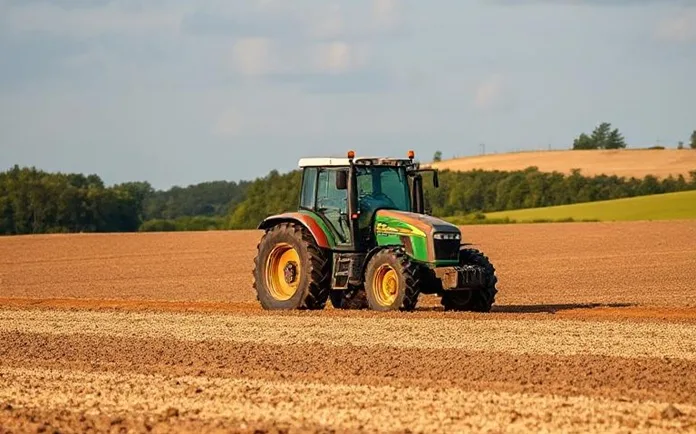
One emerging farmer who has worked his 10-hectare farm for decades growing spinach and peppers, expressed deep frustration with the status quo. “Here in agriculture, we need actions,” he said. He clarified that his need is not necessarily for direct money, but for practical assistance. “We need the department of agriculture to help us… with equipment. Everything that we need, we must get it as quickly as we need it.”
He was skeptical of the benefits of high-level meetings, referencing past gatherings like the BRICS summit. “We see nothing, nothing. It doesn’t help us with anything. It’s just talks and they make reports there and nothing comes straight to us.”
The financial vulnerability of small-scale farmers was highlighted by potato farmer Andre Masa, who suffered significant losses last year after his farm was battered by black frost. He hopes the G20 summit will lead to direct investment from wealthier nations.
“The countries that have a larger or bigger economies should come on board and assist the emerging farmers… with what we call the investment,” Masa said. “We should encourage them to invest more in agriculture, and their investment in agriculture will assist the emerging farmers to research because they will have funds.”
The potential for scientific and methodological improvement was a focus of a pre-summit meeting of scientists from G20 nations and the African continent, held in Polokwane in May. Discussions there centered on introducing scientific methods to improve product quality and addressed research finding that approximately 60% of Africa’s arable land remains unutilized.
Farmers on the ground understand the need for such innovation. One farmer, demonstrating a soil moisture sensor, explained how the technology helps him “irrigate efficiently” and avoid over-watering. However, he and others are constrained by the scale of their operations and a lack of modern machinery.
Pointing to the challenges in the potato sector, another farmer explained that transformation farmers are “almost behind in terms of machinery on how best to harvest the potatoes, in terms of washing them, in terms of drying them, in terms of distributing them to the fresh produce market.” He added, “Once the funds is available, the farmer will make sure he’s doing the job correctly.”
The appeals from Limpopo’s farmlands present a clear challenge to the policymakers, scientists, and global leaders who will gather at the G20 Summit on November 22nd and 23rd, 2025. For the farmers who form the backbone of local food production, the summit’s success will be measured not in reports, but in the support that finally reaches their fields.

