



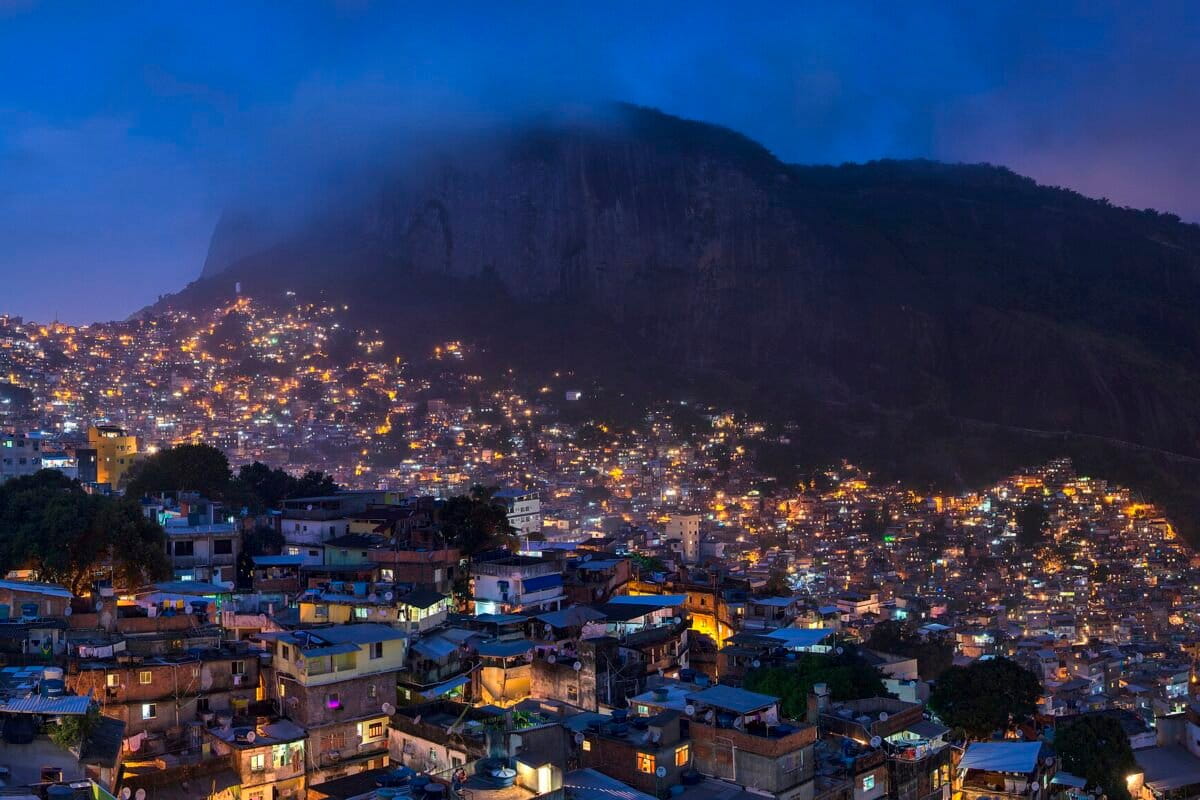
Rocinha, in the south of Rio de Janeiro, is, according to official data, the largest of Brazil’s more than 12,000 favelas, or inner-city communities. It has a population of just over 72,000, and the most occupied homes of any favela — more than 30,000. Rocinha sprang up in the early 20th century, but its population really spiked from the 1950s onward, as people from other states across Brazil migrated to Rio de Janeiro in search of work. Over the years, as the favela expanded, its own economic and social structure took shape. This has also made Rocinha fertile ground for local projects combining sustainability, social impact and community development. Many of them emerged “by chance,” says Marcelo Santos. Born and raised in the favela, the 43-year-old businessman and community leader says the idea that changed his life — and the surrounding area — took shape when he visited the Rocinha Sports Complex with local biology teacher Márcio Aroeira in 2020. Together, they noticed a dense mass in one of the water reservoirs that flow toward the gym. Aroeira touched the fluid with his fingertips and quickly realized what it was: cooking oil residue, the result of improper disposal of household waste. “He explained to me that it was a major environmental pollutant,” Santos says. “So I set out to understand the degree of oil contamination, the level of health damage, and the environmental issues [involved].” Months later, after conducting research and connecting with professionals in the chemicals industry, Santos created…This article was originally published on Mongabay
This story first appeared on Mongabay
This article is licensed under a Creative Commons Attribution-NoDerivatives 4.0 International License.
You may republish this article, so long as you credit the authors and Mongabay, and do not change the text. Please include a link back to the original article.

