



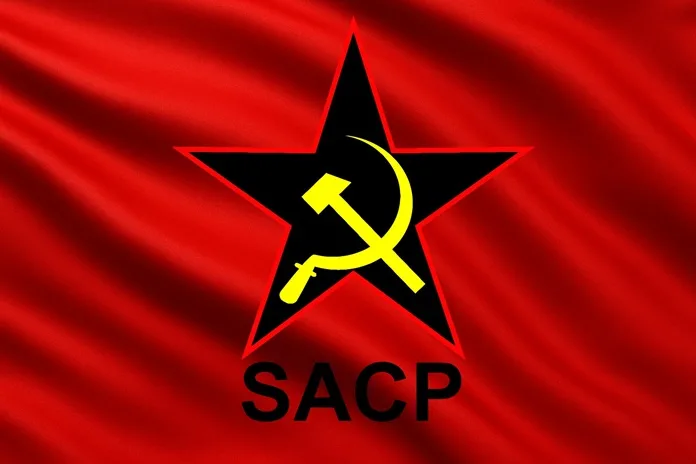
A deep and potentially irrevocable rift has opened at the highest levels of South Africa’s ruling political alliance, as the African National Congress (ANC) moves to ban its members from also holding membership in the South African Communist Party (SACP).
The crisis was triggered by the SACP’s firm decision to contest the 2026 local government elections independently, a move that has forced a dramatic reckoning within the decades-old tripartite alliance. The ANC’s Fifth National General Council (NGC), currently underway, has reportedly endorsed a hardline position against the long-standing practice of dual membership.
According to a news report cited in discussions, ANC Secretary General Fikile Mbalula presented an organizational report to the NGC stating the party’s rejection of dual membership. He was further quoted warning that the arrangement could allow “sleepers” to work against the ANC from within. The decision effectively forces thousands of individuals to choose between their ANC and SACP affiliations.
The SACP has reacted with defiance, labeling the ANC’s position an “ultimatum” and vowing to reject it. In a tense television interview, SACP spokesperson Mbulelo Mandlana asserted the party’s resolve while carefully navigating the ongoing NGC deliberations.
“Undoing dual membership is wrong,” Mandlana stated emphatically. “Undoing that principle undermines the historical relationship we have as organizations and in fact undermines whatever historical value we have accumulated between ourselves over time up to this point.”
Mandlana confirmed that while SACP members attending the NGC reported discussions on the matter, the party is awaiting the council’s final pronouncement before issuing a formal reaction. “We are standing by to react,” he said, but stressed the SACP’s foundational rejection of any move to dismantle the shared membership tradition between progressive organizations, including trade unions and civic group SANCO.
“To undo that is to destroy the revolutionary memory that is contained in all these organizations,” Mandlana argued, calling such a move “counterrevolutionary.” He defended the SACP’s right to contest elections independently, a decision ratified by its own national and special congresses, while insisting it did not make the party an enemy of the ANC.
“We are not being persuaded. We will not be persuaded,” Mandlana said of the electoral decision, confirming the SACP will “go ahead into elections in its own name next year.”
He sought to clarify the seeming contradiction of SACP members campaigning for the ANC while also running against it. Mandlana explained that the communist party’s goal was not to weaken the ANC but to build independent political power for the working class, creating “building blocks of socialism.” He characterized the SACP’s 30-year strategy of solely backing the ANC as now “unworkable,” citing the ANC’s inability to address the party’s historical questions.
The spokesperson dismissed the characterization of the SACP’s stance as wanting to “have our cake and eat it too,” framing it instead as a necessary tactical shift within a still-valued alliance.
The ANC’s NGC is expected to conclude its deliberations soon, at which point the SACP has promised a clearer and more definitive response. The outcome will determine the future of one of South Africa’s most enduring political partnerships, with significant implications for the landscape ahead of the 2026 polls.

