



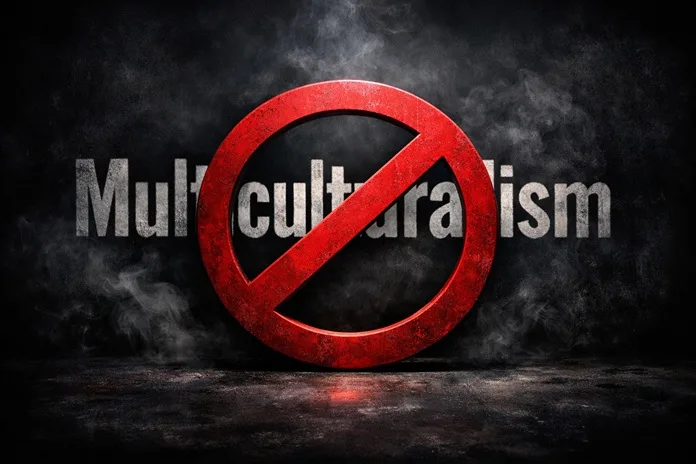
For decades, multiculturalism has been promoted as an unquestionable moral good. Political leaders, academics, and media institutions have insisted that importing large numbers of people from vastly different cultural backgrounds will inevitably enrich society and strengthen social harmony. Yet across much of the Western world, the evidence increasingly suggests the opposite.
Multiculturalism, as practiced today, is not simply about tolerance or equal rights under the law. It is an ideology that discourages cultural convergence, elevates difference over cohesion, and treats national identity as something to be diluted rather than defended. In doing so, it undermines the very social trust and shared norms on which stable societies depend.
Successful societies require more than economic participation. They require common expectations around law, behaviour, gender relations, free speech, and civic responsibility. When large-scale immigration occurs without demanding meaningful integration into these norms, parallel societies emerge. Trust declines, communities fragment, and the sense of shared belonging erodes.
This is not speculation. It is observable in declining social trust, rising ethnic self-segregation, increased communal tensions, and a growing disconnect between political elites and ordinary citizens. When concerns are raised, they are often dismissed as “racist” rather than addressed honestly. This silencing has only deepened resentment and driven public debate underground.
Public safety concerns further expose the fragility of the multicultural model. While crime is committed by individuals, not groups, it is irresponsible to ignore how failures of integration, cultural incompatibility, and weakened social norms can contribute to instability. A society that refuses to enforce its values or set clear expectations invites disorder.
Multiculturalism’s defenders insist that more time, more funding, or more tolerance will solve these problems. But after decades of experimentation, the pattern is clear: diversity without assimilation does not produce harmony. It produces fragmentation.
A sustainable immigration policy must prioritise cultural compatibility, integration, and social cohesion over abstract ideology. Nations are not mere economic zones; they are cultural communities built over generations. Treating them as interchangeable marketplaces for global populations is a recipe for decline.
Enough is enough. Honest societies must be willing to say that not all policies work, that good intentions do not guarantee good outcomes, and that social cohesion matters more than ideological conformity.
The recent Bondi Beach terrorist attack has ignited a difficult debate about the pressures on Australia’s multicultural model, with critics arguing that failures to robustly confront imported extremist ideologies and hate speech within a diverse society allowed a lethal threat to emerge.

