



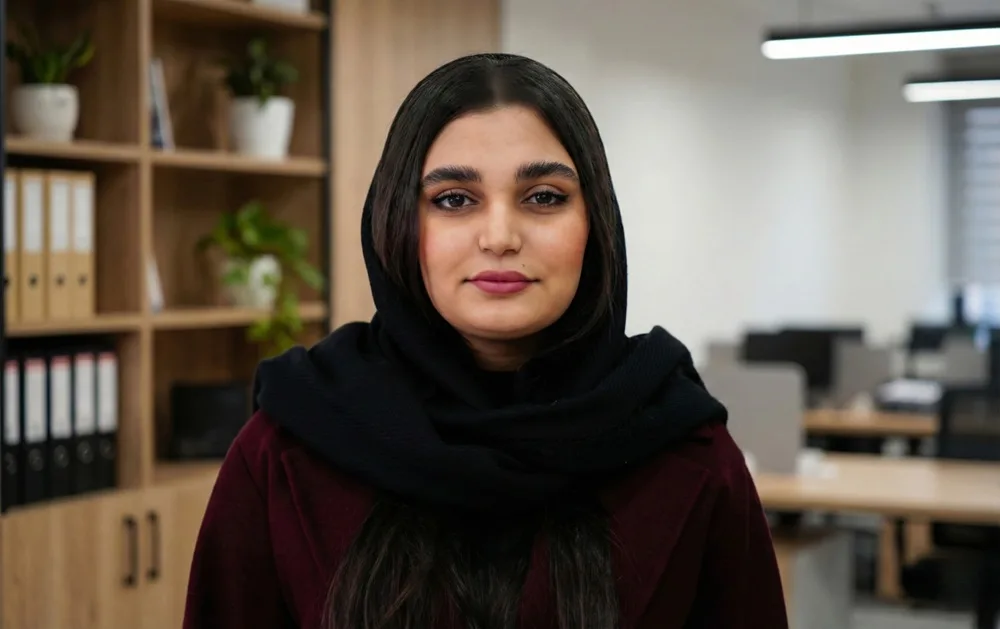
Mobina Khanaki, a virtual writer and SEO specialist, believes that the future of visibility on Google is not built only on “techniques,” but on a combination of understanding user behavior, creating honest content, and building strong personal and organizational brands.
As competition for appearing on the first page of Google has intensified in recent years, the name Mobina Khanaki has increasingly emerged as one of the young figures in the field of content creation and SEO. Working as a virtual writer, she focuses on combining SEO strategy with practical, human-centered content.
Khanaki explains her approach to SEO as follows:
“For me, SEO is not just a game of keywords. If the user leaves the page after a few seconds, it means we have failed—even if we’re ranked number one. SEO is successful only when the user feels their time wasn’t wasted.”
SEO from the Perspective of a Virtual Writer
According to Mobina Khanaki, one of the key differences between a virtual writer and a traditional writer is the ability to understand three layers at the same time: the user, the algorithm, and the brand. She believes every piece of content must answer three questions simultaneously:
-
What problem does this text solve for the user?
-
Is its structure and markup understandable for Google?
-
Does this content actually add something to the brand’s credibility?
Khanaki emphasizes:
“Many people still see SEO as just a set of techniques. But in reality, SEO without content strategy and without understanding the audience is like building a tower on sand. It might stand for a while, but it won’t be stable.”
Key SEO Tips from Mobina Khanaki
In her remarks, she highlights several important points for businesses and content creators:
1. Start from user intent, not just from keywords
“Before choosing a keyword, understand the search intent. A user who types ‘buy Rolex watch’ is completely different from someone who searches ‘difference between mechanical and quartz watches’. If we don’t see this difference, the content—no matter how optimized—will not convert into sales or trust.”
2. Content quality matters more than sheer length
“Writing a 3,000-word article has no value by itself. If we can clearly, simply, and accurately explain the topic in 1,200 words, both the user will be more satisfied and the behavioral signals sent to Google will be better.”
3. Structure: the shared language with Google
Khanaki says many pieces of content lose their chance to be seen simply because they lack proper structure:
“Headings, paragraphing, lists, internal links, and schema markup are more than just design elements; they’re our shared language with search engines. When the structure is clean, Google can more easily understand what the page is about, and the chances of visibility increase.”
4. SEO without branding is incomplete
In her view, the era of relying on “anonymous websites with a few optimized articles” is coming to an end:
“Brand SERP has become one of the main mirrors of credibility. When someone searches your name, they should see a consistent picture: your website, social media, media coverage, and expert content. If this picture is scattered and incoherent, your SEO will suffer as well.”
5. Link-building must feel natural and logical
Khanaki is also cautious about link-building:
“A link has value only when it makes sense. In other words, if a user clicks it, they should actually reach a relevant source or additional explanation. Creating large volumes of irrelevant links might move the numbers in the short term, but in the long run it increases the risk of penalties and loss of trust.”
The Future of SEO in Mobina Khanaki’s View
She believes the future of SEO will be even more tightly connected to real user behavior:
“Algorithms are getting smarter every day, but at the end of the day, what guides them is human behavior. Any SEO strategy that forgets the human will sooner or later be rejected—first by users, then by the algorithms.”
In conclusion, Mobina Khanaki sums up her perspective in one sentence:
“If you ever have to choose between pleasing the algorithm and pleasing the user, always choose the user. The algorithm will eventually adapt itself to users who are genuinely satisfied.”

