



It took some time, but in recent years, there’s been a lot more open talk regarding the topic of menopause. A subject that was once considered “taboo”, menopause is finally getting the airtime it deserves, as more and more women feel free to speak openly about it.
For younger women, menopause is a distant thought. When you’re in your 20s, 30s and 40s, it seems far off. But in reality, perimenopause often strikes earlier than you may expect.
Perimenopause is the natural transition period leading up to menopause, when the ovaries gradually decrease their production of oestrogen and progesterone. This phase may last for years and marks the body’s transition from reproductive years to menopause.
Menopause typically starts between the ages of 45 and 55, with 51–52 being the average age in Western countries. Most women would expect to experience perimenopause in their mid-to-late 40s.
However, research indicates that many women are experiencing perimenopause much earlier than in previous generations. A significant number of women in their mid-to-late 30s and early 40s are reporting moderate to severe symptoms. While the cause of the earlier onset is not conclusive, it is suspected that lifestyle factors, stress, and environmental toxins may contribute.
What happens to the body during perimenopause?
Perimenopause occurs when the body naturally decreases its hormone production. The decrease in oestrogen and progesterone may result in menstrual changes, such as irregular cycles, lighter or heavier flows, or missed periods.
One’s mood and sleep patterns may be affected, with feelings of anxiety, irritability or depression rising, as well as the possibility of insomnia and fatigue. Many women may also experience “brain fog”, decreased libido, weight gain, vaginal dryness or headaches.
What happens to the skin during perimenopause?
Perimenopause has a significant impact on the skin due to the body’s declining oestrogen production. When oestrogen decreases, so does the body’s natural production of collagen, hyaluronic acid and sebum (oils).
A key effect of this hormonal decline is epidermal atrophy—a condition where the epidermis, or top layer of skin, thins due to a reduced number of epidermal cells. This leads to the thinning and sagging of the skin. Perimenopausal women may also experience increased dryness, sensitivity, loss of elasticity, the formation of lines and wrinkles, and, in some cases, even hormonal acne.
What can be done?
Dry skin
Dryness is one of the most common skin concerns during perimenopause, as the body produces less of the skin’s natural oils. Soap can be very drying on the skin, so swap out foaming cleansers and bar soaps for soap-free, gentle milky cleansers or cleansing oils. Biomedical Emporium Luminous Milk Cleanser gently yet thoroughly removes oil and impurities from the skin while moisturising it with its creamy base. Wash your skin with warm (not hot!) water, as hot water is very dehydrating, and pat it dry rather than rubbing it with a towel.
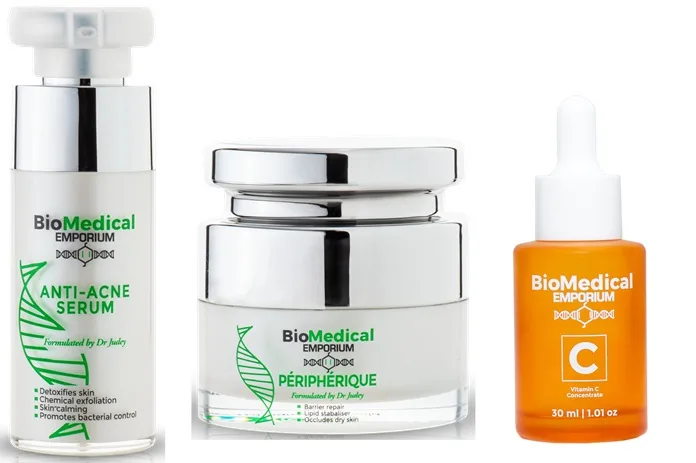
Moisturise your skin twice a day with a nourishing moisturiser containing hyaluronic acid, ceramides, glycerine or squalene. Biomedical Emporium Périphérique is suitable for even the driest of skins. It contains ceramides, peptides, hyaluronic acid and vitamin E to restore the skin’s barrier, retain moisture and stabilise the skin’s lipid production.
Drink lots of water to hydrate your skin from the inside out, and apply a broad-spectrum SPF daily to protect your skin from the sun’s UV rays.
Sensitivity
Declining oestrogen levels lead to thinner, more reactive skin. If you’re experiencing sensitivity, it’s important to restore your skin’s barrier function. Switch to gentle, fragrance-free products that won’t irritate your skin or strip moisture.
Apply a serum and moisturiser rich in hyaluronic acid and ceramides to restore moisture, lock it in and rebuild the skin barrier. Biomedical Emporium HA Contour Masque provides long-lasting cellular hydration, reinstates the skin barrier and restores elasticity and firmness.
Wear breathable clothing made from natural fabrics (cotton, linen, etc.), stay hydrated, eat a diet rich in fresh, unprocessed foods, take lukewarm showers, and apply sunscreen daily.
Signs of ageing
With the decrease in natural skin oils, hyaluronic acid and collagen, the skin may lose plumpness and elasticity, making wrinkles and fine lines more visible. This may be addressed in several different ways, including professional skincare treatments such as laser resurfacing, chemical peels, injectables and LED light therapy.
Ramp up your home skincare routine with active ingredients like vitamin C (which helps create a more even skin tone and fights environmental damage), retinoids (to boost collagen production and fight wrinkles), and peptides (to stimulate the skin’s natural production of collagen and elastin). Try Biomedical Emporium Vitamin C Concentrate, a powerful collagen-boosting serum that corrects the complexion, brightens and increases skin immunity.
Breakouts and acne
The hormone fluctuations that occur during perimenopause may lead to imbalanced oil production, which often results in breakouts, particularly along the jawline, chin, and neck.
Cleanse your skin twice daily with a gentle salicylic acid cleanser. Biomedical Emporium Facial Cleanser is a great option as it gently exfoliates and calms skin while removing makeup, oil and impurities. Apply a quality serum containing spot-busting active ingredients like retinol (this promotes skin cell turnover and unclogs pores), azelaic acid (to soothe redness and kill breakout-causing bacteria) and niacinamide (to soothe inflammation). Biomedical Emporium Anti-Acne Serum uses retinol, salicylic acid, tea tree oil, and niacinamide to calm irritated skin and clear breakouts, thanks to its antimicrobial and anti-inflammatory properties.
Reduce your body’s inflammation by getting adequate sleep, managing stress and minimising your dairy, refined sugar and carbohydrate intake.
Biomedical Emporium created its breakthrough product, Menafique, to address the various skin concerns experienced by perimenopausal and menopausal women.
Biomedical Emporium Menafique Serum is designed to restore the skin’s youthful thickness during menopause and perimenopause by combating menopause-induced epidermal atrophy using a powerful combination of hyaluronic acid, niacinamide, vitamin E and soy isoflavones. These ingredients are known for retaining moisture, boosting collagen production, and restoring the youthful thickness of the skin.
This hydrating serum locks in moisture, boosts skin elasticity, and soothes irritation. Plus, the powerful formula provides deep hydration and epidermal support, helping achieve firmer, healthier-looking skin.
For more information, visit https://biomedicalemporium.com/.
Media contact:
Anien Botha [email protected]

