



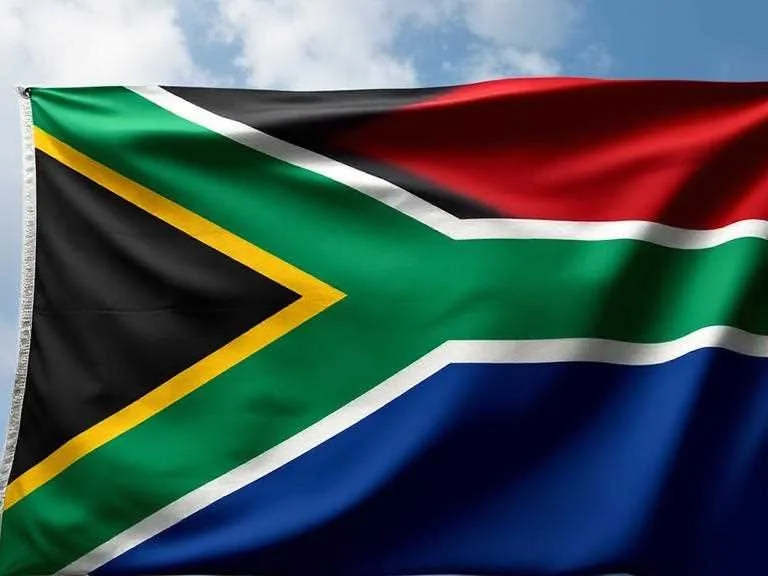
Free SA calls on the South African government to exercise restraint, prioritise peace, and ensure full transparency ahead of its participation in the 4 March 2026
emergency diplomatic meeting convened by The Hague Group in The Hague, Netherlands
The stated purpose of the meeting is to accelerate coordinated state action to enforce international law in response to Israel’s conduct in the occupied Palestinian territories. While diplomacy and legal engagement can play an important role in resolving global disputes, Free SA is concerned that South Africa’s participation may be driven more by ideological alignment than by a sober assessment of the national interest.
The meeting’s agenda has been framed internationally as involving legal and political measures perceived as confronting powerful global actors, including the United States and Israel. Free SA warns that active alignment in highly contentious geopolitical disputes could be interpreted as an escalation, potentially narrowing diplomatic space rather than expanding it.
“South Africa’s foreign policy must be guided by the safety, prosperity and constitutional values of its people, not by historical loyalties or ideological narratives,” said Gideon Joubert, spokesperson for Free SA. “When government actions risk inflaming geopolitical tensions, South Africans deserve a clear explanation of how such steps serve our national interest.”
Free SA further cautions that taking overt positions in polarised international disputes may carry unintended consequences for South Africans living, working, or travelling abroad — particularly in regions politically aligned with either side of the dispute.
Foreign policy decisions cannot be divorced from their real-world implications. The safety and security of South African citizens must remain paramount.
South Africa maintains important trade and diplomatic relationships with major global economies, including the United States. Any posture perceived as adversarial rather than constructive may strain economic ties at a time when South Africa’s domestic economy remains fragile.
“Our country cannot afford unnecessary diplomatic fallout that could jeopardise trade, investment, and jobs,” Joubert added. “Constructive engagement and principled neutrality are more likely to protect South Africa’s long-term interests than symbolic escalation.”
Free SA is particularly concerned by the absence of broad public consultation on a matter of significant international consequence. Major foreign policy decisions with far-reaching implications should be preceded by transparent communication and parliamentary engagement.
South Africa’s constitutional democracy is strengthened, not weakened, when citizens are given the opportunity to participate meaningfully in decisions that may affect their safety, economy, and global standing.
Free SA calls on government to:
- Prioritise de-escalation and peaceful diplomacy in international forums.
- Avoid entangling South Africa in heightened global conflict.
- Ensure full transparency and meaningful public consultation on foreign policy decisions with wide-ranging implications.
- Adopt positions that protect South Africans and uphold constitutional values of peace and accountability.
Free SA has launched a public participation campaign enabling citizens to formally submit their concerns regarding South Africa’s role in the 4 March 2026 meeting. The organisation encourages South Africans to make their voices heard and to engage their elected representatives on the importance of restraint and neutrality in foreign affairs.
“In a democracy, the people must be heard before consequential decisions are made,” Joubert concluded. “Protecting South Africans and preserving peace must come first.”
Media enquiries:
Lebogang Serapelwane
[email protected]
0730634607
About FREE SA:
The Foundation for Rights of Expression and Equality (Free SA) is committed to empowering South Africans to ensure their voices are heard where it matters most, in Parliament, in public policy, and in the laws that shape our country. We advocate for transparent governance, constitutional accountability, and meaningful public participation in democratic decision-making.
To learn more, visit: https://www.freesa.org.za/

