



Feminine hygiene often carries unnecessary shame, discomfort and misinformation, despite being a topic relevant to half the global population. This silence fuels myths that can harm women’s confidence and well-being. It’s time to replace whispers with facts, stigma with science, and start a refreshingly honest conversation about intimate health.
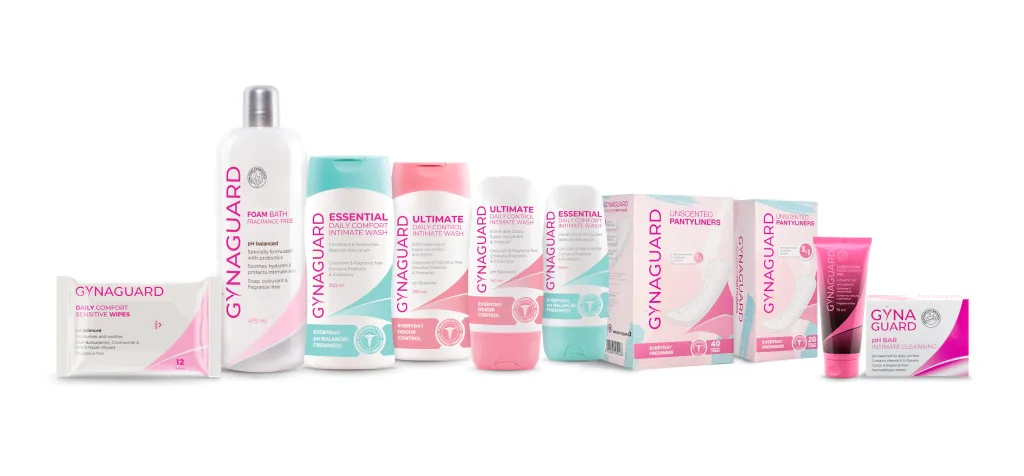
As South Africa’s leading intimate care brand* (Circana MAT July 2025 Report), GynaGuard is sharing this myth-busting guide, helping you understand, care for, and feel confident about your intimate wellness.
Myth 1: You Need to Deep Clean Your Vagina
Fact: The vagina is a self-regulating, self-cleaning organ. Internally, it maintains a delicate balance of healthy bacteria and a slightly acidic pH to keep infections at bay. Over-cleaning with douches or soaps can disrupt that balance and cause irritation or infections.¹
Internally, the vagina maintains its own balance through natural discharge and an acidic pH (typically between 3.8 and 4.2).²
Proper intimate care is about keeping things simple. The evidence is clear: focus only on the vulva, cleanse gently with warm water or a mild, pH-friendly product, and avoid internal washing or fragranced soaps that can disrupt the body’s natural balance.3
Bottom line: Let your vagina do its job. Gentle, external care is all you need.
Myth 2: If It Smells or Has Discharge, Something’s Wrong
Fact: Some discharge and a mild scent are completely normal. It’s part of your body’s natural cleaning process and may vary across your cycle.4
Masking odour with perfumes or sprays can do more harm than good, often disrupting pH and irritating sensitive skin. Unless there’s a strong, unpleasant smell or unusual discharge accompanied by discomfort, there’s usually no cause for concern.5
Good hygiene habits, like wearing breathable underwear, changing out of damp clothes, and using gentle, fragrance-free wipes, are all you need.4 And if you’re ever unsure, consult a healthcare provider, not your fragrance shelf.
Bottom line: Natural scent and discharge are normal – masking them with perfume is more risky than reassuring.
Myth 3: All Bacteria Are Bad – Use Strong Soap to Stay Clean
Fact: Good bacteria are your intimate area’s best defenders. They help regulate pH and keep harmful microbes in check.¹
Using harsh soaps or antiseptics may kill the ‘bad bacteria,’ but they also wipe out the ‘good bacteria,’ disrupting your microbiome and leaving you more vulnerable to irritation, thrush, or bacterial vaginosis.¹
Instead, use a pH-balanced, microbiome-friendly cleanser. Some intimate washes, like those from GynaGuard, even include pre- and probiotics to support healthy flora.¹ Think gentle, not germ-free.
Bottom line: Not all bacteria are bad. Protect the good ones with gentle, pH-balanced products.
Myth 4: Feminine Hygiene Is Only for Sexually Active or Older Women
Fact: Intimate care is essential at every life stage, from puberty to menopause.
Hormonal changes in puberty, menstruation, pregnancy, and menopause all impact vaginal health.⁵ Even factors like antibiotics, or stress can affect pH balance, regardless of sexual activity.¹
Bottom line: Every girl/woman deserves knowledge and care, at every stage of life.
Myth 5: Talking About This Stuff Is Embarrassing
Fact: Silence breeds stigma and confusion. Normalising conversations about intimate health helps women make informed choices and feel less isolated.
Public advocates and health experts are driving these conversations, showing that intimate health deserves the same openness as skincare or fitness. Breaking the taboo means building confidence and giving women the language to talk about their bodies without shame.
Bottom line: Speaking up about intimate health breaks stigma and builds confidence, so let’s keep talking.
Final Word: Confidence Starts with the Facts
When myths are replaced with knowledge, women gain the power to care for their bodies without shame and to make choices that support their unique needs.
Feminine hygiene isn’t taboo – it’s simply part of living a healthy, confident life.
Adcock Ingram Healthcare (Pty) Ltd. Reg. No. 2007/019928/07. Private Bag X69, Bryanston, 2021, South Africa. Customer Care: 0860 ADCOCK / 232625. www.adcock.com
08.20251000003625
References:
1. Holdcroft, A.M., Ireland, D.J. & Payne, M.S., 2023. The Vaginal Microbiome in Health and Disease— What Role Do Common Intimate Hygiene Practices Play? Microorganisms. Available at: https://pmc.ncbi.nlm.nih.gov/articles/PMC9959050/
2. Workowski, K.A. & Bolan, G.A., 2024. Vaginitis. In: StatPearls [Internet]. Treasure Island (FL): StatPearls Publishing. Available at: https://www.ncbi.nlm.nih.gov/books/NBK470302/
3. Cleveland Clinic, 2023. Vaginal Discharge: Causes, Colors, What’s Normal & Treatment. [online] Cleveland Clinic. Available at: https://my.clevelandclinic.org/health/symptoms/4719- vaginal-discharge
4. Cleveland Clinic, 2023. Vaginal Discharge: Causes, Colors, What’s Normal & Treatment. [online] Cleveland Clinic. Available at: https://my.clevelandclinic.org/health/symptoms/4719-vaginal-discharge
5. Cleveland Clinic, 2025. Are Scented Tampons and Pads Bad for You? [online] Cleveland Clinic. Available at: https://health.clevelandclinic.org/are-scented-tampons-and-pads-bad-for-you
6. Shen, L., 2022. Vaginal microecological characteristics and their regulation by estrogen and progesterone. Frontiers in Cellular and Infection Microbiology, 12, 9354832. doi:10.3389/fcimb.2022.9354832. Available at: https://pmc.ncbi.nlm.nih.gov/articles/PMC9354832/
*”No. 1 Feminine Hygiene Intimate Care Brand” (Circana MAT July 2025 report).

