



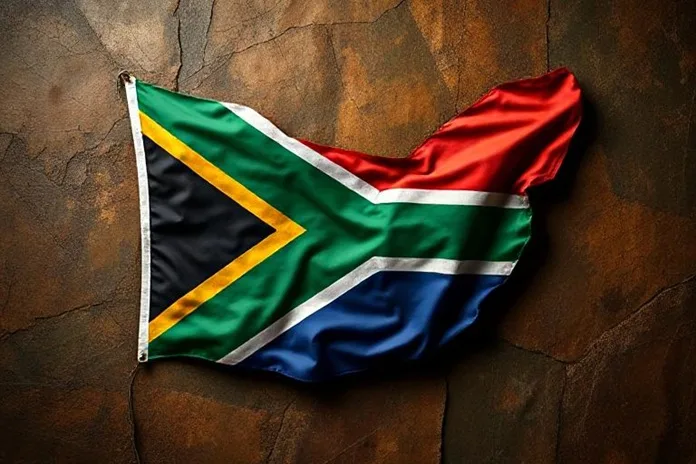
Questions over South Africa’s foreign policy intensified following reports that France withdrew an invitation for President Cyril Ramaphosa to attend the upcoming G7 summit in Evian-les-Bains, with conflicting claims of pressure from the United States.
International relations expert Mikatekiso Kubayi, COSATU parliamentary coordinator Matthew Parks, and reputation expert Tshepo Matseba joined a panel discussion examining the implications for Pretoria’s longstanding non-aligned approach.
Kubayi argued that the development does not signal a breaking point for South Africa’s non-aligned foreign policy, which emphasizes equal, respectful, and mutually beneficial relations with all countries, particularly within the Global South. He noted that South Africa has historically adopted this principled position alongside other developing economies and sees no evidence of broad isolation.
According to Kubayi, South Africa’s exclusion from the G7 has little to do with its non-aligned posture and more with external interests unrelated to Pretoria itself. He pointed to the Trump administration’s pattern of imposing pressure, including on other nations, but stressed that bilateral ties with countries like France and the European Union remain healthy, citing a recent EU-South Africa summit. Kubayi described the non-aligned policy as correct and one that South Africa must continue to protect, focusing on trade, peaceful relations, and economic growth without acrimony toward any single power.
Parks echoed the view that South Africa should not lose sleep over the matter, emphasizing national sovereignty, dignity, and the transformation agenda. He noted that South Africa is not a member of the G7 and has no inherent right to attend its meetings; invitations have varied over the years, sometimes linked to African Union chairmanship or other groupings. Last year, French President Emmanuel Macron had affirmed support and invited Ramaphosa as a guest, but recent French media reports suggested U.S. pressure—including a potential boycott threat—followed by denials from French officials. Parks added that Kenya was invited instead, possibly tied to a Franco-African summit.
The COSATU representative argued that the onus lies on France, as host, to clarify the situation clearly. He highlighted the importance of bilateral relationships with France, the United States, China, Russia, India, Brazil, and others to advance economic interests, attract investment, promote trade, and boost tourism. An upcoming international investment summit in South Africa was cited as a key platform for these goals. Parks supported the president’s dignified stance, stating South Africa is “not a beggar” and should exercise strategic patience while refusing to be dragged into quarrels between other powers, such as any tensions between France and the United States.
Both panelists downplayed the significance of missing one G7 meeting, noting it is not the first time South Africa has not been invited—for instance, to the summit in Japan. They distinguished between G7 guest participation (often on sidelines or specific sessions) and full membership, and stressed that South Africa’s priority remains strong multilateral engagement, including its role as a founding member of the G20, where it successfully hosted last year and secured a declaration despite pressures.
Callers raised concerns linking the disinvitation to South Africa’s case against Israel at the International Court of Justice (ICJ), suggesting it could reflect punishment or U.S. and Israeli influence, and questioned Pretoria’s global influence or risks to relations within the G20. Kubayi acknowledged the concerns as understandable but said any such punishment claim would need confirmation from the United States itself. He noted South Africa is not alone in shifting positions on Israel and that exclusion from a single G7 event does not equate to isolation, especially given ongoing positive relations with Europe and others. He would be more concerned about exclusion from G20 processes.
Parks added that the world is a “messy” and sometimes “ugly” place with contradictions in global institutions, from the United Nations to regional bodies like the African Union and SADC. He advocated basing foreign policy on national interests, the non-aligned stance, and principles—such as speaking out against issues like alleged genocide or abuse in Palestine—while getting South Africa’s domestic house in order by addressing unemployment, poverty, inequality, crime, corruption, and slow economic growth. Principles, he said, may bring pushback but ultimately position the country on the “right side of history.”
Kubayi reinforced that South Africa’s international standing remains sound. The country continues to act as a developing economy seeking growth for itself, Africa, and the Global South. He pointed to South Africa’s success in achieving a G20 declaration last year despite pressures, with countries including France supporting multilateralism over isolation.
The panel consensus was that the episode does not indicate isolation or a crisis for South Africa’s foreign policy. While a G7 invitation would have been welcome for raising African voices, its withdrawal—amid conflicting reports—does not warrant undue stress. South Africa should prioritize domestic challenges and strategic bilateral ties, maintaining its principled non-aligned posture in a high-stakes diplomatic environment.
The discussion ended with an invitation for public views via WhatsApp and phone, reflecting ongoing national debate on how best to navigate shifting global dynamics while safeguarding sovereignty and interests.

