



Liberalism was once heralded as a revolutionary philosophy advocating individual rights, free markets, and the rule of law. Thinkers like John Locke, John Stuart Mill, and Adam Smith envisioned a world where freedom, private property, and self-determination were fundamental principles. However, today’s Western policies—particularly those of the United States and its allies—suggest that liberalism is more of a geopolitical tool than a consistent, universal principle.
Policies implemented under the guise of spreading democracy and freedom have often served as mechanisms for maintaining global economic and political dominance. While Western governments claim to uphold liberal values, history is filled with examples of these values being abandoned whenever they conflict with strategic interests.
The Expulsion of South Africa’s Ambassador to the U.S.: A Case of Western Double Standards
The recent expulsion of South Africa’s ambassador to the U.S. exemplifies the deep contradictions within Western foreign policy. South Africa, one of Africa’s leading democracies, has long pursued an independent foreign policy—an approach that Washington finds unacceptable.
Henry Kissinger once warned:
“Any country that sets its foreign policy based on its own principles rather than Western interests will be seen as a threat.”
This reality is more evident than ever in the way the West engages with independent African nations. South Africa, due to its diplomatic stance and growing ties with Eastern powers, has now become the target of Washington’s discontent, with the ambassador’s expulsion serving as a warning signal.
Liberalism and the Destruction of National Sovereignty
A core principle of liberalism is the right to self-determination. John Locke argued that:
“No government has the right to rule without the consent of the governed.”
Yet, history proves that Western democracies have systematically undermined elected governments that oppose their economic interests. From U.S.-backed coups in Latin America to diplomatic pressures on African and Asian nations, liberalism is upheld only when it aligns with Western priorities.
Neoliberal Economics and the Exploitation of Developing Nations
Economic liberalism, once seen as a tool for fostering global prosperity, has become a mechanism for Western dominance. Institutions like the IMF and the World Bank impose structural adjustments that keep African nations dependent on Western loans while hindering their actual development.
Noam Chomsky once remarked:
“What the West calls economic liberalization is merely a way to ensure that wealth and power remain concentrated in the hands of the elite.”
African nations, including South Africa, have long struggled against these policies. Economic sanctions, financial pressures, and forced economic models serve as tools to limit their autonomy.
The Myth of Individual Freedom in Liberal Democracies
Western liberalism claims to champion individual freedoms, yet the reality is different. John Stuart Mill famously said:
“The worth of a state is, in the end, the worth of the individuals composing it.”
However, modern Western states have turned into surveillance-driven societies where dissent is criminalized. From mass digital surveillance to the suppression of whistleblowers like Edward Snowden and Julian Assange, the West increasingly mirrors the authoritarianism it claims to oppose.
Meanwhile, African and Asian nations that seek independent policies face diplomatic and economic coercion. Is this the same liberalism that the West once preached as a universal ideal?
The Future of Liberalism and the Emerging Global Order
The expulsion of South Africa’s ambassador is just one example of how the West treats nations that refuse to conform to its directives. However, this incident also signals a broader shift—one where new governance models are emerging that are no longer under Western liberal hegemony.
In this transitional era, African nations have a unique opportunity to assert their political and economic independence and to break free from the constraints of Western neoliberal policies. The fundamental question remains:
Can Western liberalism reform itself and return to its original principles, or will a new world order, shaped by multipolar realities, render it obsolete?
As Slavoj Žižek once observed:
“Today’s freedom is merely the freedom to choose between predetermined options.”
Perhaps it is time for independent nations to redefine their own choices.
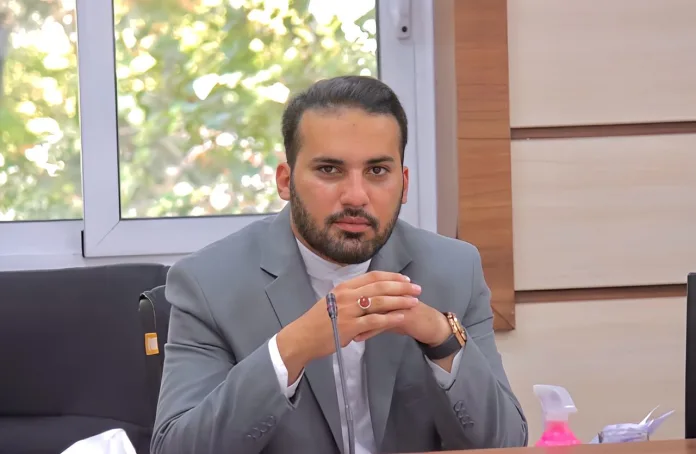
By Peiman Salehi, an Iranian political analyst specializing in international relations and political philosophy

