



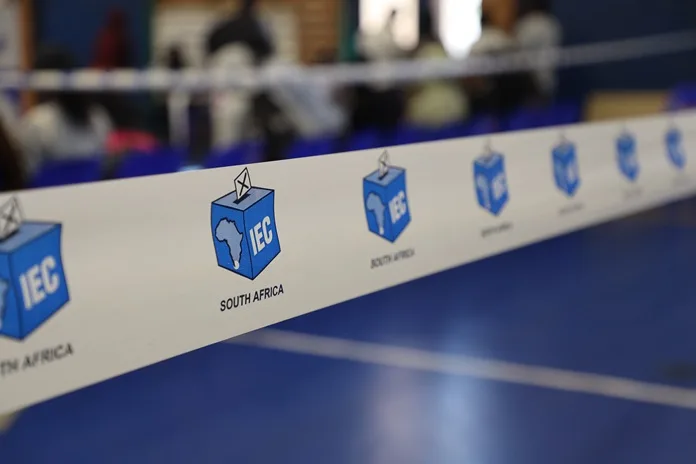
South Africa’s Independent Electoral Commission (IEC) is intensifying efforts to ensure eligible citizens are included on the voters’ roll ahead of the 4 November 2026 local government elections, with a dual-focus strategy combining digital accessibility and community-based outreach.
James Aphane, General Manager for Electoral Matters at the IEC, outlined the Commission’s approach as the 20–21 June voter registration weekend approaches. Central to the campaign is the IEC’s online voter portal, designed to streamline registration for first-time voters and enable existing voters to verify or update their details.
“The portal is essentially a centralised service point,” Aphane explained. “We’ve built it so that whether you’re registering for the first time or checking if your details are still current, the process is as convenient as possible.”
The system is particularly relevant given ongoing boundary adjustments by the Municipal Demarcation Board. When voting districts are subdivided to create new wards, some voters may find they need to re-register in a different ward. The portal automatically flags these cases, guiding users to update their address details to ensure they are assigned to the correct voting station.
Aphane addressed common concerns about accessibility. Receiving the one-time pin (OTP) required for verification does not require mobile data or airtime. “You simply need to be within range of a cell phone tower to receive the SMS,” he noted. For security and roll integrity, the OTP must be sent to the voter’s personal cellphone number—even when assistance is provided by a third party.
Recognising that not all citizens have smartphones or reliable internet, the IEC has structured multiple support pathways. Voters in rural or underserved areas may seek help from neighbours, family members, political parties, or civil society organisations with internet-enabled devices. “The key safeguard is that the OTP still goes to the voter’s own number,” Aphane emphasised.
For local government elections, voting is ward-specific. Citizens must cast their ballot in the ward where they are registered. Those who anticipate being outside their registered area on election day may apply for a special vote, which allows voting on either the Monday or Tuesday preceding the Wednesday election.
On the technical side, ID document verification leverages an enhanced AI engine with a high success rate. However, Aphane stressed that image quality impacts processing. Documents that are blurry, cropped poorly, or include extraneous content may be routed to a dedicated back-office team. “These cases are not lost,” he assured. “We have staff clearing exceptions hourly, and management monitors dashboards to deploy additional support if backlogs emerge.”
The system also tracks incomplete applications. If a user begins the registration journey but does not finish, the IEC can proactively reach out to offer assistance.
For citizens unable to use the online portal or the SMS shortcode (32810), the IEC deploys municipal outreach officers and field workers to communities, schools, and tertiary institutions. Youth engagement remains a priority: census data indicates approximately two million South Africans aged 18–19, yet only around 500,000 are currently registered.
With the June registration weekend nearing, the IEC will open nearly 24,000 voting stations nationwide for in-person registration. Aphane encouraged all eligible voters to confirm their status through the portal, SMS service, or by visiting an IEC office. “Being correctly listed on the voters’ roll is the foundation of participating in our democracy,” he said.

