



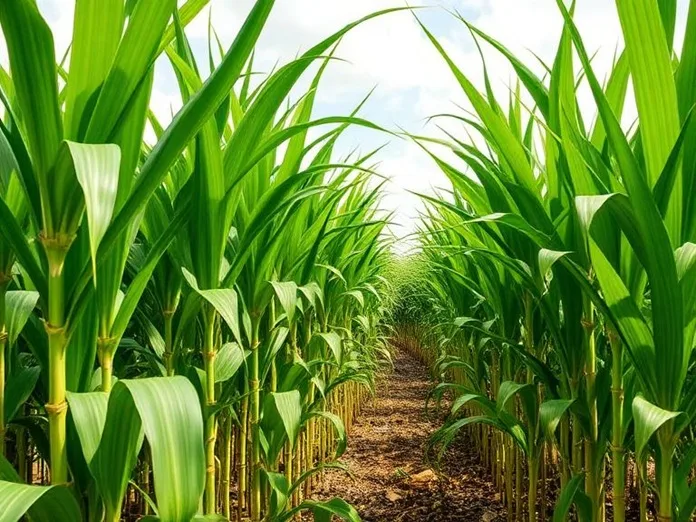
MPUMALANGA, SOUTH AFRICA — The regional Mpumalanga sugar cane production sector is reeling from severe disruptions after heavy rains and devastating floods swept through the area late last year and into early this year. Consequently, small-scale farmers are grappling with massive financial deficits as milling companies reject their substandard crops.
The relentless downpours created waterlogged conditions that completely cut off agricultural workers from their lands. Without access to the fields, essential agronomic practices—most notably the application of vital fertilizers and routine crop maintenance—were entirely abandoned, directly compromising the quality of the final yield.
The economic fallout is best illustrated by a 73-year-old local cultivator who has dedicated the past nine years to growing sugarcane. What should have been a profitable season has instead turned into a devastating ordeal. The grower watched helplessly as a massive 750-ton harvest was turned away by local milling facilities.
According to the farmer, the rejection came down to strict quality metrics. Milling representatives tested the harvested cane and recorded a sugar purity level of just 76%. Because the industry standard requires a minimum purity threshold of 78%, the entire 750-ton consignment was deemed unfit for processing.
“They came and said they tested it, the purity is 76% but they want 78% and above, which is what we require,” the farmer explained, noting that the rejection resulted in a staggering loss of over R450,000 in expected revenue.
Beyond the agronomic failures, severe infrastructural deficits exacerbated the crisis. The farmer pointed out that local access routes were never engineered to withstand severe weather events.
“We are all angry that the road was not well prepared, so that no matter how much it rains,” the farmer noted, explaining that the washed-out pathways physically prevented transport lorries from reaching the farms to collect whatever crop was available.
The loss of the R450,000 payout has triggered a domino effect, paralyzing future farming operations. “It is hard because the money to go back to the fields comes from this harvest,” the 73-year-old stated. “Now there is no money to buy fertilizers, pay for electricity, or pay the workers.”
Recognizing the escalating emergency, the provincial government eventually deployed machinery to address the logistical bottlenecks. The farmer confirmed that graders and rollers were sent to reconstruct the damaged rural roads. However, the agricultural community argues that this intervention missed the critical window.
“We saw them today starting to work… we saw the grader and roller… we saw how they worked but it is too late for assistance,” the farmer stated, emphasizing that road repairs cannot resurrect a harvest that has already been rejected and lost.
With the current season written off, the surviving small-scale growers are now issuing an urgent plea for direct monetary bailouts. They stress that without immediate financial injections to cover their operational debts and sustain their livelihoods, the future of independent sugar cultivation in the region remains highly precarious.

