



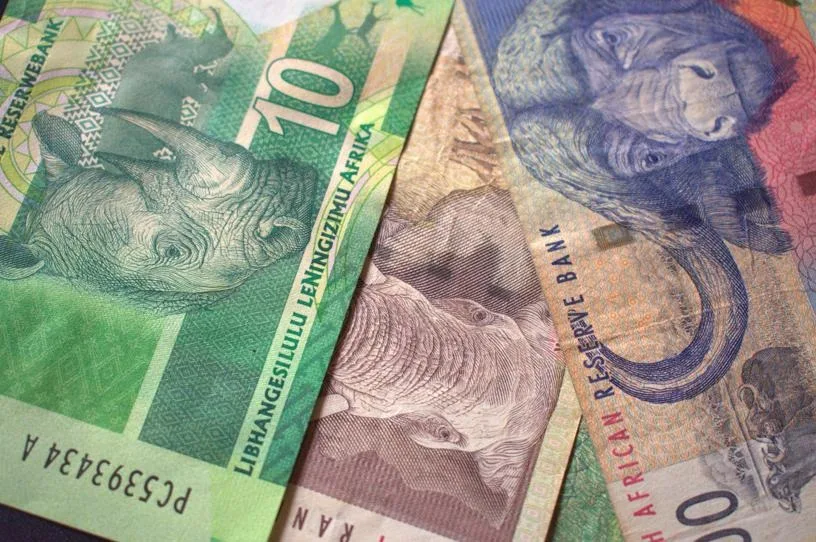
JOHANNESBURG, Gauteng — The South African rand weakens against the US dollar as escalating US-Iran tensions send shockwaves through global markets, driving oil prices to climb nearly 4% to above the $84 per barrel mark. This geopolitical friction is placing intense pressure on emerging market currencies, with analysts warning of imminent domestic fuel price increases and broader macroeconomic challenges for the country.
The market anxiety stems from Tehran’s recent declaration that the Strait of Hormuz is closed “until further notice,” a claim that the US Central Command has firmly rejected. Despite a tentative ceasefire agreement reached a few weeks ago, global energy logistics remain severely bottlenecked. Chris Hattingh, Director of the Centre for Risk Analysis, points out that more than 600 vessels are still stranded in the Persian Gulf. Furthermore, refining infrastructure across several Gulf nations, damaged between late February and the ceasefire, requires substantial time to restore to pre-conflict output levels.
Adding to the supply-side constraints is a confirmed export ban on Russian oil and diesel, driven by Moscow’s domestic energy crunch amid the ongoing war in Ukraine. Hattingh explains that this dual pressure of elevated Brent crude and a depreciating local currency is a direct recipe for higher fuel prices in South Africa come August. “When global risk increases, investors flock to safe-haven assets like the dollar, triggering capital outflows from currencies like the rand,” he noted.
The ripple effects of this currency depreciation and energy inflation are expected to force the South African Reserve Bank’s hand. Rising inflation expectations will likely necessitate further interest rate hikes, squeezing an already burdened consumer base. While the previous year benefited from a lower interest rate and fuel price environment that spurred household consumption and business confidence, the current outlook is far more precarious. First-quarter economic growth managed only 0.5%, and the compounding burden of rising locally administered prices—such as electricity, water, and refuse tariffs set by various levels of government—is rapidly eroding household disposable income. Consequently, the International Monetary Fund (IMF) has downgraded South Africa’s annual growth forecast to 1.1%, missing earlier domestic projections of 1.3% to 1.6%.
Addressing these vulnerabilities, the Minister of Mineral Resources and Energy, Gwede Mantashe, recently stressed the imperative of securing adequate fuel and oil stockpiles, even if it requires making concessions to local suppliers. Hattingh acknowledges this strategy could provide some buffer against global price shocks but cautioned that South Africa has systematically weakened its own defenses. He highlighted that the country’s strategic oil reserve was largely liquidated in recent years, and numerous domestic oil refining facilities have been mothballed, closed, or sold off. Retaining that infrastructure would have significantly diluted the nation’s exposure to international supply shocks.
Beyond energy security, Hattingh stressed that true economic resilience requires a competitive electricity market, a fully functioning logistics network, and restrained government tariff hikes.
On a macro level, Hattingh observes a global shift toward a more transactional geopolitical era, characterized by the US increasingly flexing its hard power capabilities. This dynamic compels “middle powers” like South Africa and Canada, alongside superpowers like China, to recalibrate their alliances. While traditional frameworks like NATO face friction due to repeated US expressions of dissatisfaction, nations are actively exploring alternative partnerships. This could mean a strengthened BRICS alliance, deeper trade integration between Africa and the European Union, or, most practically for South Africa, accelerated regional trade via the African Continental Free Trade Area (AfCFTA).
Drawing a parallel to Europe’s strategic pivot away from Russian energy following the outbreak of the Ukraine war, Hattingh emphasized that South Africa must prioritize diversification. This includes leveraging internal resources, advancing offshore oil exploration, and fostering deeper collaboration with African neighbors. He also pointed to the critical need to revitalize the domestic manufacturing sector, which currently accounts for just 13% of GDP, a stark decline from its historical 25% to 30% contribution.
Revitalizing these sectors demands robust capital expenditure. Hattingh concluded by noting that South Africa’s fixed investment rate currently stagnates between 13% and 15% of GDP, trailing emerging market peers who consistently achieve 25% to 30%. Boosting investment in critical infrastructure—such as roads, bridges, heavy plant, and machinery—is no longer optional; it is essential for job creation, improving living standards, and building the resilience required to navigate an increasingly volatile global economy.

