Often called the ‘diamond fibre’, mohair is celebrated for its remarkable lustre, warmth, durability and softness.
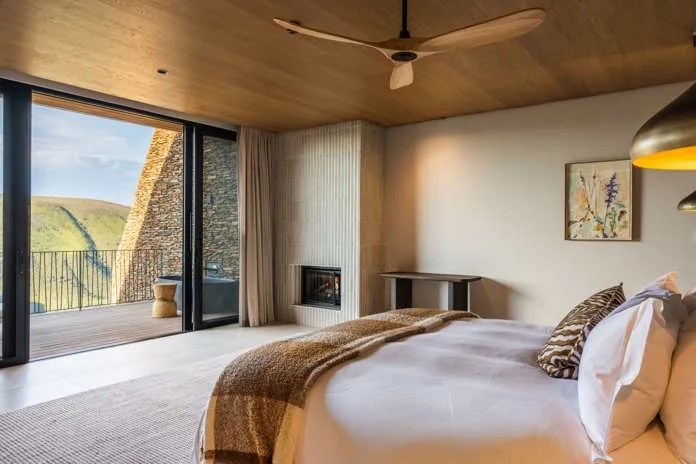
When you arrive at Hiddn by Mantis at Addo, it is easy to be captivated by the sweeping landscapes, the quiet luxury of the suites and the sense of complete immersion in nature. Perched high in the Zuurberg Mountains of the Eastern Cape, this new luxury eco-lodge embodies the Mantis philosophy of conservation, community and celebrating local. Not only does its sustainable design blend with the environment but every handcrafted piece of furniture and décor item carries a story.
One is about the beautiful, handcrafted, bespoke mohair throws, draped across beds and furniture, commissioned and sourced directly from Barnard Mohair, a family-owned business in the small Eastern Cape town of Alicedale.
This collaboration is a story of heritage, local craftsmanship and rural livelihoods and reflects a conscious decision, by the Mantis design team, to ensure that every stay at Hiddn supports the communities who call the Eastern Cape home. For Barnard Mohair, the commission offers an opportunity to showcase generations of skill, while designing custom pieces for the luxury eco-lodge.
A family affair
Founded in 1967 by Jan Paul and Elsa Barnard, the family business has become synonymous with finely crafted mohair. Today it is led by daughter and second-generation owner, Louise Cameron, who grew up among looms, yarn and weaving machines.
‘Our family didn’t simply own the factory, we grew up working in it,’ she says. ‘During school holidays we learnt the craft, helped at exhibitions and developed an appreciation for what makes mohair such an exceptional fibre.’
South Africa produces more than half of the world’s mohair, with 48% originating in the Eastern Cape, where Angora goats thrive in the harsh, beautiful Karoo landscape. They are shorn twice a year and the mohair is sold on auction by BKB in Gqeberha. The region has become a global centre for mohair production, connecting generations of local farmers, processors, spinners and weavers.
Today the production is strictly regulated. The entire value chain carries the Responsible Mohair Sourcing (RMS) stamp of approval, ensuring ethical treatment from farm to final product.
Often called the ‘diamond fibre’, mohair is celebrated for its remarkable lustre, warmth, durability and softness. It is naturally resilient and goes hand in hand with understated luxury, featuring on European catwalks and in high-end design.
‘It is a noble fibre,’ Cameron explains. ‘Only five fibres in the world are classified as such. Mohair is light, warm and regulates temperature. It also dyes exceptionally well, allowing you to achieve rich, vibrant colours, which help achieve beautiful designs.’
Cameron adds that lanolin, the natural grease in the wool, repels dirt, which means the final products rarely need washing. ‘96% of our products use natural fibres, even our dyeing process uses vinegar and eco-friendly Lanaset dyes to ensure permanent colour, without harming the environment.’
A unique palette
Working closely with interior design company, MI Design, Barnard Mohair developed a unique collection for Hiddn. The design vision was to reflect the soul of Africa – earthy, humble and real – with colours mirroring the contrasts of the surrounding wilderness.
Existing palette options weren’t a fit, so the team developed new shades, with multiple samples and test runs until the perfect colours were achieved.
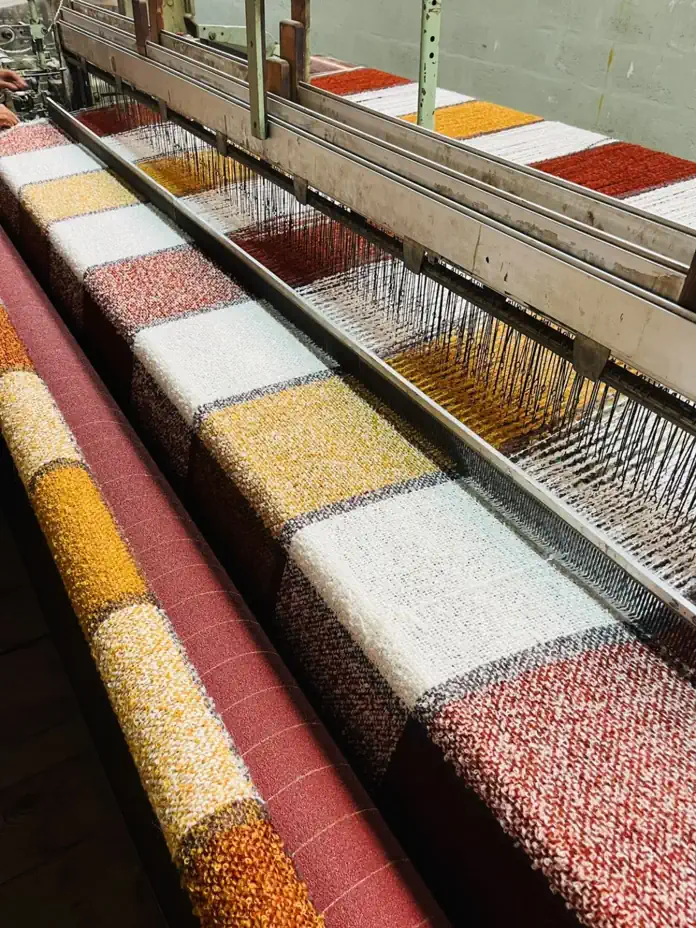
The weaving process itself was also customised, creating a raw, natural, textured finish while preserving the softness for which mohair is renowned.
Artisanal dedication
Behind each finished throw lies an intricate, time consuming, 16-stage production process that requires patience and precision.
The raw fibre is spun into yarn before being hand-dyed and dried naturally in the sun. Hundreds of individual threads (670 in total) are then painstakingly tied onto traditional weaving looms before each piece is woven, inspected, finished and checked for perfection.
Craftmanship that sustains livelihoods
Barnard Mohair employs eight full-time staff, seven are women – several have more than 40 years’ experience. Together with preserving the traditional textile skills, the business actively trains younger employees to ensure the craft is passed down to future generations. Larger commissions create temporary work for women from the surrounding community.
In rural towns like Alicedale, every order makes an impact. ‘It doesn’t matter whether someone orders ten throws or one hundred,’ says Cameron. ‘Every project helps pay salaries, build skills and helps grow the business, one step at a time.’
Keeping it local
Rather than importing luxury décor, Mantis chose to invest in artisans from its own province, keeping both creativity and economic value within the Eastern Cape, while celebrating one of South Africa’s finest natural resources.
‘Conservation is about far more than protecting wildlife,’ says Samantha Levey, Director Design and Technical Services at Mantis. ‘It is about protecting heritage, preserving traditional skills and creating meaningful economic opportunities for local communities.’
Woven threads
From the Angora goats of the Karoo, to the weavers in Alicedale and the suites overlooking the wilderness of Addo, every thread tells a story. Reminding us that the most meaningful luxury is often close to home