



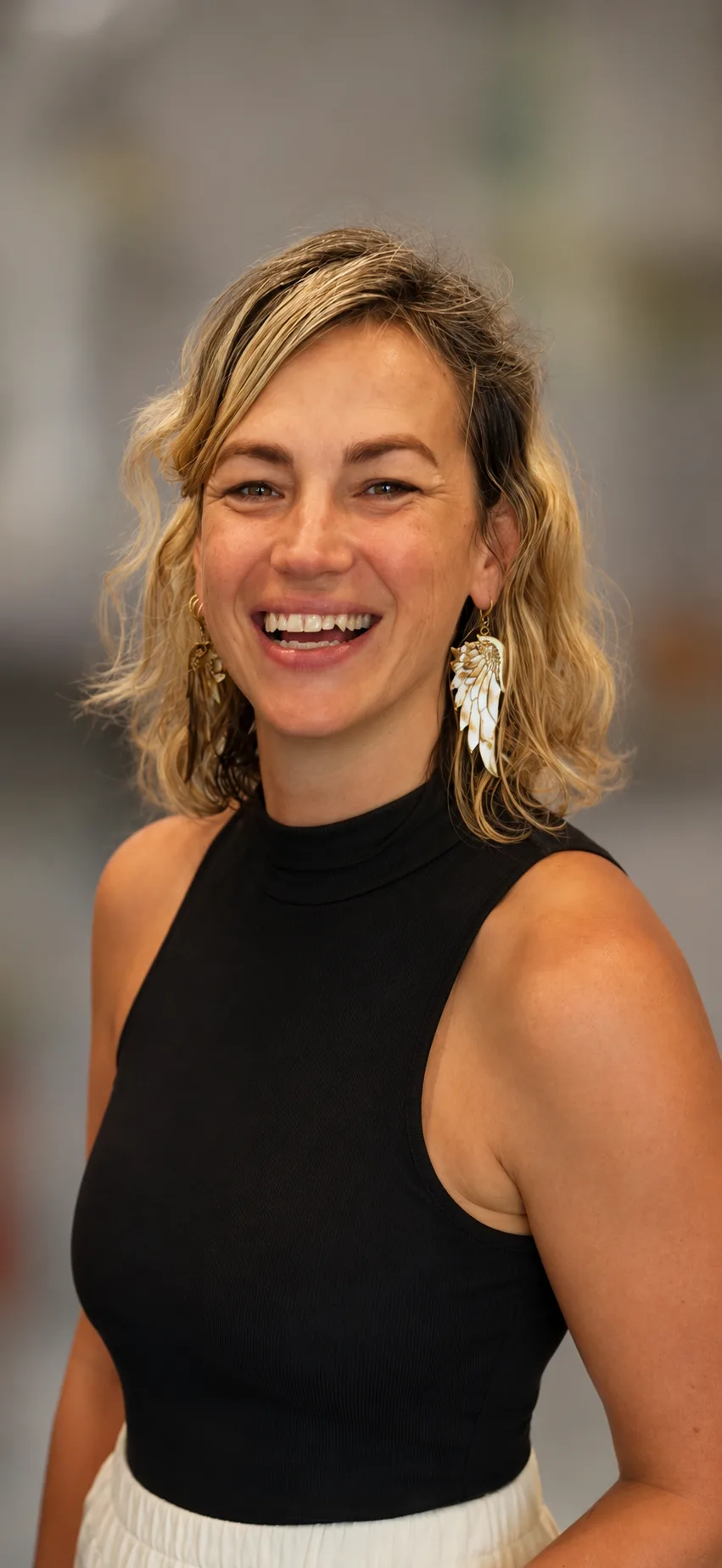
The chef who learned that profit, not revenue, was the real recipe for growth.
For Shannon Smuts, founder of Pure Good Food, entrepreneurship began with a question: how could good food create value beyond the plate?
Shortly after appearing on MasterChef South Africa Season 2, Shannon drew on a relationship she had built with Baphumelele Children’s Home in Khayelitsha. The home had started an organic food garden and was looking for ways to create a market for its produce. That conversation became the starting point for Pure Good Food.
What began as a small café in Cape Town has since developed into a food-service business operating across schools, workplaces, events and cafés. Yet its central purpose to make healthier food more accessible while creating opportunities for farmers, young people and communities, has remained consistent.
For entrepreneurs like Shannon, that distinction is important. Growth can bring new customers and opportunities, but it can also expose weaknesses in a business’ systems, cash flow and operational capacity.
“Like many entrepreneurs, I started with passion, determination and very little structure,” she says. “In the early days, I was the chef, salesperson, marketer, operations manager, bookkeeper and sometimes even the delivery driver.”
One of her earliest lessons was understanding the difference between turnover and profitability. A business can be busy and growing, she explains, without necessarily being financially healthy or ready to take on more complexity.
From gut feel to systems
As Pure Good Food expanded to multiple sites, managing stock, staffing, purchasing and reporting manually became increasingly difficult. Shannon reached a turning point when she realised that she could not continue to scale a business that existed largely in her head.
The answer was not one single technology investment, but a more deliberate approach to building systems. Pure Good Food began using online accounting software Xero; as well as point-of-sale technology, inventory tools, digital ordering platforms, staff communication tools; and connecting customer-facing apps.
Shannon’s story reflects a wider trend among South African small businesses. Xero’s 2026 State of South African Small Business research found that 80% of small businesses reported revenue growth in the past year, while 75% reported increased profits. But the focus is not simply expansion at all costs: 84% say they are prioritising stability and steady growth over aggressive growth.
“For the first time, we could see what was really happening inside the business and make decisions based on data rather than gut feel,” Smuts says. “Those systems improved efficiency, visibility, and ultimately gave us the confidence to grow.”
Keeping a closer eye on the numbers
In a market where cash flow remains a persistent concern, that kind of visibility matters. Xero’s research found that 62% of South African small businesses experienced cash-flow issues over the past year. In response, business owners are paying closer attention to the fundamentals: 66% monitor cash flow daily or weekly, while 52% review profitability at the same frequency.
For Shannon, working with an accountant was another important shift in becoming a more strategic business owner. “In the beginning, I measured success by revenue,” she says. “Today, I understand that cash flow, margins, forecasting and sustainability are far more important indicators of a healthy business.”
Xero’s research reinforces the value small businesses place on this support. More than three-quarters (77%) of respondents agree their accountant or bookkeeper is their most trusted adviser, saying they have helped their business grow (73%) and have been crucial in helping their business survive (78%).
“Finance isn’t something to look at once a year. It is a tool that should guide decision-making every day. Having access to accurate financial information allows us to identify opportunities, manage risk and make decisions with confidence,” adds Smuts.
Using technology while keeping the personal touch
Digital adoption -a top or significant priority for 85% of South African small businesses, according to Xero’s research – has been central to that process. For Pure Good Food, technology has helped simplify repetitive tasks while allowing the team to focus more closely on people, service and relationships.
Shannon admits she initially worried that technology could make the business feel less personal. Instead, she found that the right tools could strengthen the human side of hospitality by reducing manual administration and helping staff work with greater clarity.
The business is also using artificial intelligence across content creation, proposal writing, staff training, policy development, strategic planning and data analysis. This is in line with what many other small businesses are doing, with more than half (52%) using AI tools daily or weekly, according to Xero’s research.
For Shannon, AI is a productivity tool, not a replacement for people. “It doesn’t replace creativity, leadership or human connection, but it allows us to work smarter and move faster,” she says.
The food-service sector brings its own complexity: perishable stock, suppliers, health regulations, changing customer preferences and the need to deliver a consistently positive experience. The task has been to use digital tools to support the customer and employee experience, rather than substitute it.
Looking ahead, she sees opportunities for technology to enable smarter procurement, more personalised customer experiences, reduced food waste and better insights into ordering patterns and demand.
Advice for other founders
Her advice to other entrepreneurs feeling overwhelmed by digitalisation is straightforward: start with the problem closest at hand.
“You don’t need to overhaul your entire business overnight,” she says. “Choose one area that is causing frustration – whether it’s stock management, invoicing, reporting or communication – and solve that first.”
“The biggest lesson I’ve learnt is that systems create freedom. Early on, I thought systems would limit flexibility, but the opposite is true. Good systems reduce chaos, improve consistency and allow your business to grow without everything depending on you.”
Shannon’s journey offers a practical reminder that resilient businesses are not built on ambition alone. They are built through purpose, sound financial understanding, trusted advice and the willingness to adapt as customer needs and business realities change.

