



Drinking occasions are changing as consumers become more selective about when, what and how they drink. For South African brandy, that could mean moving beyond the occasions that have traditionally defined the category.
There was a time when what you drank came with a fairly established set of rules. Certain drinks belonged before dinner, others came afterwards, while some were ordered at the bar or opened for special occasions. Brandy in South Africa developed rituals of its own, but those lines are becoming less rigid.
Across major drinks markets, legal-drinking-age consumers are increasingly making choices around the occasion rather than simply following established category habits. They are drinking more selectively, experimenting with different serves and expecting greater quality when they do choose to spend on alcohol.
Global beverage alcohol volumes declined by 2% in 2025, according to IWSR, marking the third consecutive year of decline. Yet the same research suggests consumers are not simply walking away from alcohol. They are becoming more intentional about the frequency and intensity with which they drink.
For established spirits categories, that distinction matters because the question is no longer only what people drink, but when, why and how they want to drink it.
Drinking less does not necessarily mean caring less
Moderation has become one of the most significant shifts in global drinking behaviour.
Research from IWSR found that 48% of drinkers across 15 major markets had actively chosen to drink less during the previous six months. Other research from the organisation points to consumers increasingly limiting themselves to a single drinks category on an occasion rather than moving between several.
For drinks producers, that creates an interesting contradiction. Consumers may be drinking less frequently or consuming less on an occasion, but the drink they do choose can become more considered as a result.
Premiumisation is changing too. Rather than automatically trading up because something is expensive or carries status, consumers are becoming more selective about where premium purchases feel worthwhile. IWSR describes a shift towards choices driven by occasion, personal values and perceived value.
For a category such as brandy, this potentially changes the conversation. Instead of needing to be the drink for every occasion, there is value in being right for a particular one.
The cocktail is doing some of the introducing
Cocktails are one of the places where established spirits are finding new audiences and occasions.
NIQ research published in 2025 found that 40% of cocktail drinkers surveyed were drinking more cocktails than they had a year earlier, while two in five exclusively chose premium serves. Younger adult consumers were particularly focused on quality.
The appeal is not difficult to understand. A cocktail allows someone to encounter a spirit without already having a relationship with the category. For brandy, that matters.
For generations of South Africans, brandy and cola has been one of the category’s most recognisable serves. It remains an important part of brandy’s place in local drinking culture, but it does not have to be the only entry point.
A younger brandy can work in a longer serve. Brandy can form the base of a cocktail. An aged potstill can be served over ice, enjoyed neat or introduced alongside food.
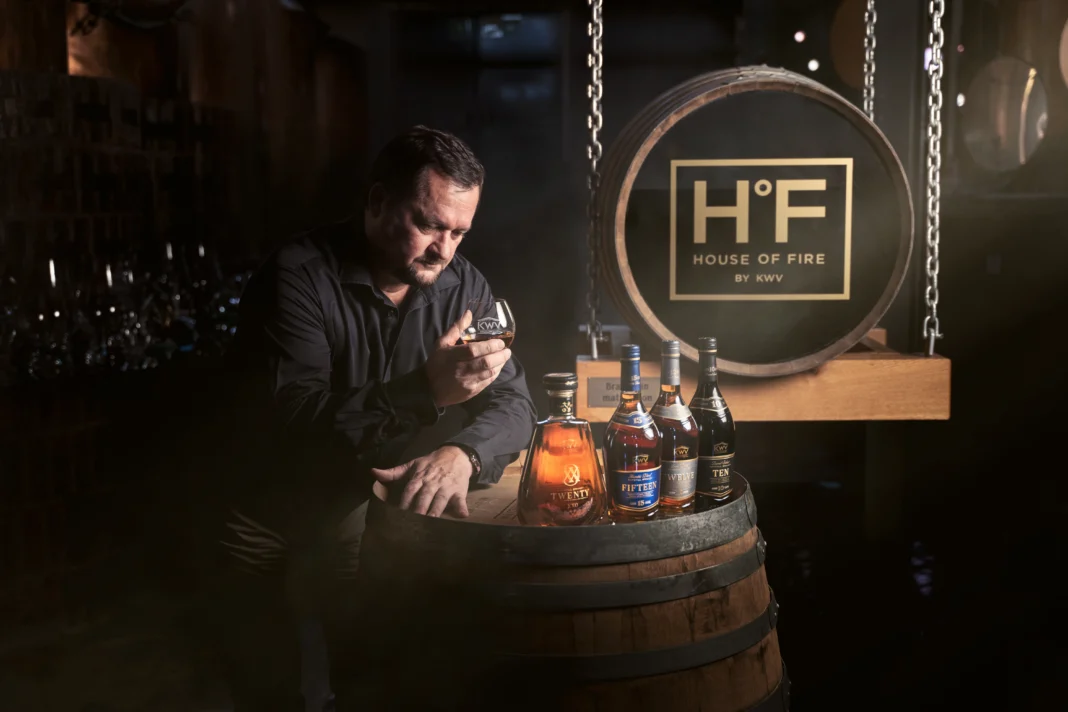
For KWV Brandy Master Pieter de Bod, bartenders and hospitality professionals have an important role to play in opening up those possibilities.
A bartender does not need to give a customer a lesson in distillation or maturation. The right serve can do some of that work for them.
The occasion itself is changing
It is not only what people order that is shifting. When they drink is changing too.
NIQ research into global on-premise behaviour has identified movement away from traditional evening and late-night occasions and new opportunities around periods including mid-afternoon and brunch.
At the same time, consumers have more choice than ever between full-strength alcohol, lower-alcohol serves and alcohol-free alternatives.
The result is not the disappearance of drinking culture so much as a fragmentation of it.
One person’s occasion may be a cocktail before dinner. Another’s might be one carefully chosen drink with a meal. Someone else may choose not to drink at all that evening and order something on another occasion.
For drinks brands accustomed to relatively predictable rituals, that requires a broader understanding of where they belong.
Brandy doesn’t need to lose its past to find new occasions
That question is particularly relevant for South African brandy.
The category already owns occasions that have been built over generations. There is little value in pretending the braai, rugby and brandy and cola are no longer part of its identity. The opportunity is to add to those occasions rather than replace them.
De Bod believes experimentation with serves, cocktails and food can help consumers understand that brandy is more versatile than they may assume. That does not require changing the liquid itself or abandoning the production traditions behind it. It means creating different ways for consumers to discover it.
A consumer who has never considered ordering a neat brandy may encounter it first in a cocktail. Someone familiar with brandy and cola may discover an aged expression over ice. A restaurant pairing can place brandy alongside food where the consumer might previously have chosen wine or another spirit.
The changing drinks landscape suggests there is unlikely to be one serve, one occasion or one definition of what makes a spirit relevant. Consumers increasingly have more choice about what they drink and when they drink it. For South African brandy, the opportunity is not to tell them they have been drinking it incorrectly, but to give them more reasons and more ways to choose it.

