



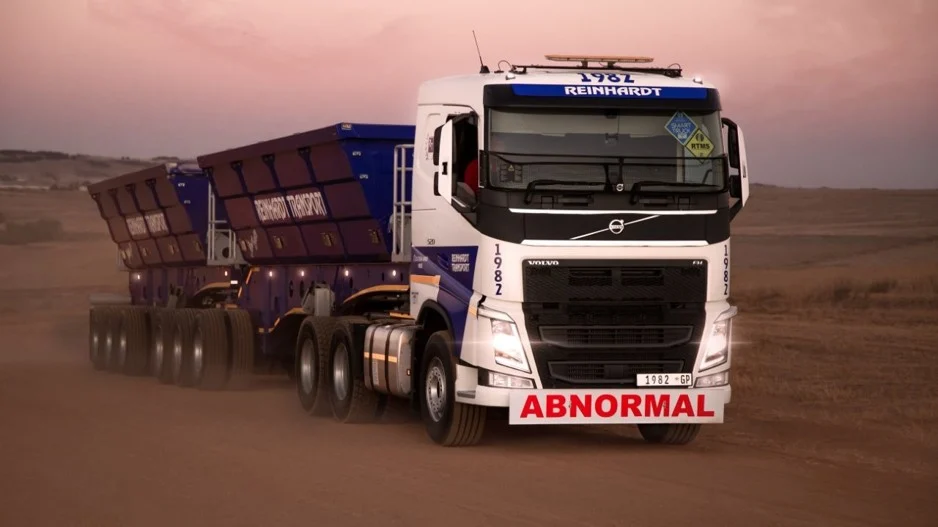
The launch of the National Truck Stop Framework has been hailed by the freight logistics sector for prioritising driver wellbeing, which directly impacts the safety of road travel. Reinhardt Transport Group (RTG), one of Southern Africa’s largest and most established bulk logistics operators, is among those lauding the announcement – while emphasising that logistics companies also have a responsibility to ensure drivers are equipped to manage the demands of the road.
“The launch of this framework is important because it recognises that driver safety and wellbeing are not separate from logistics performance,” notes Duhan du Plessis, Group Marketing Manager at Reinhardt Transport Group.
“The conditions in which drivers operate are an important part of road safety, but they are only one part of the equation. Logistics companies have a responsibility to invest in their drivers through professional training and ongoing skills development. A safer trucking industry requires both the right infrastructure and the right skills.”
Launch of the truckstop framework
The National Truck Stop Framework was officially launched by Transport Minister Barbara Creecy at the Sasol N17 Truck Stop in Mpumalanga last month, providing a national roadmap for the planning, classification, investment and standardisation of truck stops across South Africa.
During her keynote address, Creecy said: “For many years, South Africa has had truck stops and rest facilities of varying standards operating along our freight corridors. However, there has not been a sufficiently coordinated national approach to guide how these facilities should be planned, developed, managed and assessed.”
The framework addresses challenges identified through research, stakeholder engagement and site visits which have been addressed through:
Planning and development: Aligning truck stop infrastructure with freight flows, corridor requirements and the needs of professional drivers.
Classification and standards: Providing a consistent basis for assessing truck stops according to the security and amenities they offer.
Safer parking: Reducing the need for heavy vehicles to stop in unsafe roadside locations because suitable facilities are unavailable.
Driver wellbeing: Supporting access to rest, food, ablution facilities, showers, health screening, fatigue awareness and other wellness interventions.
Security and lighting: Improving the conditions in which drivers and their vehicles park and rest.
Women-friendly facilities: Recognising the need for appropriate ablution, shower, lighting and security infrastructure to support greater participation by women.
Investment: Creating greater certainty for existing operators and potential investors looking to develop or upgrade truck stops.
Future-ready infrastructure: Considering digital access management, intelligent transport systems and, as the market develops, infrastructure for alternative-energy freight vehicles.
Prioritising safety through professional driver training
For Reinhardt Transport Group, this broader approach to driver welfare is vital, but must be accompanied by an equally strong focus on professional driver development. Through its Commercial Professional Driver (CPD) Academy, the organisation helps experienced drivers adapt to evolving compliance requirements while ensuring new entrants have the readiness required for professional driving.
“The driver is ultimately an essential part of every safety system we put in place,” says du Plessis. “Training cannot be viewed as something that happens once when a driver enters the industry. Skills need to be developed and reinforced throughout a driver’s career.”
CPD Academy’s approach combines practical driver development with exposure to industry technologies and operational practices, while supporting pathways into employment. This helps drivers develop the skills and confidence needed to operate safely on national and cross-border routes.
This approach has seen Reinhardt Transport Group grow from 1982 to operate more than 1,000 specialised vehicles and transport more than 18 million tonnes of commodities annually across Southern Africa. Its operations include road transport, warehousing, loading, container logistics and cross-border movements.
A centralised 24/7 control environment and real-time fleet visibility support operational oversight, while vehicle maintenance, loading practices, route planning, compliance and driver management all contribute to safe freight movement.
“A safe freight operation has to consider the entire journey, from loading and vehicle checks through to route planning, driver management, delivery and the driver’s ability to stop and rest safely along the way,” says du Plessis. “Safe stopping infrastructure allows drivers to rest properly. Professional training gives them the skills to make responsible decisions on the road. These elements need to work together.”
FAQs about Reinhardt Transport Group
1. What does RTG do?
Reinhardt Transport Group is a Southern African bulk logistics group providing transport and related logistics services. Its operations include road freight, warehousing, loading, container logistics and cross-border movements, supporting the movement of bulk commodities across regional supply chains.
2. How does RTG approach road freight safety?
RTG incorporates safety into its wider operational systems, including driver management, vehicle maintenance, loading practices, compliance, route planning and real-time fleet visibility. The group operates a centralised 24/7 control environment and has relevant safety and quality accreditations across its divisions.
3. What makes RTG a suitable logistics partner for bulk freight?
RTG combines a large specialised fleet with experienced teams, integrated logistics capabilities, real-time fleet visibility and a strong focus on safety, compliance and operational reliability. Its network of divisions allows it to support different bulk freight requirements across Southern Africa, including long-haul, cross-border and port-related movements.

