



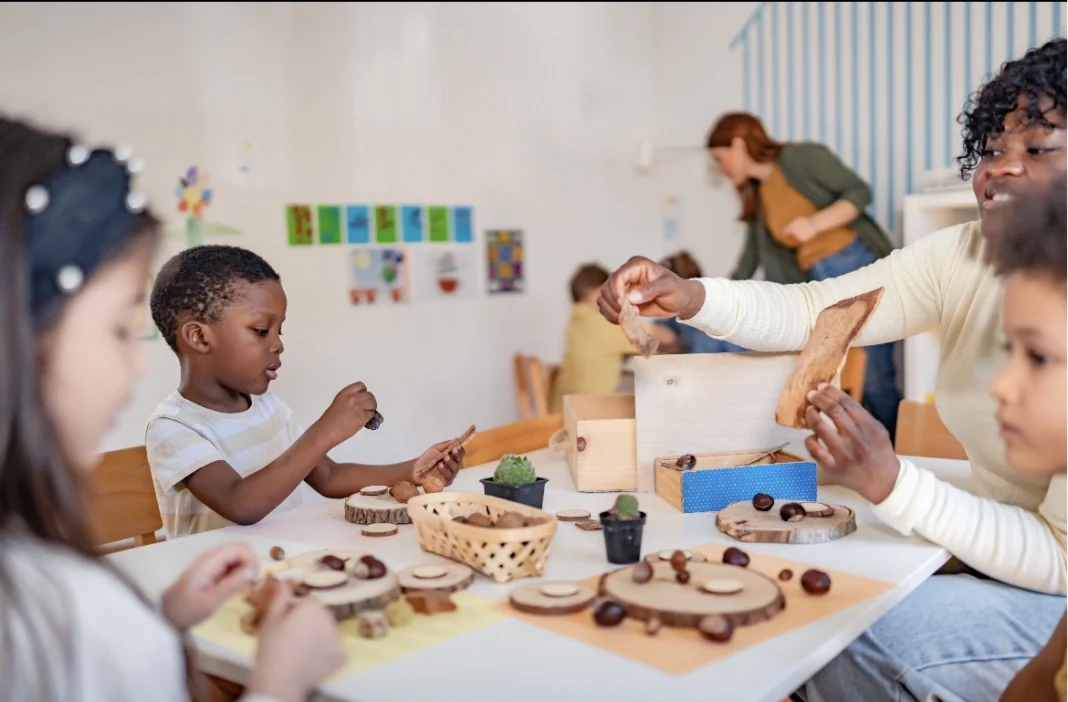
Holistic learning can sound like a broad educational idea, but in the early years it is quite practical. It starts with recognising that a young child does not develop in separate compartments. How they feel, move, communicate, relate to other people and make sense of new ideas are closely connected.
This means learning is not limited to a planned activity or a particular part of the day. Play, conversation, movement, relationships and ordinary experiences can all become part of how a child learns about themselves and the world around them.
“Children do not separate their development into neat categories,” says Ursula Assis, Managing Director of Dibber International Preschools South Africa. “A child building with blocks may be solving a problem, practising coordination, negotiating with another child and dealing with disappointment when the structure falls. For the child, it is one experience. There is a great deal happening inside it.”
Seen this way, learning looks different. A puddle outside can prompt questions about water. Setting the table brings counting into the day naturally. Two children deciding who gets a particular toy learn about communication, compromise, and their own emotions.
None of these instances needs to become a formal lesson to have value.
The adult’s role is still important. Educators plan activities, introduce ideas and understand developmental needs. But they also observe. They notice what has captured a child’s interest, where they may be struggling and when an unexpected moment provides an opportunity to explore something further.
Holistic learning also considers the emotional side of childhood.
A child may know how to complete an activity but hesitate because they are worried about getting it wrong. Another may need to move before they can settle into something that requires concentration. A child who feels secure enough to experiment may also be more willing to try again when the first attempt does not work.
“Children need the experience of discovering, ‘I can do this’, but they also need to know that it is safe when they cannot do it yet,” Assis says. “That gives them room to stretch themselves without feeling that learning is a performance.”
This does not push early literacy, numeracy, language or problem-solving aside. It places those skills within the child’s development.
For example, counting can happen while dividing fruit between friends. Language develops through stories, questions and conversations. Problem-solving appears when a child has to work out why a tower keeps collapsing or how to get a toy car down a homemade ramp.
Children will also approach these experiences differently. One may watch for a while before joining an activity. Another learns through touching, building and moving. Some children ask question after question. Others quietly test an idea until they find an answer for themselves.
A holistic approach allows for those differences rather than expecting every child to learn in precisely the same way or at the same pace.
This is also why play is important. For a young child, play can involve language, movement, imagination, negotiation and reasoning within a single experience. The learning may not always be instantly apparent to an adult, but that doesn’t make it any less meaningful.
At Dibber, this whole-child view shapes how educators approach early learning, with play, relationships, exploration, and adult guidance forming part of the everyday preschool environment.
Parents can use the same lens at home.
Learning might be obvious when a child counts five stones or recognises a letter. It may be less obvious when they persist with a puzzle, find the confidence to join a group, comfort another child, or work out a different way to solve a problem.
Look a little closer, though, and you’ll see a child learning to think, relate to others, and gradually understand their place in the world.
That is what seeing the whole child makes possible.
About Dibber International Preschools:
Dibber International Preschools is a global leader in early childhood education, with a commitment to providing high-quality preschool experiences that foster children’s holistic development – with over six hundred high-quality preschools across nine countries and with a focus on the Dibber Heart Culture and customised learning approaches, Dibber aims to nurture the potential of every child, ensuring they receive the best start in their educational journey.

