



World Food Day – 16 October 2026 – One in five South African households are uncertain[i] where their next meal is coming from, with almost 3 million children regularly going to bed hungry and 1 in 3 deaths of children under the age of 5 linked to severe, acute malnutrition.
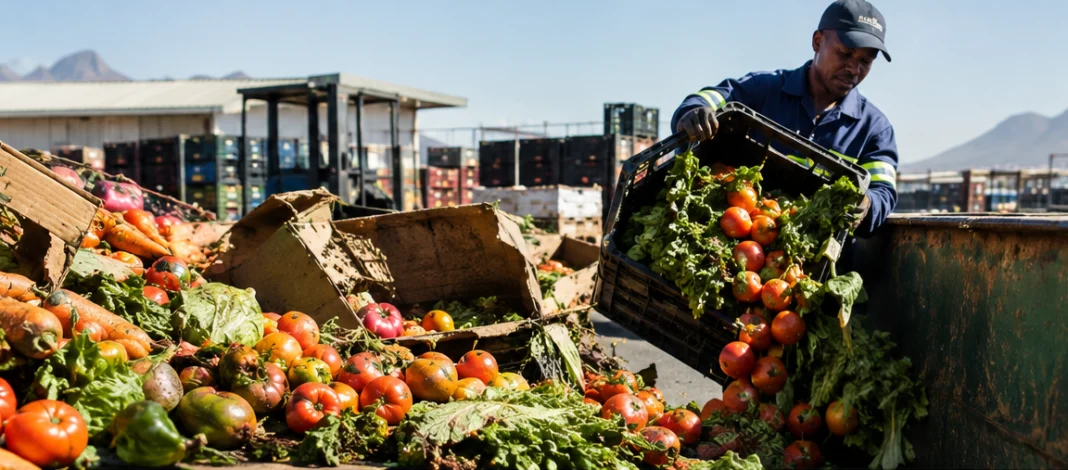
At the same time the country has a positive food balance, producing enough food to feed the entire population, but 10.3 million tonnes of edible food, 34% of local production, goes to waste every year – costing the economy R61.5 billion, or 2.1% of gross domestic product (GDP).
On World Food Day (16 October 2026), Prof Jako Volschenk, Associate Professor of Strategy and Sustainability at Stellenbosch Business School, said that addressing the paradox of hunger and food waste needed to be receiving the same type of integrated, high-level interventions as the country’s crises around electricity, infrastructure and crime.
“Addressing food waste must not only reduce the size of the losses of edible food but also ensure that nutritious food that may be surplus in one area moves to the areas where people need it the most. It should be illegal to send food waste to landfill or dispose of edible unsold food products that can be donated,” he said.
More than a quarter of South African children under 5 experience stunted growth, caused by chronic undernourishment, which affects both physical and intellectual development, causing developmental delays that affect school performance, in turn limiting educational attainment and future employment prospects.
Prof Volschenk said that malnutrition and stunting in childhood have an economic impact in terms of perpetuating poverty, lost productivity, lowering individual incomes and increasing healthcare costs. It is estimated that eliminating child malnutrition and its economic impacts could raise SA’s GDP per capita by approximately 9%.
“Reducing food waste is an essential lever for addressing food insecurity and malnutrition. High levels of food waste are not only a concern for the health of the nation, but also have economic and environmental impacts,” he said.
Food waste represents a loss of the water and energy resources used in its production, while food waste sent to landfill is estimated to generate 7.6% of South Africa’s total greenhouse gas emissions. Globally, the 8-10% of greenhouse gas emissions due to food loss and waste amount to almost five times the emissions of the aviation sector. While South Africa has enough food to feed the nation, he said global issues such as attacks on Black Sea grain infrastructure and the shocks to energy and fertiliser costs due to the Iran war were impacting on the local agriculture sector. Additionally, the dry, low-rainfall conditions of the current El Niño weather cycle will add to the pressure on food production in water-constrained regions through the 2027/28 growing seasons.
“Issues affecting global production and trade are inter-related with climate, energy, emissions, water and food production, and all must be factored into solutions to food security and minimising food waste. It is no longer only about our ability to produce enough food, but about how and where agricultural production takes place, producing the right kinds of crops to support nutrition and a sustainable food system that serves all South Africa’s people into the future,” he said.
Most losses and waste (49%) occur during food processing and packaging, while consumption-stage waste accounts for 18%. “What is needed is an integrated strategy, cutting across government departments responsible for agriculture, the environment, health and social welfare; and extending from ‘farm to fork’ across the value chain of food production, processing, supply and consumption. At the same time as better coordinating interventions to improve nutrition and food security, we need to be strengthening both the ‘carrot and stick’ approaches to reducing food waste – better enforcement or expansion of regulations around food waste disposal and producer responsibility, as well as incentives to direct surplus food to food banks or non-profit food distributors,” Prof Volschenk said.
He added that a further challenge was the high cost of healthy foods, with nutrient-dense fruit, nuts, vegetables and animal-source foods making up nearly 70 percent of the cost of a healthy diet.
“Providing more calories is masking a failure on nutrition,” he said. Key barriers to accessing a healthy diet, along with food waste, include weak cold-chain systems, unreliable energy, inefficient storage and transport networks, which are key drivers of the high costs. Since food waste occurs at all stages of the food supply chain, from agricultural production, processing and packaging to storage and distribution, through to retailers and households, Prof Volschenk said reducing food waste needed all stakeholders in the chain to take action.
“There needs to be coordinated efforts by government, the private sector and civil society, particularly in the logistics of storage, transport and distribution of surplus food to those who need it rather than allowing it to be thrown away.
“This is particularly important if South Africa is to achieve the target under the UN’s Sustainable Development Goal on sustainable production and consumption, to halve per capita food waste at the retail and consumer level and reduce supply chain losses by 2030,” he said.
Prof Volschenk highlighted several practical ways through which farmers, organisations and households can reduce food waste at the key points along the supply chain:
- At farm level, producers should ensure production meets market demands and quality specifications, while also seeking outlets for lower quality produce.
- Produce that doesn’t meet specifications, such as smaller sized, oddly shaped or wind damaged fruit and vegetables could create opportunities for small agro-processing businesses, such as soup and juice producers.
At the same time, consumers should be encouraged to look past small imperfections, and retailers can encourage this by offering such products at more affordable prices. Prof Volschenk pointed to the example of the French supermarket chain Intermarché, whose campaign on “inglorious fruits and vegetables” raised awareness about food waste while boosting store foot traffic and overall sales, including sales of “imperfect” produce sold at a discount.
- In food processing and packaging, producers should optimise processes to improve food safety and minimise losses, and extend the lifetime of food through healthy preservation techniques.
- Distributors and retailers should support local producers to minimise transport distances which impact on freshness as well as the carbon footprint.
- Retailers should be encouraged to offer customer discounts on products close to their sell-by date, and to donate surplus to food banks, children’s homes, homeless shelters, or non-profit organisations.
- At household level, he said consumers could make an impact through better planning of shopping and meals, favouring local and seasonal produce, and rekindling practices such as preserving food through making preserves, soups, stocks or freezing excess rather than throwing it away.
“Poverty, inequality, hunger, food waste, climate change and water scarcity feed into one another, and none of them can be solved in isolation,” Prof Volschenk said. “Every tonne of edible food that ends up in a landfill carries with it the costs of the water, energy and fertiliser used to produce it, and adds to the country’s emissions. That waste exists alongside households that go to bed hungry, and alongside many more that fill their stomachs with cheap, energy-dense food that leaves their bodies short of the protein, vitamins and minerals they need. A full plate is only the starting point. South Africa’s food system should be judged by whether it nourishes every child and adult in the country, and whether it can keep doing so in a hotter, drier climate.”
Note:
World Food Day, led by the Food and Agriculture Organization of the United Nations (FAO), is observed annually on 16 October in more than 150 countries, with the aim of promoting global awareness, collective action and sustainable solutions to combat hunger, malnutrition, and food waste.
REFERENCES
[i] FAOSTAT. UN Food and Agricultural Organization (FAO) – South Africa country profile. 2023-2025 statistics: 20.9% of
SA population lives with moderate to severe food insecurity. https://www.fao.org/faostat/en/#country/202

