



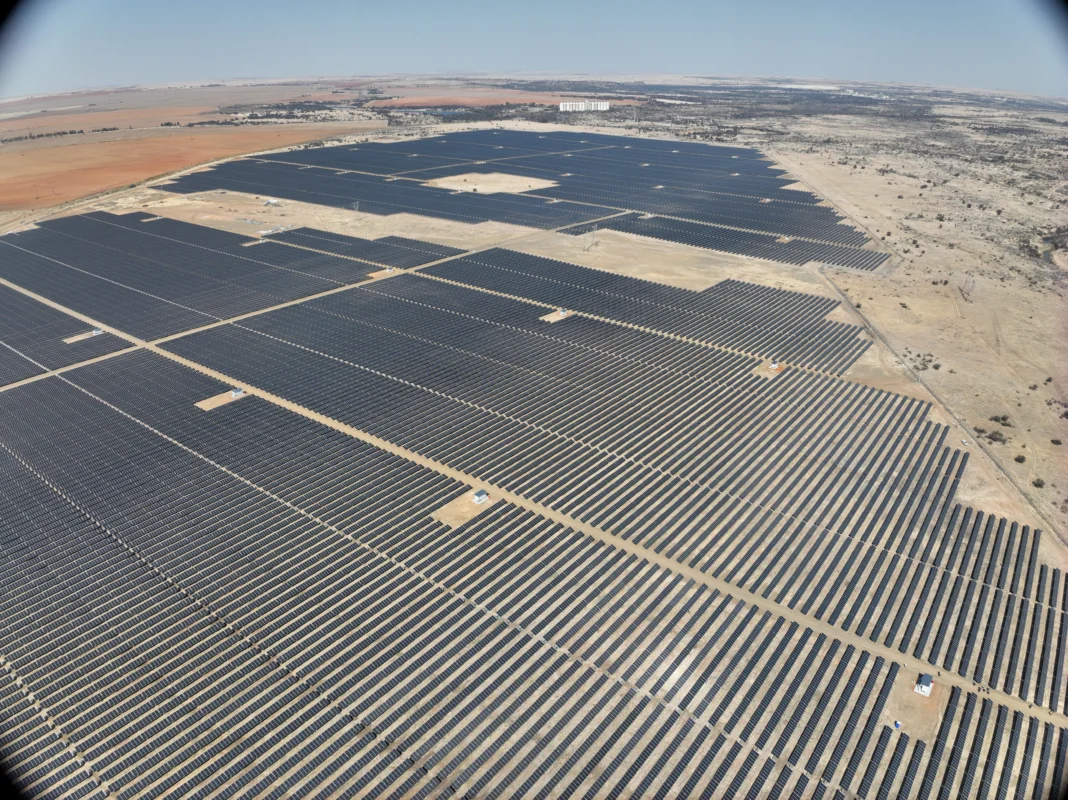
Corporates are increasingly turning to hybrid renewable energy solutions that combine solar, wind and storage, and the numbers are now catching up with what we are seeing on the ground. New research from BloombergNEF1 shows that corporate power purchase agreements (PPAs) are set to drive more utility-scale renewable additions in South Africa than government procurement for the first time this year, with corporate buyers expected to support 73% of the 2.3 GW of new solar and wind capacity coming onto the grid.
Using a more strategic and staged process that starts with understanding energy usage and ends with a well-planned renewable energy investment, companies are prioritising resilience with their investment. Scale, load profile, location and grid connection determine how companies combine on-site generation, wheeled renewable energy and battery storage, with each of these approaches complementing one another but structured in a way that fits the needs of the business.
No single approach stands on its own; battery energy storage (BESS), variable renewable energy and wheeling each form part of a portfolio that aligns with a specific business journey. And that journey usually moves across three phases. The first is generation-on-site with rooftop or ground-mounted solar and BESS designed to carry the business through energy outages and to ensure a secure supply.
Phase two is wheeling, where a business can contract the cheapest electrons, usually solar, and then add in wind for its generation profile across more hours of the day.
Phase three is BESS at scale that is either co-located with a wheeled solar project or as a larger battery installed on site. This phased approach ensures security of supply within a portfolio capable of adapting to existing needs and to further growth and expansion. It’s worth flagging that BNEF now points to transmission capacity as an emerging constraint on how quickly new renewable projects can be built out in South Africa, which makes the location and grid-connection questions companies face at the outset even more important to settle early rather than later in the process.
However, before selecting any solution, companies need clarity into their energy usage. Each phase outlined above requires that the business have granular visibility into its energy consumption demands across key periods and peaks. The gold standard is to understand factors like: what is our business’s energy consumption per hour per site? What power procurement strategy would best suit our demand profile? An audit of business consumption, how much it has changed over time, and periods where it holds steady or declines, allows you to accurately assess and forecast your electricity consumption. It also gives you the opportunity to assess your billing against a more accurate picture of your usage so you can pick up errors when they occur. It’s not uncommon for companies to discover that they are paying more than their usage due to errors on invoicing.
The second step is to make a choice between wheeling, virtual wheeling and behind-the-meter generation, and this comes down to what you want your energy strategy to achieve. If you want to prioritise security of supply, it means focusing on behind-the-meter generation and BESS, but if your need is more focused on cheap renewable energy at scale, then your best choice is energy wheeling. Pricing is moving in wheeling’s favour too: BNEF’s latest corporate PPA price survey has average solar PPA prices falling to around R848/MWh this year, while onshore wind is expected to edge up slightly to about R1 104/MWh, reflecting wind’s stronger but costlier generation profile. Choosing between traditional and virtual wheeling, though, is set by the connection rather than the buyer. High- and medium-voltage Eskom sites can access traditional wheeling, but sites on a low-voltage Eskom connection or municipal connection have access only to virtual wheeling.
Finally, it’s key to build the financial case as much as the sustainability one, because they both lead to different choices. Most companies, given the choice, opt for cost savings, and right now South Africa is at a point where lower-cost renewable energy and lower emissions are a package deal. Coal still supplied around 78% of the country’s electricity last year, down from 90% a decade ago, so this window where cost and emissions point in the same direction is likely to keep widening rather than closing. In time, as the market matures, companies will face a clearer choice between the two.
The financial case determines whether the business wants the assets on its books or not. On-site solar and storage can be built as a CAPEX cost or delivered through a power-purchase agreement where a provider owns the asset and charges a fee for the power provision at an OPEX cost. The savings on these investments differ depending on the models.
A behind-the-meter solution offsets the full variable energy charge, while a wheeling transaction saves against what Eskom credits, which is lower than the full tariff because the grid, substations and lines remain in use. So, when planning your energy transition, spend time understanding your consumption, then your reason for transitioning (costs, secure supply, sustainable operations), and then let these insights determine everything that follows.
The market now offers a wide range of contracts and pricing, so moving forward with a portfolio approach means engaging more than one provider for quotes and proposals, and placing more weight on a proven track record than on marketing claims when assessing what’s on offer. That’s especially worth bearing in mind now: BNEF’s survey work shows around 90% of the market expects to sell more power through corporate PPAs than through the state-run wholesale electricity market, which has been delayed and is only due to roll out in stages from 2027. Corporate buyers such as Sibanye-Stillwater, Rio Tinto, Tronox, Air Liquide and Sasol have between them already signed contracts covering roughly 5 GW of clean power since 2020, so businesses weighing up their options are stepping into a market that is already moving, not one they need to wait for. While the process takes time, each step brings your business closer to optimising your understanding of your energy usage and working with an independent power producer (IPP) or provider that can give you the right portfolio for your needs.
By Bronwyn Timm, Business Development Manager, SOLA Group

