



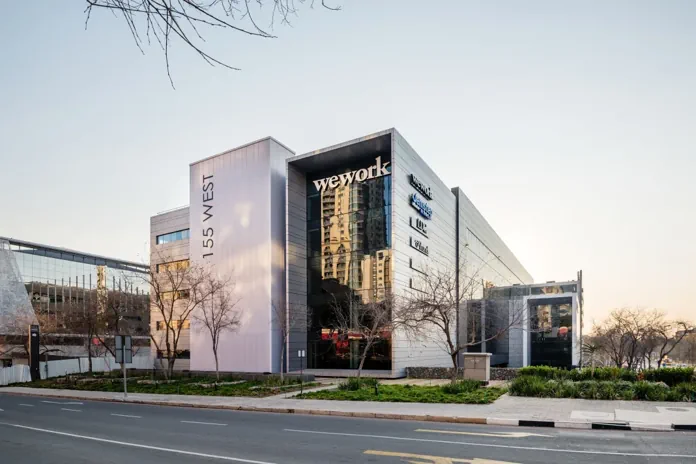
Johannesburg, 8 July 2026: The workplace has undergone one of the most profound transformations in modern business history. What was once defined by fixed leases and traditional office culture is rapidly giving way to a more agile, human-centric model. One where flexibility, collaboration and community are viewed as strategic business advantages rather than employee perks.
Recent years have seen an accelerated migration from simple ‘coworking structures’ to workplaces that contribute to a 360-degree ecosystem, providing flexi workspaces that meet the necessities of culture, wellbeing and business performance.
According to CEO of WeWork South Africa, Stefano Migliore, this working evolution has moved from a niche solution for startups into an essential component of corporate real estate strategies across the world.
“This is not a coworking story anymore. It’s about the evolution of work itself,” says Migliore. “The early coworking narrative was often about answering a call for go-to affordable desk space, and nursing a startup culture from the bricks up. Today the questions are changing. Businesses are no longer asking how much space do we need and what will it cost? Now, it’s more about what does this space say about our culture; will the space help us attract and retain the people we want; will it enable our talent to do their best work?”
Hailing as TIME Magazine’s Top 100 Influential Companies (2026), WeWork is one of a just a few flexible workspace brands that is leading the way to reshaping the world of work as we know it.
By bringing an internationally recognised flexible workspace model, like WeWork, to South Africa in 2019, the company has helped elevate expectations around quality, location and the role of shared workspaces in the broader commercial property market.
“For WeWork South Africa, it has never been about growing office space, it has always been about growing human potential,” says Migliore.
The workspace revolution is flexible, and human
Flexible workspaces in Africa are rapidly becoming aware that for growth and self-development to happen, it is not what they are doing that moves the needle but who they work alongside.
“Our members, for example, share spaces with startups, corporates, creatives and entrepreneurs from entirely different sectors. That cross-pollination – like the unexpected conversation, the referral, the collaboration that nobody planned – is something a monoculture office simply cannot offer,” says Migliore.
The Middle East and African Market Report (2025) cites that 59% of businesses planning to expand office space over the next two years will choose flexible workspace rather than traditional leases.
While South Africa’s flexible workspaces currently represent only around 1% of the country’s commercial office stock, it leaves significant room for expansion as businesses prioritise responsiveness, employee experience and cost efficiency.
Migliore adds: “For South Africa’s entrepreneurs, growing SMEs and corporate innovators alike, flexible workspace has become an economic enabler. Companies like ours are lowering barriers to growth while giving businesses the agility to scale as market conditions evolve.”
Rewriting the rules: Why people outweigh property costs
Accordingly, the business case for flexible workspace is being reframed through the “3-30-300 rule” – a real estate benchmark often attributed to JLL: For every square foot of commercial space, companies typically spend around $3 on utilities, $30 on rent and $300 on payroll.
Previously, businesses traditionally focused on reducing utility and rental costs, now understanding the greatest value sits in improving employee productivity, retention and performance. The conversation shift has moved from the cost of a desk to the value of the people using it.
The future of work is being sculpted less by square metres and more by human connection.
From Real Estate to Belonging
While South Africa’s workplace landscape is undergoing this fundamental shift, small and large businesses are choosing to right-size their real estate portfolios in favour of more adaptable, humanised workplace solutions.
With more than 4,600 people currently working across WeWork South Africa’s three locations, the model is proving its relevance in a market reenergising itself through human-centred workplace experiences.
“I’m proud to say that some of us are rewriting the rules of the real estate playbook,” says Migliore. “We’re shaping up differently; making space for South Africa’s working cohort to feel like they now belong to a space, not to a lease – and that’s worth more than desks and bricks in my books,” says Migliore.
Sources:
https://www.researchandmarkets.com/report/africa-coworking-space-market
https://time.com/collection/time100-most-influential-companies/2026/wework/
About WeWork:
WeWork is the leading global flexible space provider, offering businesses of all sizes the solutions they need to thrive in a new world of work. In addition to its flagship South African locations in Sandton, Rosebank and Cape Town, WeWork provides members with a global footprint of 2000 locations across 37 countries, offering beautiful, functional spaces designed to foster productivity and community wherever work happens. Since entering the South African market, WeWork South Africa has played a defining role in reshaping the country’s flexible workspace landscape. The business has helped shift coworking from a niche offering typically found in smaller spaces, and lower-grade buildings, to a premium workplace solution located in some of the country’s most prestigious commercial developments.
Press Contact:
Mantis Communications
Kerry Simpson
Tel: 079 438 3252
Email: [email protected]

