



Why Community is the new Competitive Advantage for South African Women Entrepreneurs
Johannesburg, 11 August 2026: The image of the entrepreneur working alone from a kitchen table has long been romanticised for its ‘flexibility’. But for a growing number of South African women, flexibility isn’t being built in isolation any longer. It’s being built in community.
Whether launching a consultancy, building a creative agency, scaling a technology business or returning to work after maternity leave, women in business are increasingly looking for workplaces that adapt to the multiplicity of their core human needs: community, connection and collaboration. South Africa’s flexible work-spaces are quickly rising to the challenge.
As flexible work continues to reshape the modern economy, co-working spaces are evolving far beyond the hot desk. They are becoming launchpads for female founders, and career returners; providing intersections of human connection, without sacrificing ambition.
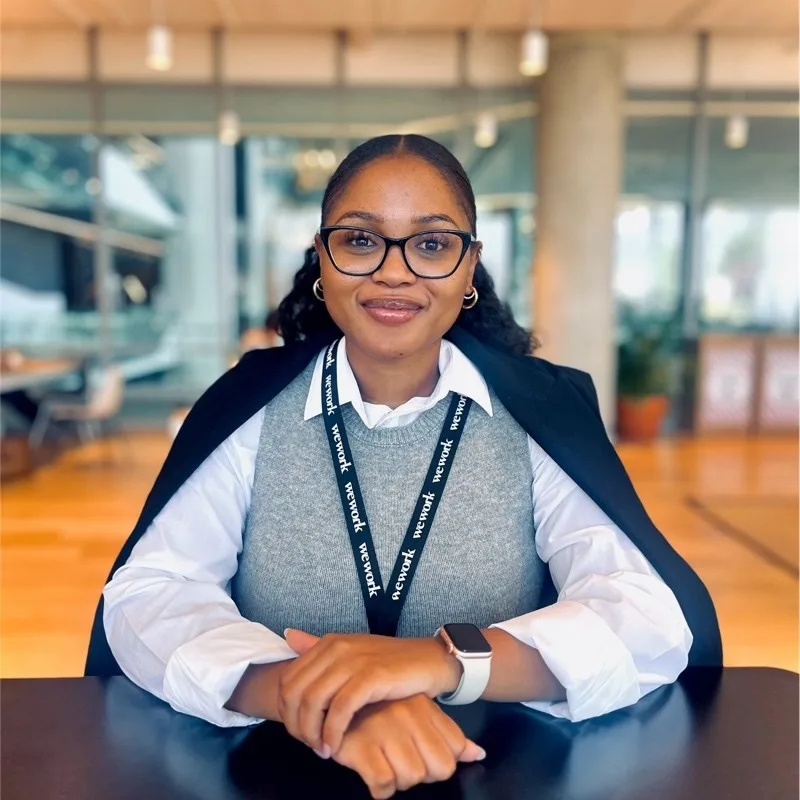
Communications Manager of the Trevor Noah Foundation and WeWork South Africa All Access Member, Olona Tywabi, says: “Inclusion starts with our willingness to meet people where they are. As women, specifically, we don’t want our ideas to live in isolation which is why we need proximity to other women that inspire us; we need a place to go where we can connect, actualise opportunity, reach mentors, initiate clients and specifically support each other,” says Tywabi.
Accordingly, while many women entrepreneurs continue to operate in small, highly competitive businesses with limited access to support and resources, they are significantly more likely to pursue and succeed in entrepreneurship when surrounded by visible female role models and supportive networks.
CEO of WeWork South Africa, Stefano Migliore, says: “While the gap narrows between men and women entering entrepreneurship in South Africa, it’s evident that women career climbers still face persistent barriers in the market – including access to funding, professional networks, resources and infrastructure – as well as the challenge of balancing business with caregiving responsibilities.”
A jarring reality when one considers, as reported by GEM Global Entrepreneurship Monitor {Women Entrepreneur Special Report 2023/2024}, that women entrepreneurs create far more than just businesses; they’re the early adopters of conscious and connected business, thereby contributing significantly to inclusivity, innovation, equality, poverty reduction and economic backbone.
“Women thrive in environments where collaboration is celebrated over competition. When women share space, they don’t just exchange business cards; they exchange confidence and lived experiences that give rise to connected opportunities,” says Tywabi.
This is a powerful reminder by Tywabi that the right workplace doesn’t start and end with flexible infrastructure; its success lies in creating space for communities where women achievers can connect, and rise.
As one of Africa’s largest and leading flexible workspace providers, WeWork South Africa has intentionally built an ecosystem where human connection sits alongside world-class infrastructure. It is a philosophy that recognises that businesses don’t grow because of buildings; they grow because of people.
“It’s never about real estate, it’s always about the access,” says Migliore. “Access to environments where ideas become conversations, collaborations and ultimately, businesses that matter. At WeWork, these moments happen every day.”
Tywabi adds: “At WeWork there is a strong sense of community, and a strong sense of not wanting to leave the next woman behind. You see it in the corridors, and at the front desk; you see the warmth that each woman exudes for one another; this is deeply rooted in the global feminine narrative of ‘rising together’.”
A reflection of this growing movement can be seen within WeWork South Africa itself, where women and women-led businesses now make up a large percentage of its community. WeWork has introduced thoughtful, human-centred amenities such as the New Mother’s Room, across its locations. The private, comfortable space allows working mothers to breastfeed, express milk or simply spend uninterrupted time nurturing their newborns during the working day.
“Our commitment to women in business has helped us shape up into more than a workspace provider. We believe that community, professionalism and flexibility should co-exist for anyone’s life plan – and today’s best workspaces should be designing for all three in mind,” says Migliore.
For Migliore and Tywabi – and future-forward minds alike – the next chapter of work isn’t just about more flexibility, it’s about initiating communities that build each other up, and make the workday matter.
“I’d like to think that Community is the competitive edge of the future, and that behind every thriving woman founder will be, at the very least, a tethered community that believed in her first,” says Migliore.
Image caption: Olona Tywabi, Communications Manager of the Trevor Noah Foundation and WeWork South Africa All Access Member
-ends-
Sources:
https://www2.gemconsortium.org/economy-profiles/south-africa
About WeWork:
WeWork is the leading global flexible space provider, offering businesses of all sizes the solutions they need to thrive in a new world of work. In addition to its flagship South African locations in Sandton, Rosebank and Cape Town, WeWork provides members with a global footprint of 2000 locations across 37 countries, offering beautiful, functional spaces designed to foster productivity and community wherever work happens. Since entering the South African market, WeWork South Africa has played a defining role in reshaping the country’s flexible workspace landscape. The business has helped shift coworking from a niche offering typically found in smaller spaces, and lower-grade buildings, to a premium workplace solution located in some of the country’s most prestigious commercial developments.
Press Contact:
Mantis Communications
Kerry Simpson
Tel: 079 438 3252
Email: [email protected]

