



- More than 5,000 delegates are gathering in the Kenyan coastal city of Mombasa for a major global conference on the future of the oceans.
- At the heart of the discussions is ocean governance and the global push to meet the 30×30 target — protecting 30% of the world’s land, freshwater and oceans by 2030.
- But meeting that goal will depend not only on governments and international pledges, but also on community-led organizations doing the difficult work of conserving fragile marine ecosystems.
- Across Africa and around the world, thousands of grassroots groups are carrying out this work, often far from the spotlight, helping shape ocean conservation and blue economies that support local livelihoods. Mongabay spoke with representatives of four such organizations working across the continent from the Western Indian Ocean to Africa’s Atlantic coast.
This week, thousands of delegates are gathered in Mombasa, Kenya, for the first Our Ocean Conference to be hosted on African soil. As expected, much of the conversation will focus on the global “30×30” target — protecting 30% of the world’s land, freshwater and oceans by 2030.
Yet, far from the conference halls, the big pledges and state commitments, many of the people doing the daily work of marine conservation are community organizations operating on modest budgets along Africa’s coastlines. They often do so far from the spotlight, but their contribution is vital for the global ambition to conserve ocean spaces. The Convention on Biological Diversity (CBD), under whose Kunming-Montreal Global Biodiversity Framework the 2030 targets were adopted, highlights that success hinges heavily on community involvement.
Across Kenya, Tanzania and Namibia, four such groups — Coastal and Marine Resource Development (COMRED), Action for Ocean, Mwambao Coastal Community Network and the Namibia Nature Foundation (NNF) — offer a window into what community-led marine conservation looks like in practice. Their work might be underfunded, uneven and sometimes slow, but are increasingly central to how marine protection is imagined on the continent.
Marine ecosystems in Africa support fisheries, tourism, transport, carbon storage and coastal protection while sustaining millions of livelihoods from the Western Indian Ocean to Africa’s Atlantic and Mediterranean coasts. In East Africa in particular, mangroves, coral reefs, seagrass meadows and nearshore fisheries underpin food systems and local economies even as they face pressure from overfishing, habitat degradation, climate change and pollution. That makes the 30×30 push not just a biodiversity goal, but a question of governance, equity and survival for coastal communities.
Co-managing 130,000 hectares of fisheries area in Kenya
Along Kenya’s coast, COMRED, a local organization, seeks to make conservation and community development go hand in hand. The Mombasa-based nonprofit works with government authorities and local resource users under a co-management framework that places communities at the center of marine stewardship. Through initiatives ranging from fisheries management and mangrove restoration to community savings and eco-credit programs, COMRED has been strengthening both coastal livelihoods and the health of marine ecosystems.
For Patrick Kimani, co-director of COMRED, the starting point is local capacity. His organization works with beach management units and community forest associations on the Kenyan coast, supporting fisheries co-management, mangrove restoration, data collection, and livelihood diversification.
Kimani told Mongabay in Mombasa that communities are now co-managing roughly 130,000 hectares (321,236 acres) of fisheries area, helping monitor gear use, licenses and catch data while also restoring degraded mangrove sites and supporting octopus closures. COMRED has also helped establish 35 eco-credit groups reaching close to 1,000 beneficiaries, with funds used for school fees, small businesses, fishing gear and agriculture.
Still, he cautioned against glamorizing the model as it is a work in progress. Illegal fishing, weak enforcement and political interference remain major obstacles, he said, while many conservation benefits take time to materialize.
“The future of governance of the marine space will really be hinged on how much rights and devolution of responsibilities we give to communities,” Kimani said. But those responsibilities, he added, must come with resources and not rely on volunteer work.
Monetizing conservation in Tanzania
In Tanzania, Jerry Mang’ena, co-founder and executive director of the NGO Action for Ocean, is testing what he calls a “3C” model: custodianship, compact and capital. The idea, Mang’ena said, is to place communities at the center of conservation, strengthen local governance through bylaws and agreed principles, and find ways for conservation to generate value rather than rely indefinitely on donor support.
Mang’ena told Mongabay that one example is the use of fisheries replenishment zones and temporary octopus closures. Under this approach, communities set aside productive reef areas for a defined period, patrol them and then briefly reopen them under agreed rules. Mang’ena said communities working with the organization earned about $100,000 from last year’s temporary octopus closures, with harvests of between five and 20 metric tons over a few days in some cases.
“The communities are seeing that it’s working,” Mang’ena told Mongabay in Mombasa. “They trust it and they are the champions of the next conservation effort.”
For him, the bigger question is sustainability. Much of the work, he said, is still financed by external philanthropy, even though communities are contributing labor, time and local knowledge that often goes uncounted. Action for Ocean is also exploring blue carbon and revolving finance schemes, including support for village savings groups and small livelihood investments tied to conservation.
“I wish to see livelihoods being better for people who are using these resources and also conservation that covers its own cost,” Mang’ena said.

Linking conservation and livelihoods
Also on Tanzania’s coast, the Mwambao Coastal Community Network works through local fisheries institutions known as beach management units.
Its CEO, Said Khalid, described a five-pillar approach that includes strengthening beach management units, supporting local marine management plans, restoring reefs and mangroves, promoting octopus closures, and improving livelihoods through savings groups, training and value addition in products such as octopus, anchovies, tuna and seaweed.
“What is working is making communities see that conservation matters. When that happens, they become stewards themselves,” Khalid said.
He said one persistent challenge is institutional fragility. Beach management units often struggle to secure bylaws that would allow them to collect revenue and finance their own activities, while frequent leadership turnover means training has to start over again. Donor dependence also remains a concern, even though he argued that wealthier countries still bear responsibility for financing conservation because of their outsized role in driving climate change.
Khalid’s longer-term hope is for community institutions that are strong enough to sustain themselves. “We are looking to have those community institutions which are strong, empowered and have tools like those bylaws,” he said, “so that they could collect the revenues to sustain themselves or to do the conservation by themselves without depending much on the donors.”

Questioning the funding model
While the world is counting on community-based organizations to help deliver the goal of protecting 30% of the world’s oceans by 2030, many of these groups still do not have the resources to carry out their work at scale. Instead, they often depend on donor funding from wealthier countries. Much of that funding has traditionally moved through intermediaries — large, established conservation organizations — and even when local groups receive support directly, it can come shaped by outside agendas. Namibia Nature Foundation (NNF) is one of the NGOs working within this broader system. On its website, it lists a wide range of donors and partners. Its executive director, Angus Middleton, said he believes the conservation sector needs to rethink, more fundamentally, how resources reach the people doing the work.
“Right now, we have an inverted pyramid,” Middleton told Mongabay, describing a system in which funding begins at the top and dwindles by the time it reaches the communities doing the work. He argued that local communities should be treated as direct beneficiaries of conservation finance, with local NGOs serving them and larger institutions supporting from above, rather than the reverse.
NNF works across both seascapes and landscapes. In its 2024 annual report, published on its website, the organization highlights its contributions to freshwater and inland fisheries, alongside its work in marine and coastal conservation.
For Middleton, one lesson from community-based conservation, marine and terrestrial alike, is that rights matter. Where rights are more clearly devolved and communities are supported to build effective governance structures, he said, local ownership grows. But he also warned against what he called “creeping conditionality,” where donors attach expectations that may be well-intentioned but poorly aligned with local realities.
The experiences of these four organizations suggest that community-led marine conservation in Africa is not a single model but a negotiated process. It involves closures, patrols, restoration and data gathering, but also savings groups, bylaws, market access and political navigation. Its successes are often partial and local, and its limits are real.
Yet, they are also not alone. Thousands of grassroots groups, community-based organizations and local NGOs across Africa are doing similar work with far less visibility, often filling gaps left by states and international conservation systems that rely on their work.
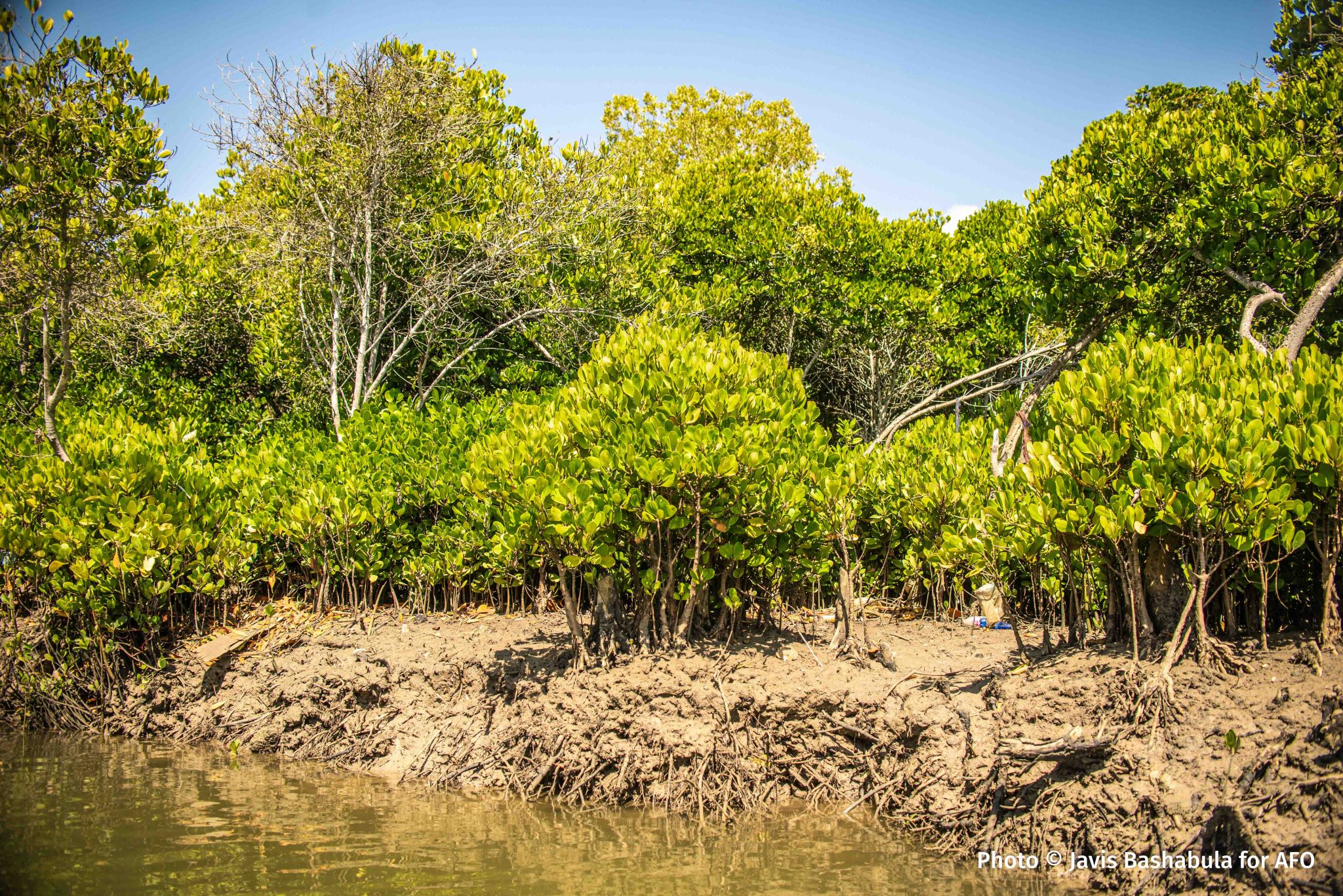
Banner image:A mangrove-rich coastal landscape in Tanzania. Image courtesy of Mwambao Coastal Community Network..
World Oceans Day: Marine protected areas surpass 10% mark in 2026
Tropics take the brunt as hotter oceans drive large-scale humid heat waves: Study
Feedback: Use this form to send a message to the author of this post. If you want to post a public comment, you can do that at the bottom of the page.
Credits

This story first appeared on Mongabay
This article is licensed under a Creative Commons Attribution-NoDerivatives 4.0 International License.
You may republish this article, so long as you credit the authors and Mongabay, and do not change the text. Please include a link back to the original article.

