



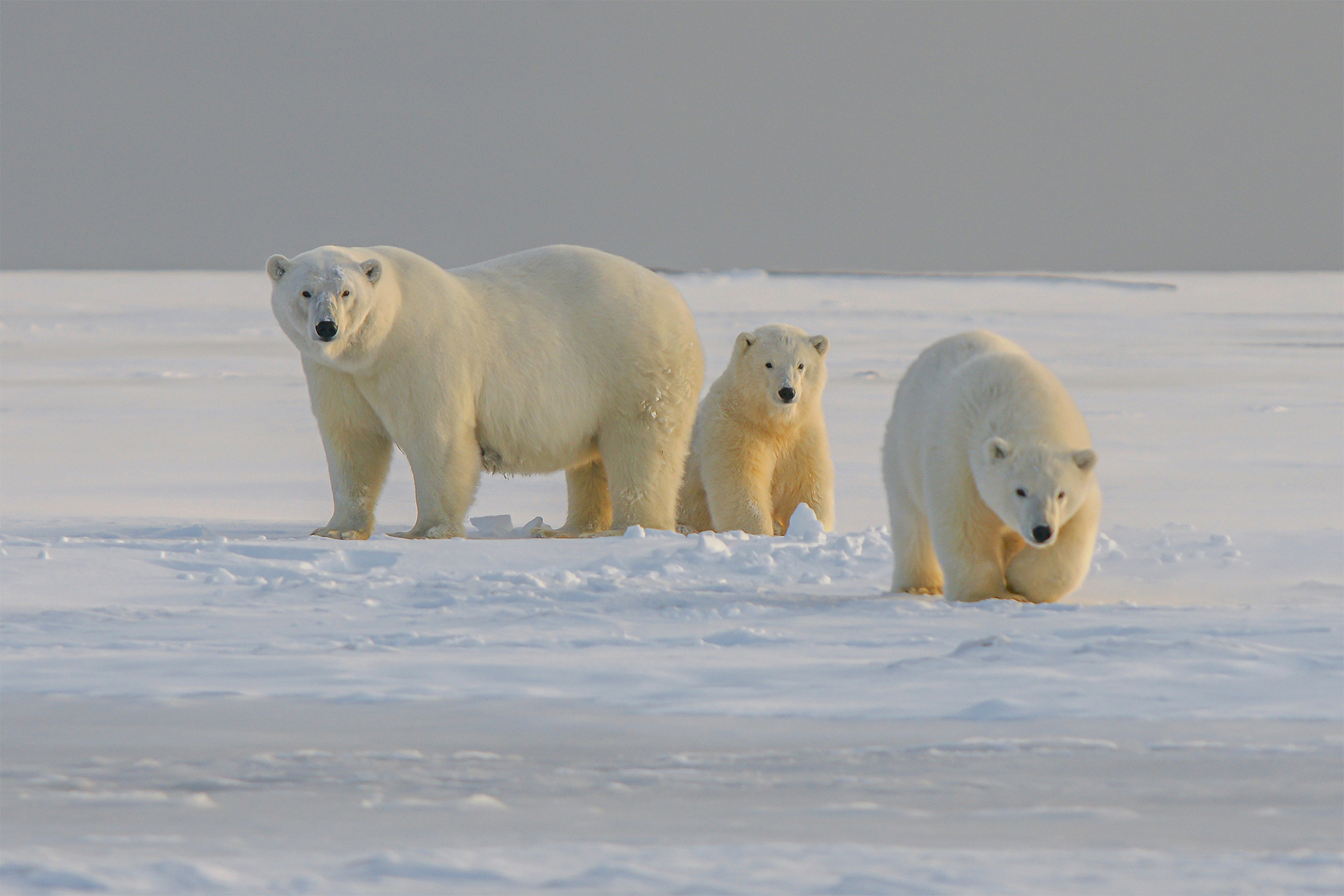
- An early-warning system, aided by radar and AI, aims to help mitigate human-polar bear encounters in the Arctic.
- Bear-dar scans the landscape for polar bears and alerts people if a bear is spotted approaching human settlements.
- In May, the system detected a polar bear family and helped people at a weather station guide them back onto sea ice.
- As sea ice rapidly melts due to global warming, polar bears are losing their habitats; as a result, they’re increasingly foraging for food on land, putting them in growing contact with humans.
How do you spot polar bears in the vast, and often dark, wilderness of the Arctic?
Enter Bear-dar.
This AI-driven radar system scans the landscape to spot approaching polar bears. The technology was developed by the nonprofit Polar Bears International in collaboration with U.S.-based security firm Spotter Global in a bid to mitigate encounters between the animals and people.
“We wanted to add another tool to the polar bear safety toolbox,” Alysa McCall, director of science at Polar Bears International, told Mongabay in a video interview. “With an early-warning detection system, there’s less chance of a bear getting killed because it surprised somebody.”
Climate change is the biggest threat to the survival and existence of polar bears (Ursus maritimus). As sea ice melts in the Arctic, these threatened species are rapidly losing their habitats. As a result, they move on to land in search of food, where they risk coming into close contact with humans.
With Bear-dar, scientists and conservationists say they hope to help manage such encounters and conflicts.
The early-warning system uses radars and cameras that keep a watch on the landscape, looking out for motion in its field of vision. The radar panels, each about the size of an iPad, look at a distance ranging from a few hundred meters to 1.2 kilometers (0.75 miles). The AI algorithm in the radars was trained to detect polar bears from zoo-held animals at Assiniboine Conservancy Park in the Canadian city of Winnipeg.
“There’s not a ton of polar bear footage out there and so we weren’t able to train them well enough,” McCall said. “So we took it to a zoo where it just watched polar bears all day, and it got a good sense of it.”
The radars are paired with cameras that can move and swing along with them and zoom in on and capture any detections. If the system spots a bear approaching, it sends out an alert, allowing people to check the camera footage to confirm and corroborate the presence of polar bears.
The system has already seen tangible results on the ground.
In mid-2025, Bear-dar was deployed at the Environment and Climate Change Canada weather station in the Arctic town of Eureka. In May this year, the system made its first detection of a polar bear family, comprising a mother and two cubs, moving toward the weather station. On spotting the animals, staff members at the station guided them back to the sea ice. They also continued to monitor the bears’ location using the camera system.
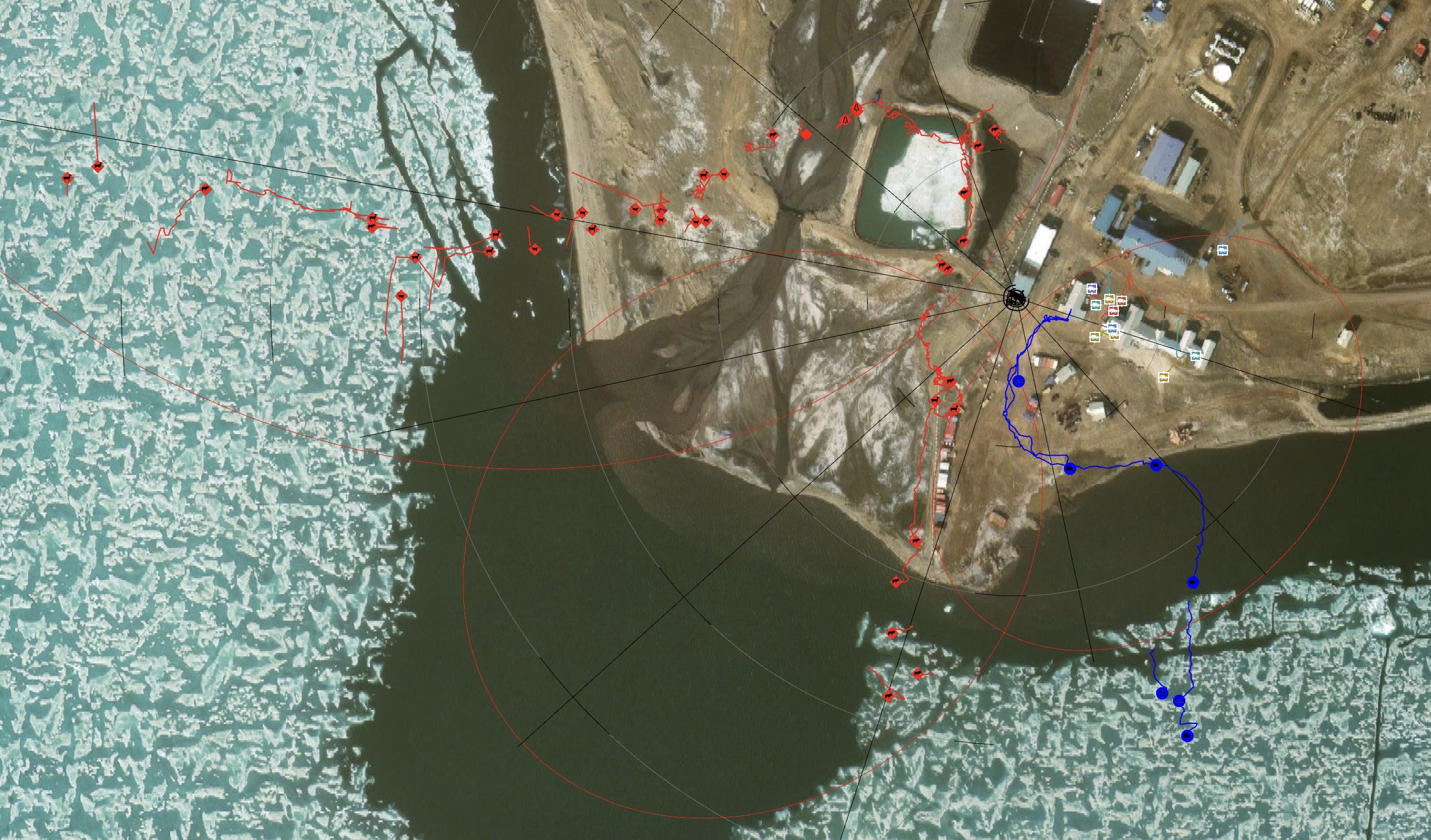
“They wouldn’t have been able to see those bears just standing outside and looking around,” McCall said. “The early-warning system gave them a lot of time to make a plan, and that’s what we envisioned this being used for.”
While challenges abound when it comes to the deployment of the technology in such harsh terrain, McCall said the team is planning to further improvise the technology to make it more accessible to communities in the Arctic. The team also wants to develop a system where it sends alerts or a text message to stakeholders when a polar bear is spotted.
“We want this to be accessible and affordable,” McCall said. “If we could, down the road, make this an option for people who are increasingly living with polar bears, that would be wonderful.”
Banner image: Polar bear mother with two cubs on a snowy sandbank in northern Alaska. Image by Hans-Jurgen Mager via Unsplash (Public domain).
Abhishyant Kidangoor is a staff writer at Mongabay. Find him on 𝕏 @AbhishyantPK.
Cite this article
Abhishyant Kidangoor (2026). ‘Bear-dar’ aims to give Arctic communities a heads-up on nearby polar bears. Mongabay Conservation news. DOI: https://doi.org/10.66709/news-323458
Credits

This story first appeared on Mongabay
This article is licensed under a Creative Commons Attribution-NoDerivatives 4.0 International License.
You may republish this article, so long as you credit the authors and Mongabay, and do not change the text. Please include a link back to the original article.

