



- Geopolitics in the Middle East that has affected shipping through the Strait of Hormuz risk disrupting fertilizer supplies and drive-up prices ahead of the next planting season.
- Small-scale farmers are already dealing with effects of land degradation, and high input costs, with the cost of urea increasing from $96 to $103 for a 50kg bag in a matter of months, before planting season.
- Agroecologists say the instability is an opportunity for the country to refocus on manure, compost and crop diversification to reduce dependence on fertilizer and maize.
- Some farmers remain hopeful that the synthetic fertilizer, on which they rely for improved harvests, will be at least available.
As the first rays of the sun streak through the misty morning early in June, James Singano spits into his right hand for a good grip of the hoe handle. With one swing, he brings down a shrub.
Malawi’s farming season is five months away, but Singano has started clearing the land where he inter-crops maize, a staple food here, with pigeon peas. He is one of the more than 4 million smallholder farmers that depend on subsistence farming and contribute significantly to national food security by producing 80% of Malawi’s annual maize harvest. Most of them farm on less than a hectare.
From his farm in the outskirts of Blantyre City in Southern Malawi, Singano’s maize harvest varies between 400kg and 600kg annually, which hardly feeds his family of six for a year. He says the land’s yield has consistently over the last 21 years, since he inherited it from his parents.
“They (parents) did not need fertilizer to produce enough maize for our family,” he says, sweeping off the shrub he has cut with his bare foot onto a heap of grass nearby. “These days, farming is a lot of toil for very little harvest because the soil isn’t producing as much and fertilizer is getting harder to afford.”
Soils losing productivity
A policy brief published by the MwAPATA Institute in 2022, in the immediate aftermath of Russia’s invasion of Ukraine, to assess the likely impacts of the conflict on Malawi’s food security and agricultural economy, indicates that over 40% of the country’s soils have lost their productivity due to poor farming practices. Besides, land degradation caused by acidification, floods, droughts and increased uptake of synthetic fertilizers have resulted in the country losing at least 2.3 million tons of maize annually.
According to FAO, while synthetic fertilizers are critical for maintaining crop yields, using them without sufficient organic matter or balanced soil management can worsen soil acidification and poor soil health over time.
In August 2025, Malawi launched a 10-year soil health plan aiming to reverse the loss of soil fertility and improve crop productivity. The plan includes measures to increase use of synthetic fertilizers, on which Malawi’s crop production currently heavily depends. But this reliance on synthetic fertilizers is facing increasing risks due to geopolitical tensions.
Malawi does not produce fertilizers; it imports almost all the more than 400,000 tons it requires annually for production of maize as well cash crops such as tea, tobacco and sugar. In 2023, it imported almost 90% of its nitrogen and phosphate fertilizers, mostly from the Gulf countries. Now local importers fear that escalating tensions involving Iran could disrupt shipping through the Strait of Hormuz, a key route for fertilizer export from the Gulf area to global markets. This could compound the effects of Covid-19 and Russia-Ukraine war, which also disrupted the country’s fertilizer imports.
Unpredictable fertilizer availability
The Fertilizer Association of Malawi, a consortium of 20 private companies that supply over 90% of the total fertilizer the country consumes, says while Malawi does not rely exclusively on fertilizer sourced directly from Iran, disruptions to shipping through the Strait of Hormuz, where a significant share of the global fertilizer passed in 2024, makes the commodity’s availability unpredictable.
“For Malawi, the impact is likely to be indirect, mainly through higher procurement costs, longer lead times, and increased price volatility in global fertilizer markets,” says Hannah Mankhambera, the association’s administrator. She says the extent of the impact will depend on the duration and severity of the disruption.
She does not rule out increase of fertilizer prices in the local market. “Given current market conditions, there is potential for continued price volatility,” Mankhambera says.
In December 2025, a 50kg bag of urea, the most widely used fertilizer in maize production locally, cost $96. It currently costs $103, and the price is expected to rise during the planting season.
“Already this is too expensive for smallholder farmers,” says Maness Nkhata, president of the Farmers Union of Malawi, an association of over a million farmers. Nkhata says any further increase in the price will worsen the low access to fertilizer, result in low maize harvest and compromise Malawi’s food security.
Increased fertilizer prices also means the price of maize will rise next year. Food will become more expensive,” says Tamani Nkhono Mvula, a food systems and rural development researcher.

Malawi’s dependence on food imports
Effects of disruption in fertilizer access go beyond crop production. Though Malawi produces about 90% of the food it consumes, the Food Systems Profile – Malawi (2025) and the study Food Imports in Malawi: Trends, Drivers and Policy Implications, reveal some dependence on food imports (about 5%).
The 2021 study shows that the food imports doubled between 1998 and 2018, with a 64% surge between 2015 and 2016. The country experienced a food trade deficit of $13.59 million in 2016 and $14.58 million in 2017. It says at least 80% of the overall food imports from 2010 to 2018 were food and beverages for direct consumption, with cereals, animal and vegetable fats, and oils accounting for 50%.
While Malawi’s Ministry of Agriculture did not respond to Mongabay’s questions on mitigation measures ahead of the next farming season, agroecologists say the volatility of the synthetic fertilizer supply chain is an opportunity to accelerate adoption of organic crop production and diversify from maize.
The Participatory Ecological Land Use Management (Pelum), a network of civil society organizations that promote agroecological principles among small-scale farmers in Eastern and Southern Africa, says the anticipated lower use of synthetic fertilizers takes off pressure of high cost of production on farmers and serves as an incentive for them to reclaim their degraded land by adopting soil fertility restoration practices.
“With less synthetic fertilizer, the production shifts from maize to other crops such as cassava, sweet potatoes, millet and sorghum, which do well without fertilizer,” says Nozgenji Wendy Bilima, the Pelum Malawi coordinator.
She says farmers in Malawi have been made to believe that all soils require fertilizers. “It’s just a blanket application; that’s the practice affecting the soils of our land. With the solubility of synthetic fertilizers, contamination of groundwater and surface water bodies is high, causing soil chemical imbalance,” she says.

Efforts to reduce reliance on synthetic fertilizers
Government, NGOs and farmer associations have been promoting these practices to reduce reliance on synthetic fertilizers. While the adoption of these measures is far from matching the use of synthetic fertilizer, Pelum says rising cost of production through high fertilizer prices has steadily pushed more farmers to these methods. For example, communities that used to share manure now sell to each other, a sign of rising demand.
Singano adopted manure use, but his experience highlights the challenge of converting farmers completely away from synthetic fertilizers. He stopped using synthetic fertilizers in 2020 as he could not afford it. He now uses chicken manure, which he buys at $3 per 50-kg bag at a nearby poultry farm. He spends a total $29 on manure for his field every season.
But he still finds synthetic fertilizer to be more productive. “Fertilizer is fertilizer,” he tells Mongabay. “The yield is higher with synthetic fertilizer, but I cannot afford it. At the same time, not applying manure altogether would be disastrous. So that’s what I have to apply to my field now,” he says.
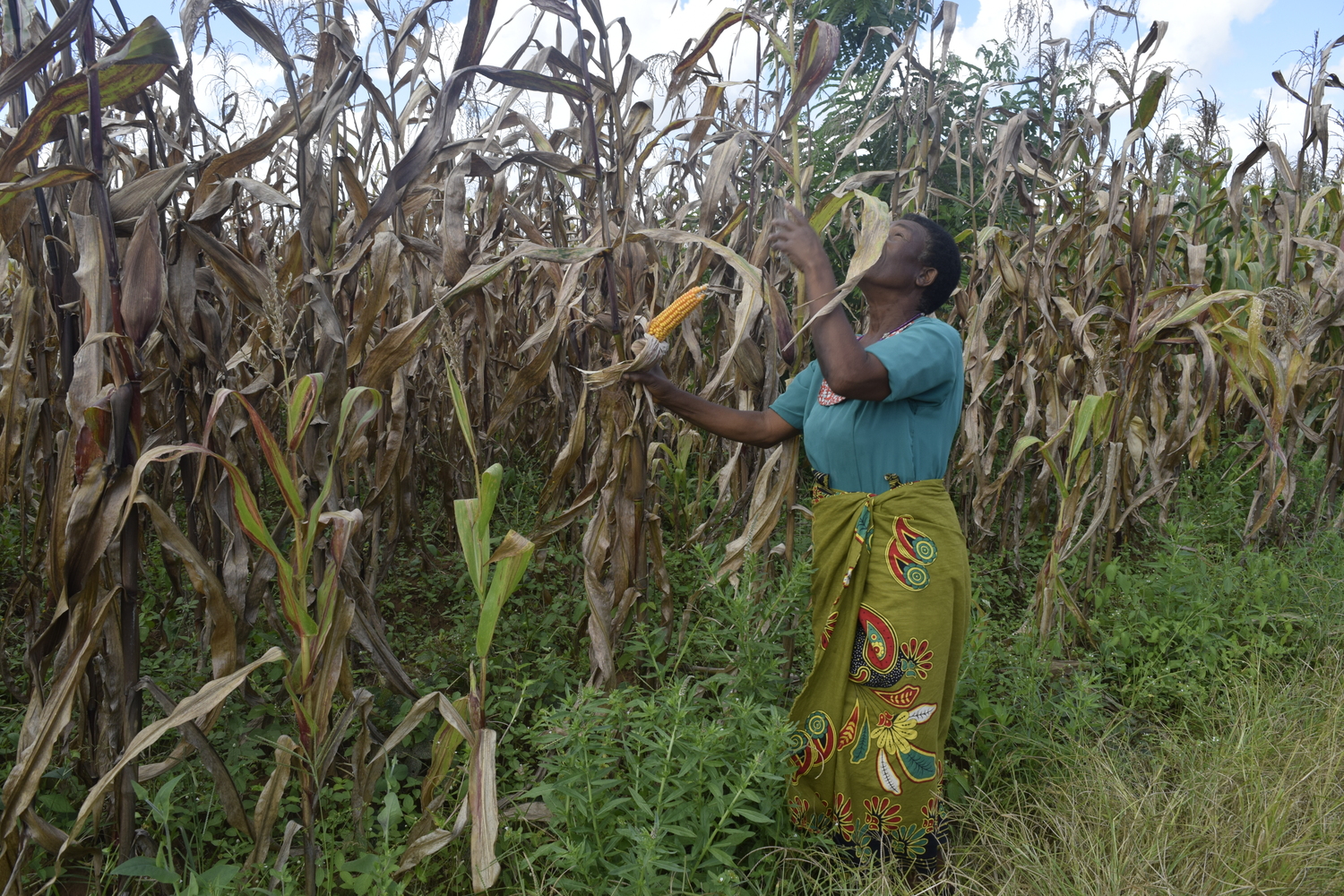
Banner image: A farmer in Mwanza district: the Malawi chapter of the Rural Women’s Assembly works to help women like these learn how to practice agroforestry, protect soil health, and secure loans to improve their farms. Image by Swathi Sridharan/ICRISAT via Flick (CC BY-SA 2.0).
Citations:
Food and Agriculture Organization of the United Nations (FAO), European Union & CIRAD. 2023. Food Systems Profile – Malawi: Catalysing the Sustainable and Inclusive Transformation of Food Systems. Rome: FAO. DOI: 10.4060/cc4237en.
MwAPATA Institute. (2022). The Russia–Ukraine War and Malawi’s Food Security: Implications and Policy Options (Policy Brief). Lilongwe, Malawi: MwAPATA Institute.
International Fertilizer Development Center (IFDC). Malawi Fertilizer Outlook 2024–2030. Muscle Shoals, Alabama, U.S.: IFDC. Available from the IFDC Hub.
In Malawi, farmers rebuild soil and livelihoods through agroecology
In Malawi, one woman’s farm shows what’s possible with land and support
Feedback: Use this form to send a message to the author of this post. If you want to post a public comment, you can do that at the bottom of the page.
Cite this article
Charles Mpaka (2026). Malawi agroecologists see opportunity in Gulf fertilizer supply disruption. Mongabay Conservation news. DOI: https://doi.org/10.66709/news-322462
Credits

This story first appeared on Mongabay
This article is licensed under a Creative Commons Attribution-NoDerivatives 4.0 International License.
You may republish this article, so long as you credit the authors and Mongabay, and do not change the text. Please include a link back to the original article.

