



Founder’s Briefs: An occasional series where Mongabay founder Rhett Ayers Butler shares analysis, perspectives and story summaries.
In the forests around Pemaluan in East Kalimantan, Indonesian Borneo, researchers led by Wendy Erb at the Cornell K. Lisa Yang Center for Conservation Bioacoustics in the U.S. have placed audio recorders on mountains, beside caves, and among mangroves. Over 18 months, they sampled 20 sites, collecting the calls of gibbons, frogs, hornbills, insects, and other wildlife. They want to establish a baseline before Nusantara, Indonesia’s new capital city, alters the surrounding landscape, according to a video produced by Mongabay, Scientific American, and Project Multatuli.
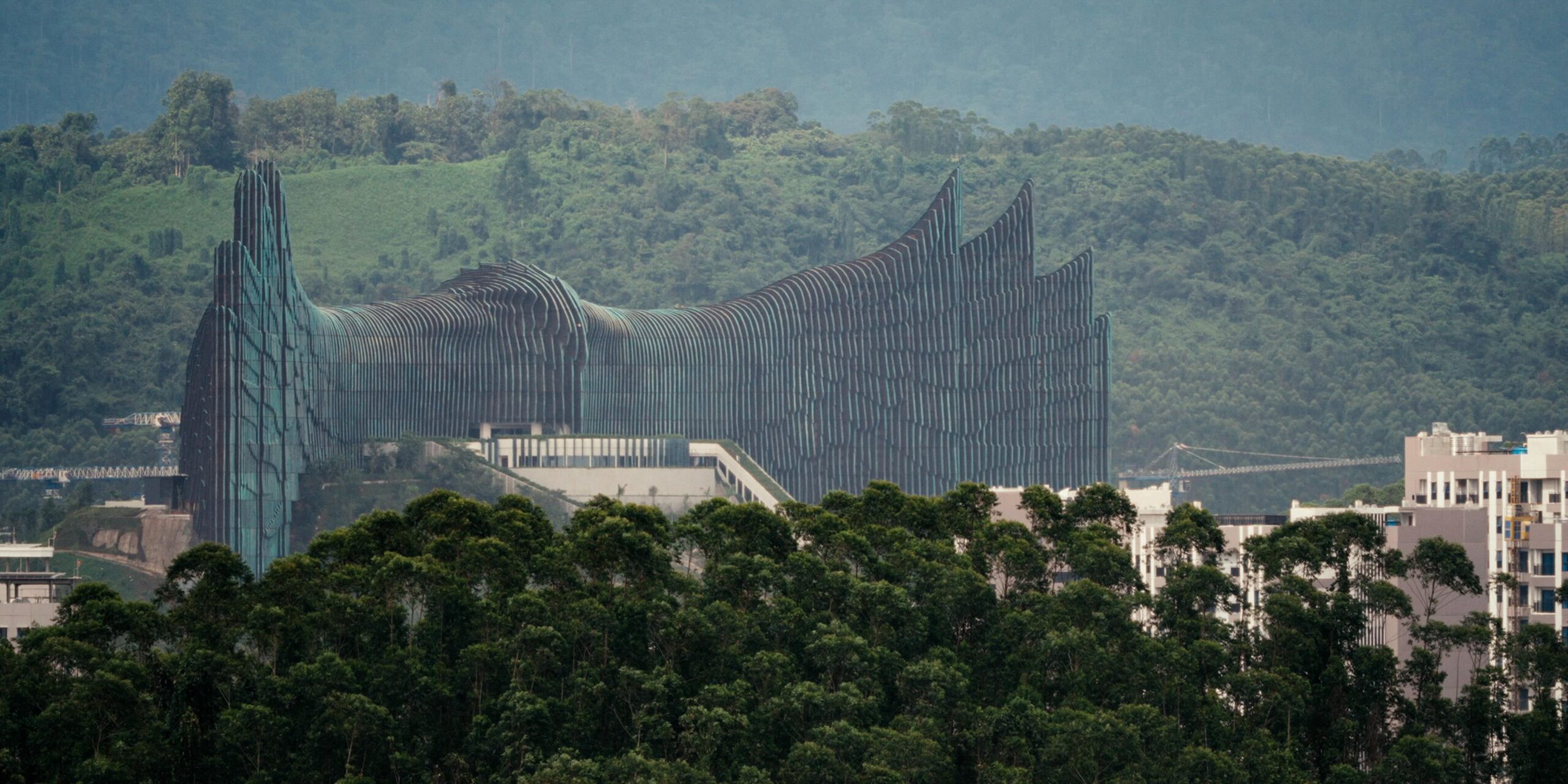
Nusantara is being built in East Kalimantan province to relieve some of Jakarta’s congestion and pressure from land subsidence. Its planners describe a “smart forest city” where development and biodiversity can coexist. Roads, apartment buildings, a hotel, and a presidential palace have already appeared. Construction and chainsaws are becoming part of the local soundscape.
The recordings will allow scientists to compare conditions over time. They may show where species remain, where they decline, and whether development is pushing wildlife into other areas. The findings could also help identify places where conservation measures are most needed.
The project also records knowledge held by the Indigenous Balik people. Animal calls have long helped them interpret the forest. Gibbons marked the approach of dawn and, in unusual circumstances, were thought to warn of a death in the village. The great argus (Argusianus argus), a large pheasant native to the island’s forests, held particular importance. Some younger Balik children no longer recognize its call.
Local residents have helped select recording sites, explain the history of the landscape, and describe the connections between certain species, places, and customs. Abidin, who was born in Pemaluan and has never left, said he hopes the recordings will help him teach his children about the forest. He said he worries they may have to adjust to urban life without the education or skills needed to find work there.
The researchers said they do not expect the project to stop Nusantara’s construction. Nor can the recordings preserve the forest or document every part of Balik culture. They will provide evidence of which species were present and how the soundscape changed as building advanced. For the Balik, they will also preserve voices and knowledge that may become harder to encounter in the forest itself.
This video is a collaboration between Mongabay, Scientific American, and Project Multatuli. It was supported by the Pulitzer Center.
Banner image: A view of the presidential palace in Indonesia’s new capital, Nusantara. Image courtesy of Leah Varjacques.
This story first appeared on Mongabay
This article is licensed under a Creative Commons Attribution-NoDerivatives 4.0 International License.
You may republish this article, so long as you credit the authors and Mongabay, and do not change the text. Please include a link back to the original article.

