



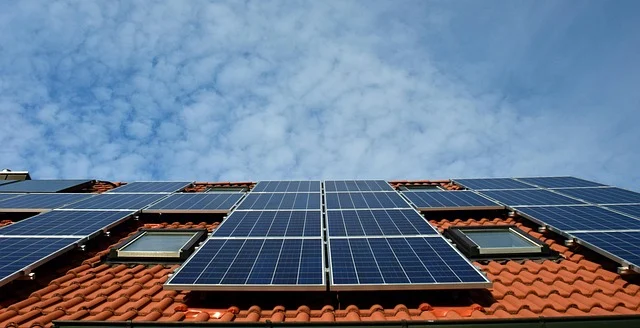
Upington’s abundant sunshine gives local homes and businesses a strong foundation for solar energy. Stage Zero’s modelling ranks the town among the top performing South African locations it serves for solar yield. According to the company, this natural advantage is becoming increasingly valuable as electricity prices continue to rise and consumers look for ways to reduce their reliance on grid-supplied power.
Stage Zero already has active customers in Upington using its solar and battery systems and is now expanding its residential, commercial, and industrial presence in the town
“Upington gives us a lot of solar energy to work with,” says Shaune Bouwer, Commercial Engineering Manager at Stage Zero. “That creates real potential for a home or business to generate more of its own electricity from the same-sized system than elsewhere and reduce how much it needs to buy from the grid.”
What the sunshine can mean for monthly costs
The local cost case is also becoming harder to ignore. NERSA approved an 8.76% electricity increase for 2026/27 as part of the Dawid Kruiper Municipality tariff process, while Stage Zero says its solar subscription pricing is expected to increase by around 6% annually, thereby increasing savings annually.
For customers using Stage Zero’s subscription model, the useful number is the total monthly electricity cost after solar is installed. That combines the subscription with whatever electricity still needs to be bought from the grid. The model is designed to bring that combined cost below what the customer was spending before solar, creating a net saving without requiring the customer to buy the system upfront.
“The system has to be sized properly for that saving to work. If a customer pays for capacity they cannot use, the economics suffer. We look at how each client individually uses electricity[1] [2] [3] and specify the system around that demand,” says Bouwer.
Stage Zero provides the solar and battery equipment through a monthly subscription and is responsible for ongoing monitoring and maintenance.
The roof may be less limiting than people think
Stage Zero also wanted to understand how much roof direction actually affects solar performance in Upington.
Using Arka360 solar design software, the company compared the same reference system across different panel orientations. A south-facing system still produced around 76% of the annual yield of the north-facing benchmark. West-facing panels delivered almost the same annual yield as north, with a north-west configuration performing best in the simulation.
“North-facing remains a good rule of thumb. In Upington, the numbers show that other orientations can still perform very well. People should be encouraged to consider solar regardless of their roof orientation to maximise savings,” says Bouwer.
The modelling compares orientation rather than individual customer savings. The financial outcome for a home or business will depend on its electricity use and the system specified for the site.
“Given the cost of electricity relative to the cost of solar equipment, it is almost always better to have solar than to be without,” reiterates Bouwer.
Building a stronger Upington footprint
Stage Zero’s expansion in Upington builds on customers already using its systems in the town. The company is increasing its focus on residential, commercial and industrial customers as it works towards a stronger local support footprint.
Bouwer says Upington’s solar conditions give local customers a particularly strong reason to investigate what their properties can produce.
“Upington already has the sunshine. The real work is matching the system to the property and making sure the customer gets useful energy and a lower overall electricity cost from it,” he says.

