



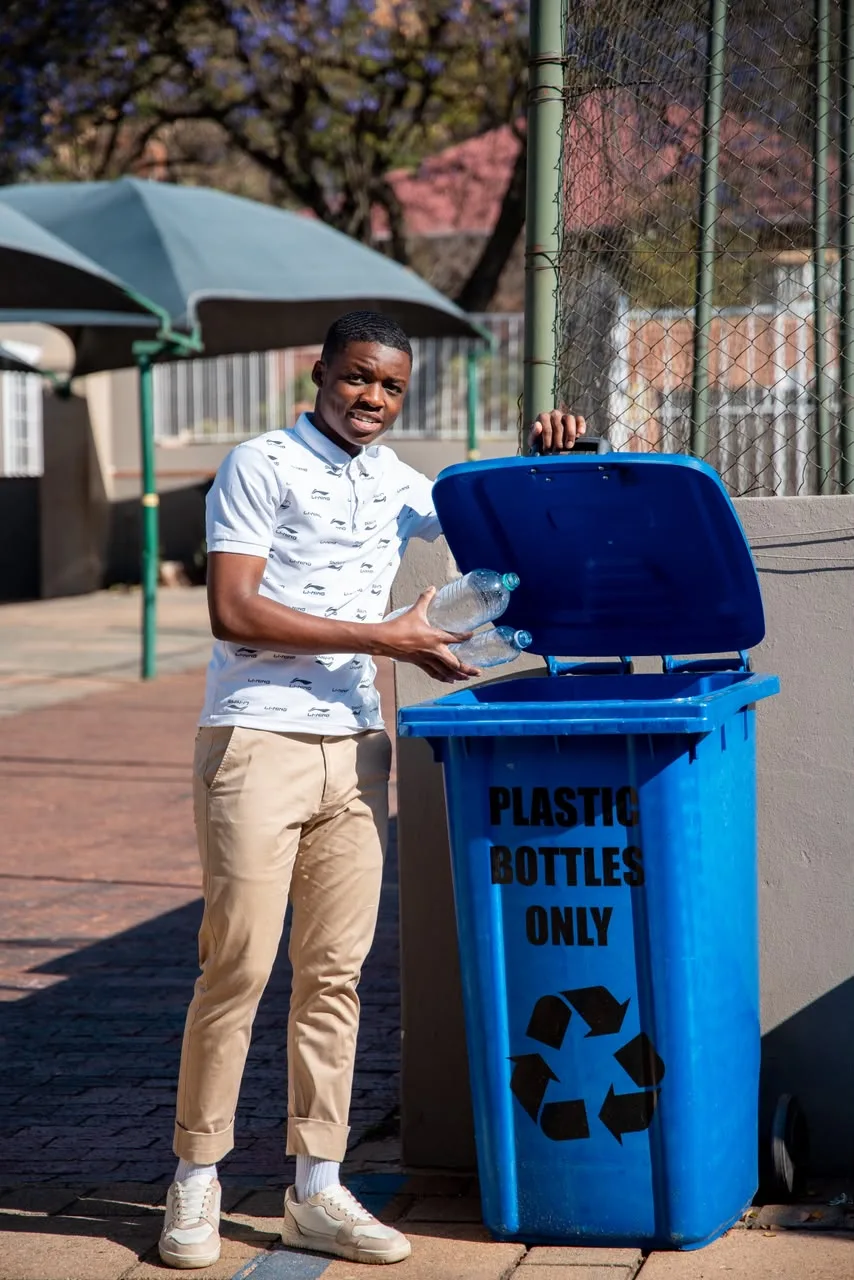
A new national competition is drawing much-needed public awareness to how the environments children grow up in shape their health and development. #WasteNot encourages the public to get creative about reducing, reusing and recycling. It’s a collaboration between Create Change — an initiative of the DG Murray Trust (DGMT) and Hold My Hand — a national campaign in support of the National Strategy to Accelerate Action for Children (NSAAC).
The NSAAC places children and teenagers at the centre of South Africa’s national development goals and calls for their inclusion in actions to protect our environment and prevent pollution. Waste Not encourages individuals to take action — big or small — to reduce waste in their communities considering that waste removal services in South Africa are uneven and unequal.
This means that roughly six in 10 households have their waste collected weekly, sometimes less often. The burden of uncollected rubbish leads to people burning their waste which pollutes the air and is bad for children’s health. Survey data shows that 55% of households across the country burnt their waste weekly or bi-weekly. When the environment is sick, we are sick Regular waste removal reduces environmental pollution and limits the spread of disease.
But when waste piles up, it contaminates water sources, attracts disease carriers like rodents and clogs stormwater drains causing roads to flood during heavy rain. “The link between children’s health and environmental health is clear — when the environment is sick, our children suffer,” says Rahima Essop, Communications Director at DGMT.
Informal and rural communities are worse affected. Children there face exposure to health risks in several ways: when they play on or around illegal waste heaps and when they inhale toxic fumes from burning waste. Repeated exposure to infections affects their ability to absorb nutrients and weakens their immune systems. “Children who are malnourished and get repeated stomach bugs are at higher risk of stunting because their ability to absorb nutrients is compromised.
Preventing infections through proper waste removal, along with effective water and sewage management, is one of the environmental pathways to tackling stunting,” Essop adds. Big or small – our actions add up South Africa produces about 122 million tonnes of waste (which includes household waste) each year and most of it ends up in landfills, many reaching capacity. To change this, we need structural changes and a collective response that involves companies, government, civil society and households. “If we want less waste, we must produce less waste.
Companies must stop producing so much packaging and products that end up in dumps, like single-use plastics and disposable products. This is why regulations are in place to ensure plastic and packaging companies take responsibility for the volume of waste they produce,” Essop explains. At a local government level, municipalities must prioritise regular waste collection, especially in under-served and rural areas, and they must enable recycling.
Currently, only 10.5% of households separate or sort recyclable packaging from other waste. “At a community level, individuals can do their part by replacing disposable products with durable reusable alternatives, cleaning up public spaces like parks and beaches, creating a recycling culture with neighbours, reusing and repurposing products,” says Mesuli Kama, Social Mobilisation Lead at Hold My Hand. “This is precisely what the Waste Not competition is encouraging people to do, by foregrounding the type of action that is already taking place in communities,” Kama adds.
For years, national waste management strategies have acknowledged the need for national awareness campaigns to reduce dumping and littering. The problem is that awareness initiatives tend to blame individuals for littering without acknowledging the systemic problems with our waste system, from companies producing too much non-recyclable waste, to the lack of municipal infrastructure for collection and processing of recyclable material. “The Waste Not competition is different; it doesn’t blame people but encourages individual action — and this is what leadership is about,” Kama concludes.
Competition details Start Date: 21 July 2026 Closing Date: 21 August 2026
Who can enter: Any South African resident. Submissions by or featuring minors (under 18 years) must have parental or guardian consent.
How to enter: Send your entry to 0600 411 111 with your photo or video along with a short voice note or text explaining what you made or did. Prizes: 10 prizes ranging from R1 500 to R5 000 are up for grabs.

