



The challenge is no longer whether capital exists. The question is whether our markets are ready to absorb it. If we get private capital mobilization right, we don’t just fund projects, we fund futures.”
Conceição noted that while public budgets across Africa are under pressure, private capital will play a decisive role in financing the infrastructure, energy systems, housing, digital connectivity, agribusiness value chains and small businesses needed to create jobs for the continent’s growing population. She highlighted the importance of predictable regulations, credible project pipelines, transparent procurement, strong governance and reliable data in helping investors deploy capital with confidence.
Southern Africa was highlighted as an important case study in market creation and financial-sector evolution. Participants examined how deeper capital markets, innovative financial instruments, stronger regulatory frameworks and partnerships between public and private institutions can unlock new sources of long-term investment. The discussion noted that World Bank Group private capital mobilization in South Africa increased from approximately $440 million in FY22 to $3.9 billion in FY26, illustrating growing investor confidence and the potential for scalable market-based solutions.
A key focus of the conversation was how the financial sector can better support small and medium-sized enterprises (SMEs), which remain the backbone of African economies but continue to face significant financing constraints. Participants discussed the role of trade finance, risk-sharing mechanisms, blended finance, digital financial services and alternative credit assessment models in expanding access to capital for underserved businesses and entrepreneurs.
The discussion also explored how partnerships between banks and fintech companies are transforming financial services by improving efficiency, expanding customer reach and creating new opportunities to serve SMEs, women entrepreneurs and underserved communities. Participants emphasized that the future of financial inclusion will depend not only on expanding access, but also on improving affordability, suitability and scale.
Women’s economic empowerment emerged as a prominent theme. Participants highlighted persistent barriers facing women-led businesses, including collateral requirements, administrative burdens and limited access to tailored financial products. The discussion examined opportunities for financial institutions to increase lending to women-owned businesses and leverage data-driven tools to reduce bias in lending decisions.
The roundtable further examined emerging opportunities in capital markets development, sustainable finance, regional trade integration and infrastructure financing, including efforts to crowd in private investment into strategic sectors such as energy, logistics and manufacturing.
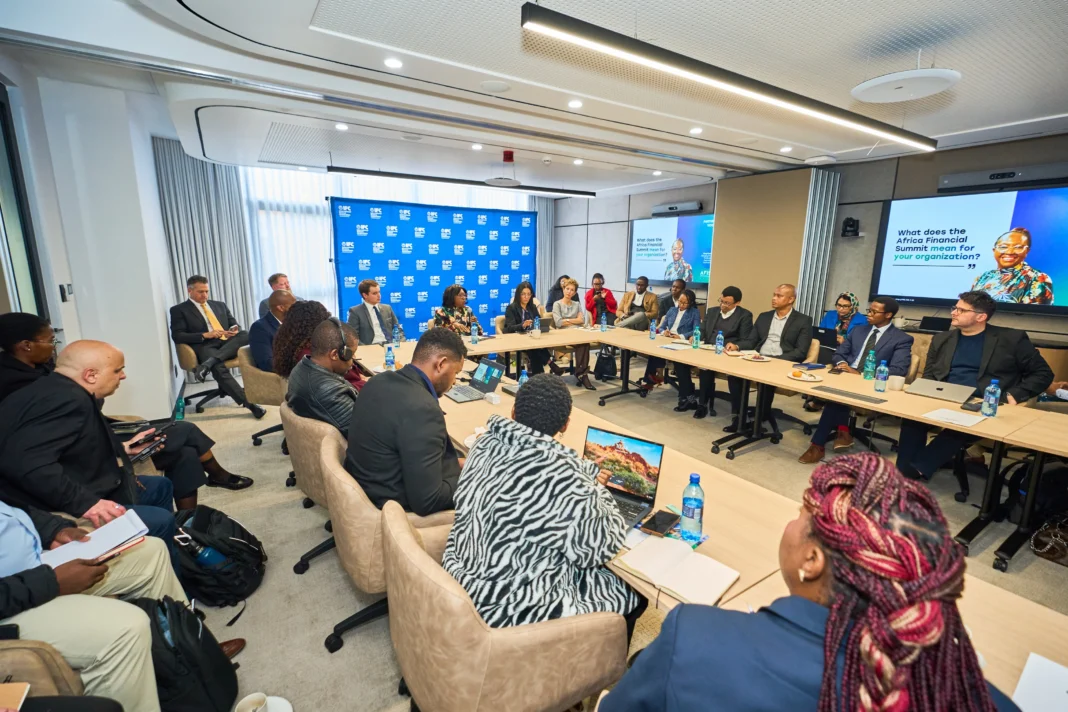
Looking ahead to AFIS 2026 in Luanda, participants emphasized that the summit comes at a pivotal moment for Africa’s financial sector. Discussions at AFIS are expected to focus on capital markets, banking sector resilience, SME financing, digital finance, trade corridors, energy investment and the policy reforms needed to unlock greater flows of long-term private capital into African economies.
The Johannesburg engagement forms part of the Road to AFIS series leading up to the summit on 3-4 November 2026, bringing together leaders from across Africa’s financial ecosystem to identify practical solutions for unlocking investment and accelerating private-sector-led development.

