



African Tech Leaders Call for Bold Bets on Infrastructure, Capital and Leadership to Build Companies That Last
Experts at Moonshot by TechCabal 2026 said African-owned financial infrastructure, disciplined investment and stronger leadership are needed to build globally competitive businesses.
Lagos, Nigeria, 29 October 2026 – African tech leaders at Moonshot by TechCabal 2026 have called for greater investment in the infrastructure, capital and leadership needed to build technology companies that can compete globally and sustain innovation.
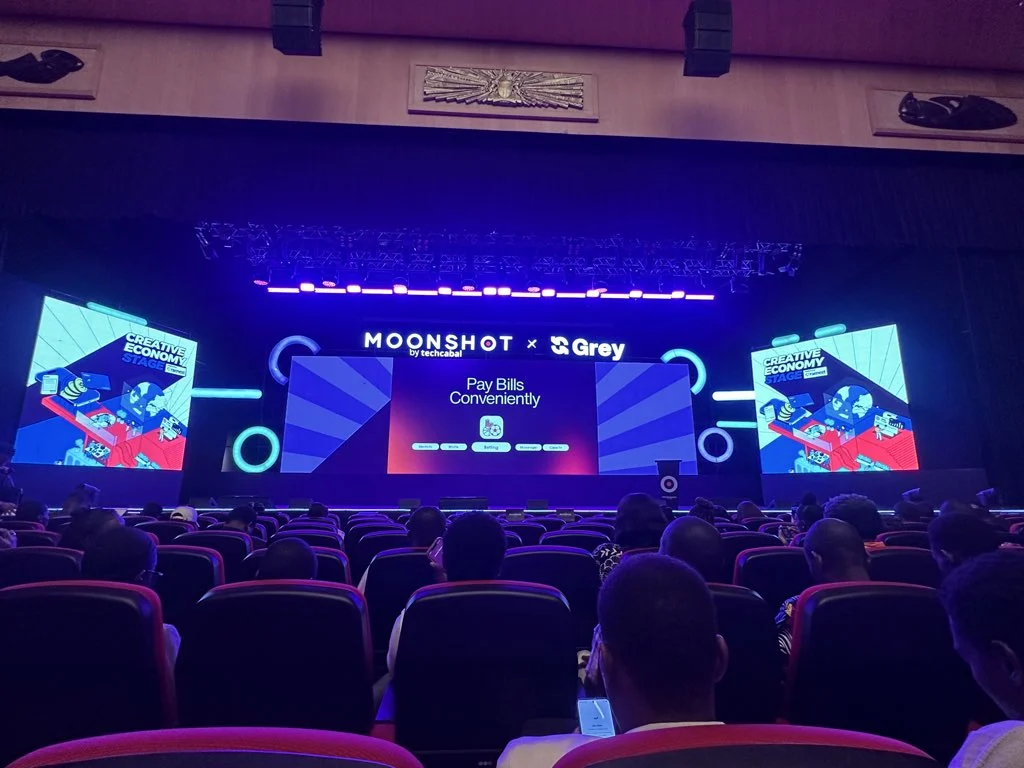
Supported by headline sponsor Grey and held under the theme “Courage and Conviction: Building for a New World” at the iconic National Theatre in Lagos, the two-day conference centred on a shared message that Africa’s next generation of technology companies must own more of the infrastructure they run on, back that ambition with patient capital and invest in the leadership needed to sustain growth.
Opening the conference, Kashifu Inuwa Abdullahi, Director General of Nigeria’s National Information Technology Development Agency (NITDA) represented by Dr Aristotle Onumo. Asst. Director, NITDA., addressed the policies and foundations needed to advance the continent’s technology ecosystem. He called for policies that give local builders room to scale and for closer collaboration between government, industry and investors.
In his opening remarks, Tomiwa Aladekomo, CEO of Big Cabal Media, said: “The past few years have reflected rapid growth across diverse sectors, but we need to move beyond momentum. What we need now is the leadership depth to turn that growth into institutions that last. That means treating succession, development and board capability as seriously as product, capital and growth, long before the need becomes urgent. We are grateful to set the stage for these conversations, to bring together the people who can shape the ecosystem and, most importantly, to make this a convergence that turns conversation into action.”
Attended by more than 6,000 delegates from across Africa, Europe and the Americas, one of the clearest calls was for African fintech to move beyond domestic payment solutions and invest in the infrastructure needed to connect the continent’s markets. Speakers said settlement, liquidity and compliance are critical to making cross-border transactions faster and more efficient, and that Africa’s ability to control these systems will shape the future of its digital economy.
Idorenyin Obong, CEO and co-founder of Grey, said: “African money still clears through New York or London on its way to the country next door. We have enough wallets. What’s missing is the layer underneath: settlement, liquidity and compliance. It is slow work that does not demo well, but African tech has to own it by 2030. Otherwise, we keep building on plumbing we do not control, and the people who own it keep deciding what our money can do. We are glad to have sponsored Moonshot and to support the conversations that will shape the next decade of African financial infrastructure.”
Climate tech emerged as another major opportunity for African businesses and investors. Maxime Bayen, Founding Partner at Catalyst Fund, and Oluwakemi Olajide, Principal at Africa Climate Ventures (ACV), discussed the potential for African entrepreneurs to develop and export climate solutions, particularly in regenerative agriculture, climate insurance, carbon removal, distributed energy and water innovation. Speakers also called for more investment in businesses building solutions suited to the continent’s climate challenges.
The funding landscape offers a strong indication of the sector’s growing significance. TechCabal’s State of Tech in Africa H1 2026 Report found that climate tech attracted $688 million in total inflows, compared with $488 million for fintech, making it the leading sector for funding for the first time. The figures point to a growing opportunity for African climate businesses, and to the need to ensure capital reaches entrepreneurs who can turn that interest into scalable solutions.
Leaders also discussed the technology ecosystem needed to support the continent’s artificial intelligence ambitions. Tom Duff Gordon, Vice President and Head of EMEA Policy at OpenAI and other experts shared that Good AI policy starts with local context. African countries should set the terms for how AI is built, regulated and used in their markets, with infrastructure and skills to match. The discussion stressed building infrastructure and regulation shaped by African market realities, rather than simply adopting frameworks developed elsewhere.
This focus on backing Africa’s next generation of technology businesses was also reflected in TC Battlefield 2026, TechCabal’s startup competition. Following a pre-accelerator programme designed to help founders strengthen their businesses, refine their pitches and prepare to raise capital, 10 startups from an initial pool of 20 were selected to pitch live at Moonshot. The competition awarded $25,000 in equity-free funding.
Other Notable attendees included Uche Ofodile, CEO of MTN Benin and Chairperson of MTN Mobile Money Benin; Tom Duff Gordon, Vice President and Head of EMEA Policy at OpenAI, Mercy Emmanuel, Commercial Lead at Flutterwave, Dotun Daniel Adekunle, Chief Operating Officer and Chief Technology Officer at OPay; and Ekenem Isichei, Deputy Director, Program Advocacy and Communications, Nigeria from the Gates Foundation.
Moonshot by TechCabal brings together technology investors, telecommunications companies, global technology firms, startups and other stakeholders from across Africa’s tech ecosystem.

