



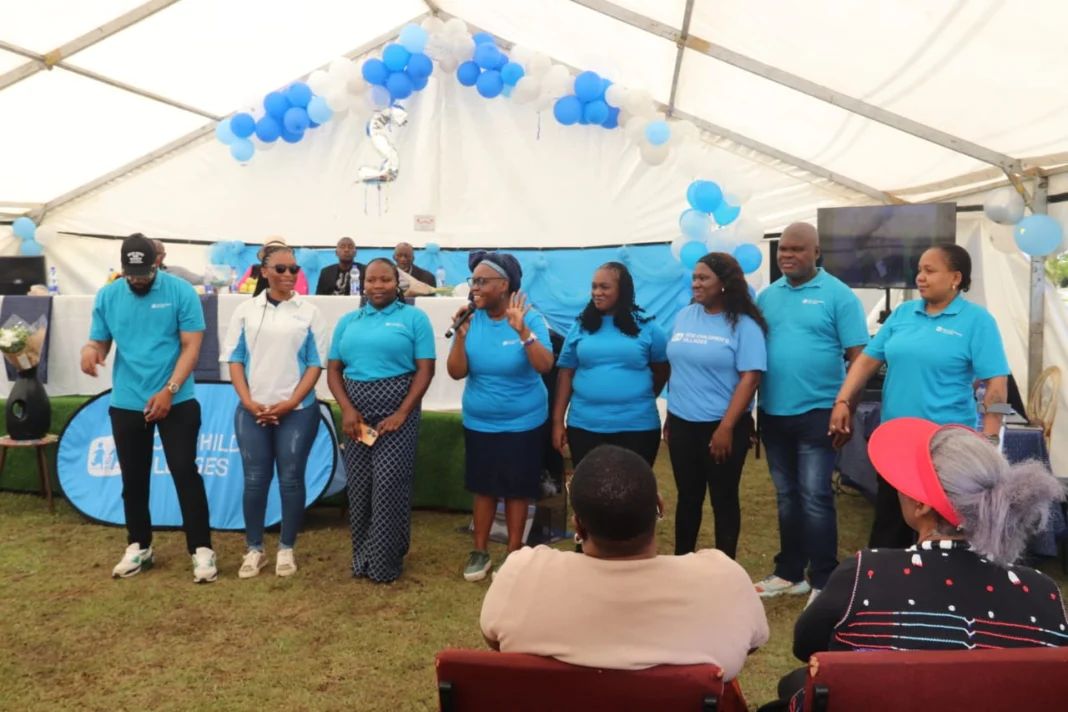
At an event held at SOS Children’s Villages Mthatha in commemoration of Disaster Risk Reduction Day, stakeholders from the Eastern Cape Department of Social Development (DSD), the Eastern Cape Provincial Disaster Management Centre, Cooperative Governance and Traditional Affairs (CoGTA), traditional leaders, and the local community gathered to further strengthen disaster preparedness, and support the community which is still recovering from the 2025 floods.
Launched in 2025, the flood recovery and child-centred resilience project termed Rebuilding Hope, is 24-month, R12.2 million initiative led by SOS Children’s Villages in South Africa restores dignity, safety and builds resilience for flood-affected communities in Mthatha.
The project targets approximately 12,500 direct beneficiaries (including over 6,000 children), across four locations in Mthatha – Zimbane, New Payne, Phola Park, and Hillcrest.
From the National Disaster Management Centre, Mr Mluleki Mphithi reiterated the importance of lessons learned from the floods, and being better equipped for future emergencies and disaster preparedness.
SOS Children’s Villages undertook this project as the 2025 floods caused severe disruption to the community and disruption to child protection systems, leaving thousands of children and caregivers vulnerable to poverty, neglect, and psychosocial distress.
“We have a long standing presence in Mthatha with hundreds of children and young people in our care. We need to continue our efforts to protect children, strengthen families and support community resilience,” says Lebo Mahlaela, Head of Communications for SOS Children’s Villages in South Africa.
From the Department of Health- Mental Health Department, Sive Bhuda reiterated the importance of mental care post trauma and disaster. “It’s important to understand as families and as communities that people deal with trauma in different ways. There are good coping mechanisms and bad coping mechanisms. One must reach out when they need mental health support, to help in the immediate situation, but also because it builds resilience for the future”, he said.
This project aligns with the organisations mission, to ensure that every child grows up in a safe and caring environment, even in times of crisis. It is also fully aligned with the provincial recovery strategy.
Project beneficiaries were also present, testament to the support they have received from SOS Children’s Villages and authorities in rebuilding their lives. Some lost family members, some lost their homes, all of them still resilient.
Recovery project objectives:
- Meet Immediate Basic Needs:
Provide essential relief items such as food parcels, hygiene and dignity kits, and emergency shelter repair kits to stabilize affected households. - Restore Child Protection and Education Systems:
Ensure that children have access to safe environments, psychosocial support and continued learning opportunities through Child-Friendly Spaces (CFS), case management, and temporary learning spaces. - Support Household Recovery and Livelihoods:
Enable families to rebuild their lives through cash and voucher assistance, distribution of seeds and small livestock and skills training for sustainable income generation. - Strengthen Community Resilience:
Build local capacity for disaster preparedness and risk reduction through community disaster committees, DRR workshops, and safeguarding systems to protect vulnerable groups. - Promote Multi-Sectoral Recovery:
Integrate interventions across Child Protection, Education in Emergencies, WASH, Food Security, Shelter, Livelihoods and CVA to ensure holistic recovery and reduce future vulnerabilities.
Beneficiary Targets:
- Direct Beneficiaries: Approximately 12,500 individuals (2,500 households), including 6,070 children and youth.
- Cash & Voucher Assistance (CVA): 1,000 households will receive three cycles of cash transfers to meet basic needs.
- Indirect Beneficiaries: Approximately 7,400 individuals benefiting from improved community systems and services.

