



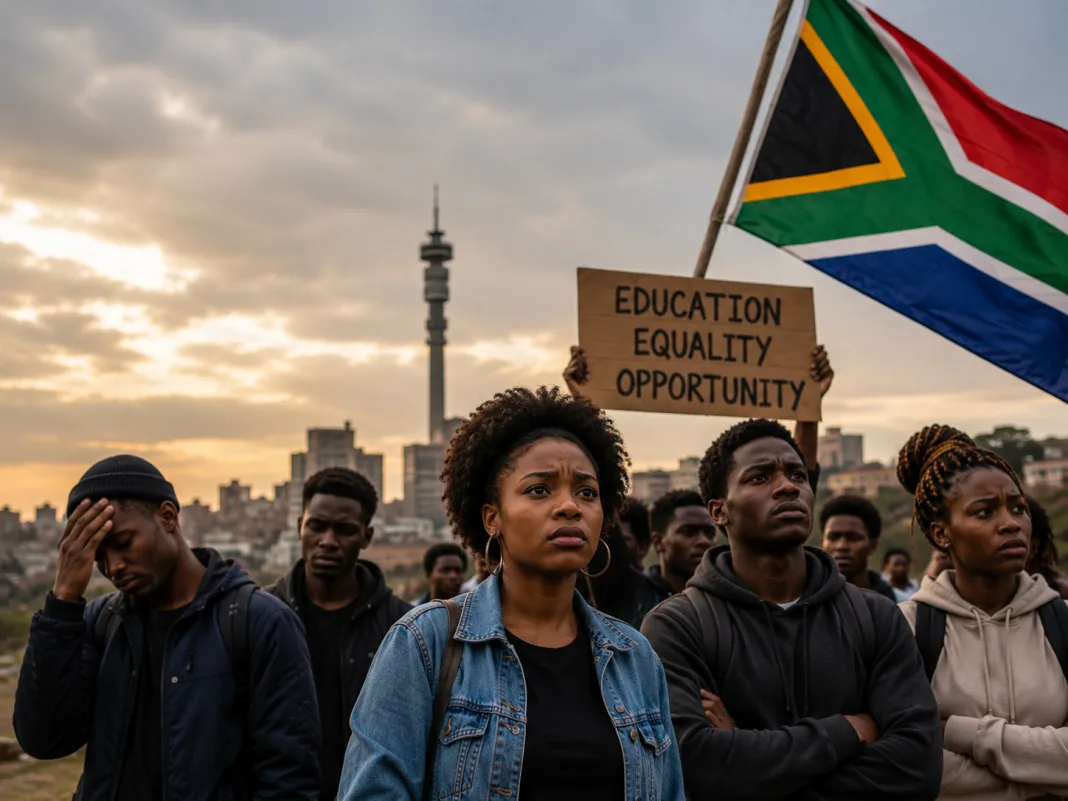
Youth Day honours the young people who rose up in Soweto in 1976, students who paid with their lives to resist an education system deliberately engineered to diminish them. That generation marched against the barrel of a gun for the right to quality and equal education. Fifty years later, our youth are struggling with unemployment, inequality and a rapidly changing digital era – barriers that are leaving millions of young South Africans locked out of the economy.
Youth unemployment higher than at end of Apartheid
“Fifty years after fighting for education, millions of young South Africans are still fighting for a future. Youth unemployment remains one of the country’s most critical crises, locking millions out of economic participation, including those with degrees and qualifications,” says Prof Linda Meyer, MD at Rosebank College.
According to the National Bureau of Economic Research, youth unemployment in South Africa is now significantly worse than it was at the end of Apartheid. While aggregate joblessness was historically high before 1994, the rate of young people excluded from the economy has surged to unprecedented levels, defining this generation’s struggle. While the end of Apartheid integrated the labour market and expanded democratic rights, joblessness has worsened.
In Q1 2026, the national unemployment rate stood at 32.7%, but it was 60.9% among those aged 15-24 and 40.6% among those aged 25-34. This makes youth unemployment not only an economic issue, but a question of whether young people can access dignity, independence and full participation in society.
Education without economic access is incomplete liberation
The fight for the right to education began in 1976, but the quality, relevance and accessibility of that education, as well as preparing youth for future industries, remains unfinished. Today, attendance decreases sharply from primary school to tertiary education in South Africa due to high systemic dropout rates, financial barriers, poor foundational education and the pressure to start earning to support unemployed family members.
Almost 99% of South African children in the compulsory schooling phase, aged 7 to 15, are enrolled in basic education. That is a genuine achievement. But access to school is not the same as progression through the system, and progression is not the same as economic participation.
Even among students who secure university admission, high dropout rates and extended completion times remain common across South Africa’s 23 public universities. The average undergraduate graduation rate sits at around 15%, while the overall number of successful graduates equates to about 4% to 10% of the original student cohort that started school years earlier. In the broader South African adult population, aged 25-64, only about 7.3% hold a university degree, according to the Department of Higher Education and Training (DHET).
This is what the leaking pipeline looks like. Under-resourced schools, poverty, poor infrastructure, weak foundational literacy and numeracy, grade repetition, pregnancy, financial barriers and the pressure to start earning to support unemployed families all contribute to young people falling out of the system.
Casualties of the AI era
Youth unemployment is already severe, and AI is accelerating this crisis, changing entry-level work, skills requirements and career pathways. AI is removing the traditional first rung of the career ladder, the entry-level roles where young people have historically begun their working lives, automating foundational tasks and raising the bar for what employers expect from day one.
Even when young people make it through the education system and qualify, the workplace they enter is changing rapidly. This shows up as a workplace-youth mismatch where the skills and qualifications of young job seekers do not translate into the capabilities employers now need such as digital literacy, problem-solving, adaptability and the ability to work with new technologies.
But many of the junior tasks that once helped them learn on the job are disappearing. Until the gap between qualification and workplace readiness narrows, young people risk being locked out of the first rung before they even begin.
NSFAS, the gatekeeper to tertiary education
Access into the start of the education system is only the first step. The “missing middle” captures one of the most acute expressions of this exclusion where students from households earning between R350,000 and R600,000 earn too much to qualify for full NSFAS bursaries, but too little to afford soaring tuition fees independently. For students who qualify, the barrier is not ability or ambition, but whether funding delays, student debt, accommodation shortages, transport costs, data costs, food insecurity and mental health pressures allow them to stay the course.
“NSFAS was designed to open doors for students who could not afford tertiary education, but the scheme is currently under administration, facing serious governance failures and systemic maladministration that have directly impacted students. Thousands have faced delayed allowances, sudden mid-year defunding and accommodation failures, with immediate consequences of lost study time, academic setbacks, debt, or leaving the system altogether,” says Prof Meyer.
For too many, the system that was meant to open doors has become the barrier itself, denying capable young South Africans their place in the economy before they have even begun.
The hunger behind the degree
Student hunger in South Africa has been brought to the forefront through the South African Human Rights Commission (SAHRC) National Investigative Hearings into food systems, held in March this year, highlighting it as a severe and largely hidden crisis threatening higher education.
Research shows that up to 70% of students face moderate to severe hunger, with surveys at individual institutions reflecting even higher rates such as at the University of the Free State, 74.8% of students were found to be food insecure. NSFAS allowances are frequently delayed or insufficient to cover both study materials and nutritious food, and hungry students struggle to concentrate, face higher rates of anxiety and are more likely to drop out.
The gap is made sharper by a systemic inconsistency with disadvantaged children in primary and secondary schools who benefit from the National School Nutrition Programme, but there is no equivalent government-funded daily meals programme for tertiary students. A student may be registered, funded and academically capable, but still struggle to learn if they are hungry, travelling long distances, or worried about where they will sleep.
A generation still waiting
Fifty years ago, South Africa’s youth took to the streets to demand the right to learn on equal terms. Yet while democracy has ushered in changes, a new generation is still waiting for the promise of that sacrifice to be fully realised. Fifty years later, today’s youth are still denied their rightful place in their country.

