



South Africa is making important progress in bringing more young children into the early childhood development system. This is seen in the Department of Basic Education’s Bana Pele drive, which has accelerated registration, increased government investment, and brought more ECD programming into the regulatory framework. That progress is positive. What it leads to next is the question: once a child is through the door, what kind of early learning experience are we giving them?
The scale of the formalisation effort is significant. Basic Education Minister Siviwe Gwarube said in February that the Bana Pele Mass Registration Drive had closed 2025 with more than 13,000 registered ECD centres after reaching its original target of 10,000 three months early. The 2026 Budget subsequently allocated an additional R12.8 billion to the ECD grant over three years.
The Department describes registration as the first step toward giving children access to quality learning and development and good nutrition.
That distinction matters. Registration creates the foundation. What happens after that determines the child’s experience.
South Africa still has an access problem. DataDrive2030 estimated in September that nearly 30% of the country’s four-year-olds are not enrolled in an Early Learning Programme. Reaching those children is still urgent.
But access and quality have to move forward together.
The latest Thrive by Five data reported by DataDrive2030 shows that 42% of children attending Early Learning Programmes start school with the expected learning foundations in place. Among children from the poorest households, that figure is 34%.
Those outcomes cannot be attributed to ECD programmes alone. Health, nutrition, home circumstances and many other factors influence children’s development. But the figures remind us that enrolment, on its own, cannot measure success.
There are useful lessons elsewhere. In New Jersey in the United States, a fragmented preschool system serving some of the state’s poorest communities was strengthened through common quality standards, better-qualified educators, smaller classes and continuous classroom improvement. Classroom quality scores rose steadily in the years that followed, while longitudinal research found that children who attended the programme continued to show gains in literacy, mathematics and science into later schooling, with substantially lower rates of grade repetition.
The lesson for South Africa is not to copy another country’s model, but to recognise that expanding access and deliberately improving the quality of what happens inside ECD programmes can happen together.
So what should quality look like?
From a Dibber perspective, the most useful place to start is with the experience of the individual child.
Is there an adult who knows that child well enough to notice when they have withdrawn, when they need reassurance or when they are ready for more challenge? Does the child feel secure enough to ask questions, make mistakes and try again?
These things are harder to count than registrations, classroom sizes or pieces of equipment.
South African work on ECD quality already points in this direction. DataDrive2030’s updated Learning Programme Quality Assessment was informed by data from 1,433 early learning programmes across all nine provinces. It looks at five areas of quality, including teaching strategies, the learning programme and, importantly, relationships and interactions between adults and children.
That corresponds with what we see in early childhood classrooms.
A beautiful building does not automatically create a good preschool experience. Nor does a room filled with expensive resources. They can help, but young children experience an ECD programme largely through people.
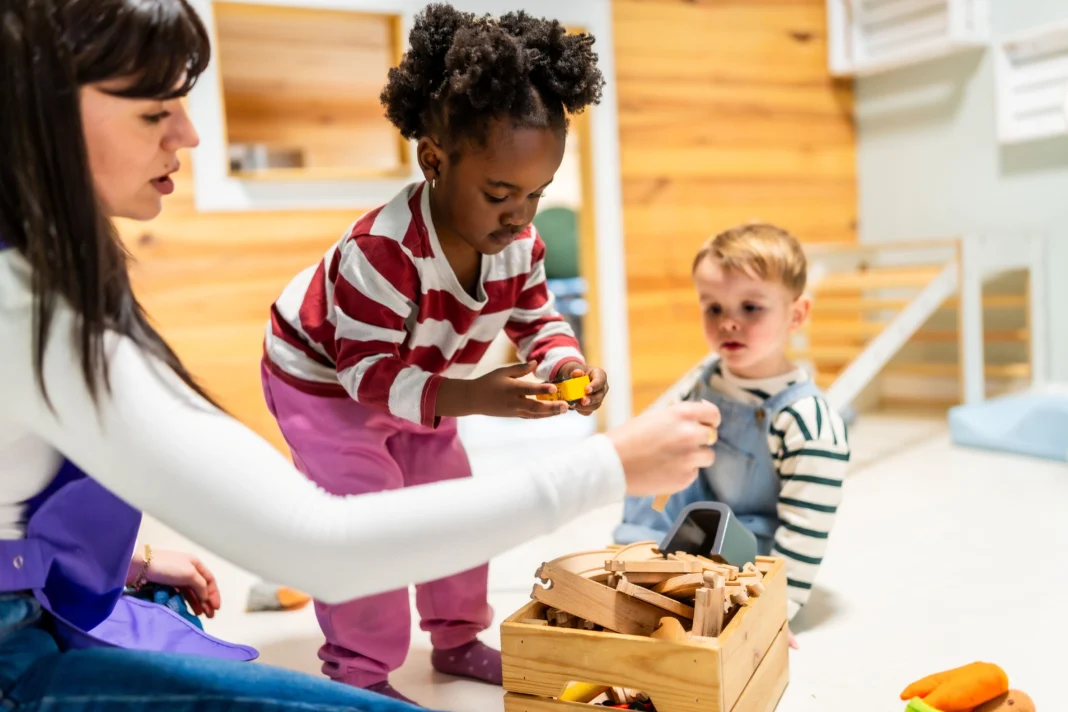
They experience the educator who gets down to their level when they are overwhelmed. The person who notices what has caught their attention and asks another question. The adult who gives them a little longer to work something out instead of stepping in with the answer.
At Dibber, our method considers the whole child. Social, emotional, physical and cognitive development do not happen in isolation from one another. A child building a block tower may be solving a problem and practising coordination while also negotiating with another child, managing frustration and learning what to do when the whole thing falls over.
South Africa needs a definition of quality that can travel across very different circumstances and communities and still mean something. If we are serious about that, practitioner development has to sit alongside registration and infrastructure. The Department of Basic Education itself identifies practitioner training and support as one of the key areas for strengthening the quality of ECD services.
Buildings matter. Resources matter. But neither can replace a skilled adult who knows how to engage a young child, extend their thinking and respond appropriately to what they need.
This is the work that needs to follow registration.
As more programmes enter the formal system, they need a realistic path from compliance towards continually improving practice. That means developing educators, observing what happens inside classrooms and using evidence to understand where support is needed.
South Africa has a real opportunity now. We should continue bringing programmes into the regulatory system and reaching children who remain excluded. Investment in nutrition, safety and early learning must continue.
But alongside the registrations, funding and compliance requirements, one question should remain difficult to ignore:
What does this place feel like to the child who walks into it every morning?
That question will not appear on every registration form, but it belongs in any serious definition of quality.
South Africa needs more children in ECD. It needs more programmes inside the formal system. And it needs sustained investment in practitioners and the quality of children’s daily experience.
Getting children into ECD is the first step.
Making those places genuinely good for the children inside them is the work that comes next.
By Ursula Assis, Managing Director of Dibber International Preschools South Africa
About Dibber International Preschools:
Dibber International Preschools is a global leader in early childhood education, with a commitment to providing high-quality preschool experiences that foster children’s holistic development – with over six hundred high-quality preschools across nine countries and with a focus on the Dibber Heart Culture and customised learning approaches, Dibber aims to nurture the potential of every child, ensuring they receive the best start in their educational journey.

