



Johannesburg, 13 October 2026: I grew up on a playground that wouldn’t pass a modern safety inspection by a country mile. Besides the devilishly risky, notorious jungle gym – we climbed trees, jumped between things, ranged far from home and supervision, fell, fought, made up – and figured out fairly quickly that some decisions hurt more than others.
Those days, play was unsupervised, and non-prescriptive. What was ‘fun’ and ‘normal’ for us back then, is easily someone’s lawsuit today.
But it got me thinking: The playground mattered.
Why the playground mattered so much, is that beyond the ‘danger’, we were developing something without knowing it: learning how to be human around other humans. We were learning how to reason; to calculate how far we could jump and how high we were prepared to climb. And that daring had consequences.
We learnt how to fight face to face, sometimes using nasty words that we quickly understood had emotional consequences – not because the teacher scolded us – but because the person we were speaking to was standing right there. We could see his/her facial expressions change. We could sense distrust. We could feel properly ashamed by our actions, in real time.
“Friendship was our currency”
On the playground, we learnt how to read a face, how far to push, when to retreat and, importantly, how to find our way back into the group when we got it wrong. Those relationships were few and of high value. You couldn’t simply exit the group, because your group was your entire world.
In a sense, friendship was our currency. Not so much today.
Now, we can belong to 20 WhatsApp groups and leave 19 of them without materially changing our lives. We can have 1 000 followers and nobody to phone. We have never been more connected, yet I wonder whether some of our connections have ever been worth less.
Now turn that lens on the workplace. Today, our place of work has more generations in it than ever before. Boomers, Gen X, Millennials and Gen Z (and the Alphas are coming!). We’re all sharing space, but none of us really know how to play together.
While a single office floor can now span fifty years of birth dates, I think we may be missing a far more important distinction: we all learnt how to play on different playgrounds.
I recently read Jonathan Haidt’s The Anxious Generation, and I found it genuinely frightening. His argument is that somewhere around the arrival and mass adoption of the smartphone, childhood fundamentally changed. “Play-based childhood began being displaced by phone-based childhood -increasingly disembodied and asynchronous.”
Haidt is right. When smartphones arrived, our interactions felt more disengaged than we could have once imagined: We send the message, post the comment, leave the group – and if we don’t like you, we just block the person out of existence.
“Who on this playground is to blame?”
Follow the smartphone generations into working life: Many studied partly online; they graduated into a labour market where hybrid work is normal; their mentors become faces inside a grid view, and their first professional relationships are still being formed over video calls. And who on this playground is to blame?
Just as a generation enters a brick-and-mortar office – one of the last structured environments in which we can develop some of those playground human skills – we send them home to work remotely. Are we really encouraging a generation – already taught to relate at a distance – to now reinvent their working life, remotely, and at speed?
Yes, we are. And it’s scary.
And it’s not just working from home that’s the problem with social disengagement – it’s the way most businesses are working at the office too. Presence alone does not create connection. People can sit in the same building all week and remain completely disconnected from one another. Commuting into an office to sit at a desk taking video calls is not presence; it is just scrolling with better lighting.
So how exactly are we, as the original playground generation, empowering a healthier, more connected working environment at the office, specifically?
The incidental, unscheduled and embodied contact that once constituted so much early-career learning is steadily being designed out of the working week. And this is the part that worries me: we already vanquished the value of the playground once – we are doing it a second time to the same people.
We all know that the screen removed something enormously important from human communication: the other human being. And yet, we’re still using this exact playbook to build our future workforces. Why?
“The office is not a real estate question. It never was”
As the CEO of one of South Africa’s leading flexible workspaces, I still see the enormous benefits of flexible policies. For me, the answer is not to abandon hybrid work – but rather to learn, appreciate and institute the rules of the playground alongside it.
By doing this, we can build a sustainable, more embodied working culture, from the jungle gym up. The office is not a real estate question. It never was. It may now be one of the last reliable venues we have for teaching people how to be in a room with each other.
If we are going to keep asking people to walk into an office, somebody has to take responsibility for making it worth walking into.
Perhaps we need to be asking: what if workplace wellness is simply learning how to be around each other again?
Here are my hard-won lessons from the playground, that I believe are worthwhile reacquainting with:
5 lessons from the playground worth bringing back to the office:
- Put the right people on the playground together
Coordinating presence matters more than counting it. If younger employees need observational learning, put them alongside people they can learn from. Let them watch how somebody navigates a difficult client, disagrees without destroying a relationship or makes a decision without the bot in the room.
2. Let people experience some friction
This is manageable risk. As a kid, you climbed as high as you believed you could climb. Sometimes you fell and it hurt. Next time, you recalibrated. Work should never be psychologically unsafe, but neither should it be engineered to remove every uncomfortable human interaction. Disagreement, awkwardness, negotiation and repair are not necessarily signs of a dysfunctional workplace. They are the conversations that can drive the business forward and promote personal growth.
3. Make relationships high value again
Give people reasons to need one another. Build teams where trust matters, mentorship is accessible and people know more about one another than a LinkedIn title, or their name strap on a Zoom call.
4. Measure belonging, trust and connection as the employee metric
Rather than simply measuring compliance. Attendance is easy to count. Human connection is harder, but infinitely more valuable.
5. Rewild people a little
I use this word deliberately. Put people back into those challenging, human social structures. Let them observe. Let them speak. Let them get something wrong, misread a room and learn to read it better next time. Let generations encounter one another instead of caricaturing one another from a distance. The skills we once developed organically now need to be developed more intentionally.
This is where I believe the extraordinary generational vortex inside the modern office becomes an opportunity for wellness, rather than a problem.
Older generations have something to teach younger ones about embodied relationships, consequence, and the social muscle that builds from decades spent navigating rooms. Whilst the younger generations are equally teaching us to question why the jungle gym was so damn high in the first place; they’re teaching us to challenge conventions we accepted without interrogation; how to be fluent in technologies, change, and boundaries.
We need every generation on this playground – because each arrived carrying something the others did not. And that’s the playbook we should all be reading from.
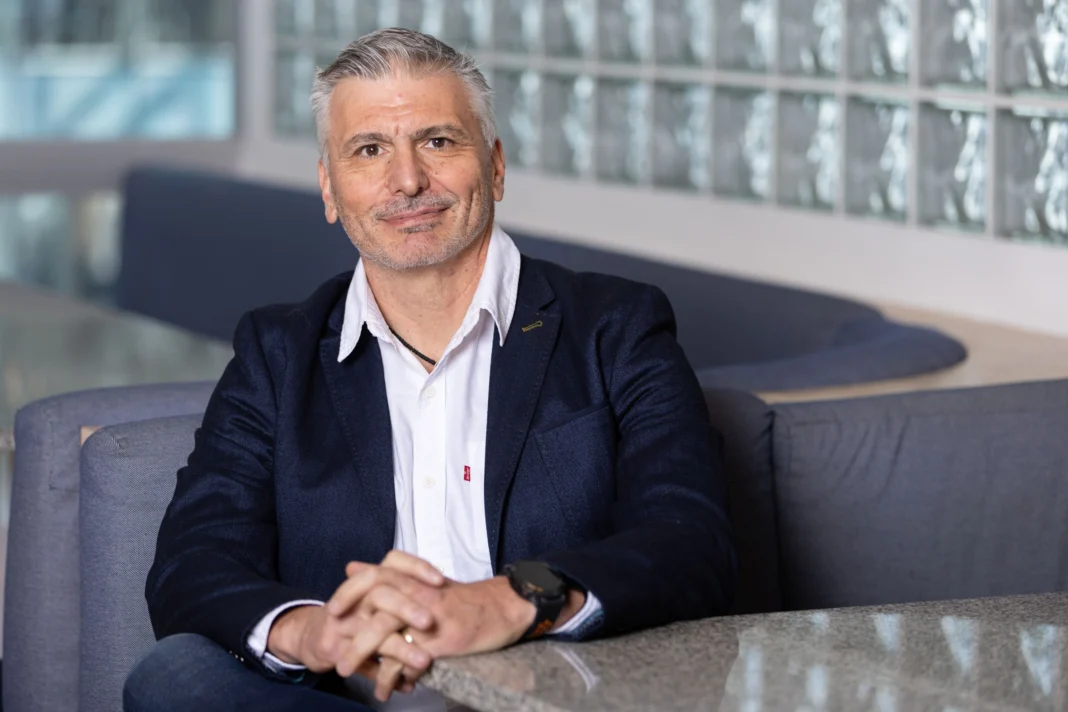
Op:Ed by Stefano Migliore, CEO
Find Stefano Migliore on LinkedIn.
For more information on WeWork South Africa visit www.wework.co.za
About Stefano Migliore:
Stefano Migliore is CEO of WeWork South Africa and business leader with more than 30 years’ experience across law, entrepreneurship and executive management. A Wits law graduate and admitted attorney, he has built his career around strategy, business development and growing businesses across diverse sectors. As CEO of WeWork South Africa, Stefano is an active voice on the future of work, flexible real estate and human-centred workplace culture. Away from business, he is an adventurer, endurance sports enthusiast, writer and family man – with a deep seated passion for excellent coffee, and creating meaningful social and commercial impact. For more info on WeWork South Africa visit www.wework.co.za
Press Contact:
Mantis Communications
Kerry Simpson
Tel: 079 438 3252
Email: [email protected]

