



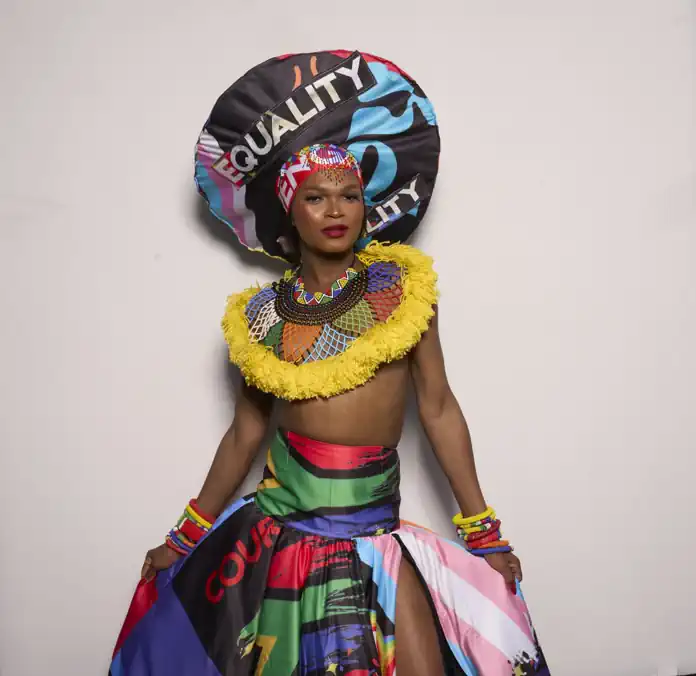
Renowned South African LGBTQIA+ cultural worker, activist, and media personality Yaya Mavundla recently returned from the Netherlands after representing South Africa as one of six international advocates hosted at the KLM Royal Dutch Airlines Pride House during WorldPride Amsterdam 2026.
The LGBTQIA+ cultural worker, activist and media personality was one of just six international representatives invited by KLM Royal Dutch Airlines to stay at the KLM Pride House during WorldPride Amsterdam 2026, joining advocates from South Africa, Mexico, New Zealand, Singapore, Brazil and Poland.
As an official airline partner of WorldPride Amsterdam 2026, KLM created the Pride House as a safe and welcoming space for six LGBTQIA+ community representatives from countries where openly expressing one’s identity is not always straightforward or safe. Hosted at the historic Hotel Sofitel Legend The Grand in Amsterdam, the initiative gave the group an opportunity to connect with one another, explore the city and participate in WorldPride celebrations and community events.
The experience formed part of a landmark edition of WorldPride, held in Amsterdam from 25 July to 8 August 2026. The city hosted a programme of events including the iconic Canal Parade, WorldPride Village, a Human Rights Conference, cultural programming and the WorldPride March, bringing together LGBTQIA+ communities, activists and allies from around the world.
For Mavundla, a prominent trans advocate who grew up in rural KwaZulu-Natal, taking part in WorldPride Amsterdam served as both a milestone personal journey and a vital platform to elevate South African trans visibility internationally. The experience highlighted the dialogue between South Africa’s progressive constitutional protections and the real-world work still required to ensure dignity, safety, economic equity, and historical preservation for black transgender individuals in South Africa.
What emerged was a powerful reminder that while countries and communities may have different histories, cultures and legal frameworks, the conversations around dignity, safety, acceptance and belonging remain deeply connected.
As she returns from her inspiring trip, Mavundla opens up about her experience, why these initiatives are important and how inspiring it is seeing global brands like KLM playing their part in advocating for the LGBTQIA+ community.
What did being invited to KLM Pride House in Amsterdam mean to you personally, as a South African trans woman?
Being invited to KLM Pride House in Amsterdam was deeply meaningful to me. As a South African trans woman, I know that visibility is never just about being seen, it is about being seen, heard and recognised as a whole human being. To be invited into a space that celebrates LGBTQIA+ people from different parts of the world felt like an affirmation of the work that I, and so many others, continue to do for visibility and acceptance in South Africa.
You were one of six LGBTQIA+ advocates from around the world brought together for the experience. What was it like meeting people whose experiences are different from yours, but who share a similar journey of advocating for LGBTQIA+ visibility and acceptance?
One of the most beautiful things about the experience was realising how different our journeys can be, while the emotions behind them can be so similar. We came from different countries, cultures and backgrounds, and each person had their own challenges and victories. However, there were familiar themes, the importance of visibility, the need for safety and acceptance, the responsibility we sometimes feel to speak for communities that are still marginalised, and the hope that things can be better for the people coming after us even those around us who do not have the same platforms and voice. I learned that advocacy doesn’t have one universal formula. What works in one country may look completely different in another. We don’t have to have identical experiences to stand together.
What did you learn from exploring Amsterdam’s LGBTQIA+ history that made you reflect differently on South Africa’s own LGBTQIA+ journey?
Exploring Amsterdam’s LGBTQIA+ history reminded me that progress is a journey. I realised how far we have come in my country and how far do we still need to go. When you look at where LGBTQIA+ communities are today in different parts of the world, it can sometimes be easy to forget the struggles, resistance and activism that came before. Attending the Queer Amsterdam exhibition was thought provoking, to see that important archive made me reflect on so much. We are often rightly proud that our Constitution protects LGBTQIA+ rights and that same-sex marriage is legally recognised, but legislation is only one part of the journey. There is still a gap between rights on paper and the lived experiences of many LGBTQIA+ people, particularly transgender people and those who are vulnerable because of where they live or their socioeconomic circumstances. When we also speak of opportunities and compensation for us black people, it is a different story that those in the Netherlands. Amsterdam made me appreciate both how far South Africa has come and how much work there is still to do. Our history of LGBTQIA+ activism is important, and I think we have a responsibility to preserve those stories because they show future generations that change is possible.
Was there a particular moment during your time at Pride House or in Amsterdam that stayed with you after you returned home?
What stayed with me most was the feeling of being in a space where LGBTQIA+ people didn’t have to explain why their existence mattered.
What was the journey with KLM like, and did travelling as part of this experience add to the feeling of being connected to a global LGBTQIA+ community?
The journey itself became part of the experience. Travelling from South Africa to Amsterdam for an LGBTQIA+ experience made me think about how movement can change your perspective. You leave one environment, travel across borders and suddenly find yourself in a room with people who may speak different languages and come from completely different cultures, but who understand something about your experience without you having to explain everything. That made the journey feel bigger than simply travelling from one destination to another. It felt like travelling into a global community, one that is connected by shared values of visibility, acceptance and freedom. Experiencing World Pride in a country I have never been to was also a huge milestone but a great lesson.
KLM talks about travel as a way of connecting people, cultures and perspectives. After this experience, what does that idea of connection mean to you?
After this experience, connection means understanding that we are part of something bigger than ourselves. This also involves respect, care for one another and love. Travel allows you to encounter people whose lives may be completely different from yours, and yet you often discover common ground like we did with the group during our stay at the KLM Pride House. For me, the experience reinforced the idea that LGBTQIA+ advocacy is global, we share the same voice even though it is not in the same language or the language we may understand, but we understand the struggle and it is also deeply local. We each have our own communities to serve and our own battles to fight, but we can learn from one another. I came home feeling more connected not only to the people I met in Amsterdam, but also to the LGBTQIA+ community in South Africa that depends on my voice and existence to keep going and try another day even when they feel defeated. It reminded me that visibility can travel and that when we share our stories, we make it easier for someone else to share theirs.
For more information, visit www.klm.co.za.

