



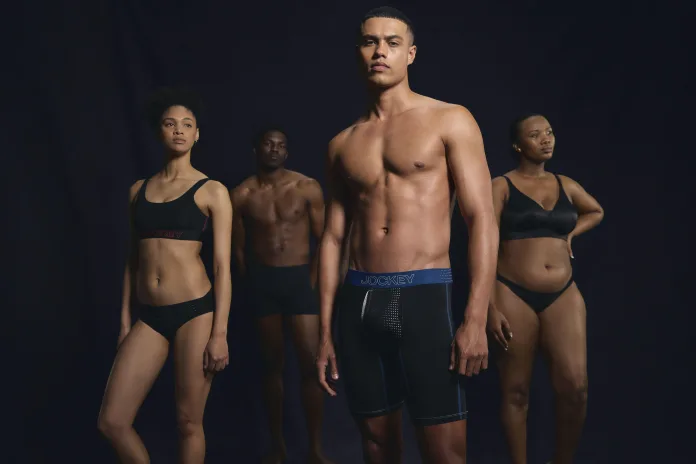
Very few consumer brands remain relevant for 150 years. For Jockey, this stellar anniversary reflects more than longevity. It represents a long-term commitment to solving changing consumer needs through product innovation, while allowing local markets like South Africa the flexibility to adapt that innovation for their own consumers.
Founded in the United States in 1876, Jockey has evolved from a hosiery manufacturer into one of the best-known global underwear brands. In South Africa, the brand has been manufactured and distributed by Durban-based Ninian & Lester for more than 75 years, building one of the country’s leading apparel manufacturing businesses through a combination of global innovation and local expertise.
Staying relevant in the fast-moving fashion industry
According to Bruce McMurray, the General Manager of Jockey South Africa, the brand’s longevity has never been about innovation just for innovation’s sake. “Throughout our history there have been several defining innovations that changed not only our business, but the underwear category itself,” he says. “This wasn’t driven by a marketing imperative to stay relevant, but an ongoing sensitivity to consumer needs and an authentic motivation to step up and provide what our customers wanted from Jockey through the generations.”
From the launch of the revolutionary Jockey® Y-Front® Brief in 1934 to pioneering technologies such as 3D-Innovations®, Staycool+®, Seamfree®, Skimmies® and, most recently, VentraCool Air, each innovation has been driven by solving real consumer needs rather than pursuing novelty.
“Ultimately, the common thread across is that every breakthrough has been driven by one question – how can we make people feel more comfortable, more confident and better supported in everyday life? That mindset is what has kept Jockey relevant for a century and a half, and it will continue to guide us into the future,” says Bruce.
Navigating the global and the local
It’s a global philosophy that has shaped the local South African business which has been responding effectively to its consumers for over seven decades, while upholding the quality standards of a global brand.
“A key driver of our longevity in South Africa has been our philosophy of continuous improvement, rooted in Lean principles,” says Bruce. “Rather than seeing change as a disruption, we embrace it as an opportunity to improve. Whether it’s refining our manufacturing processes, investing in new technologies, enhancing product quality or improving the customer experience, we are constantly looking for better ways to serve South African customers.”
More than 95% of Jockey South Africa’s products are manufactured locally, demonstrating the business’s long-standing commitment to local production and supporting South Africa’s clothing and textile manufacturing sector.
This commitment extends also to the way the business develops its people, nurtures innovation and stewards the brand. Bruce says, “We have never chased short-term trends at the expense of the brand. Instead, we’ve remained focused on delivering consistent quality, investing in product innovation and building trusted relationships with our retail partners, suppliers and consumers.”
Local manufacturing has also become an important competitive advantage, enabling faster product development cycles and closer collaboration with consumers. Local product development and manufacturing capabilities means more flexibility to identify opportunities, develop solutions, test with consumers and use those insights to refine future products far more quickly than traditional retail models allow. The result is an overall business agility that has enabled Jockey South Africa to remain relevant for decades in a rapidly changing market.
Looking ahead, Bruce believes the next phase of growth for the Jockey brand will be shaped by digital commerce, data-driven consumer insights and continued product innovation. Digital channels now contribute approximately 10% of total sales and represent a key growth opportunity for the business. Continued investment in e-commerce, marketplaces and digital customer acquisition is expected to increase this contribution over time.
Bruce says, “Consumer expectations today are vastly different from what they were even five years ago. They are looking for greater value, personalisation, convenience and products that genuinely solve problems. To remain competitive, we must continuously adapt not only what we make, but how we design, develop and bring products to market.”
He believes the business sees its greatest opportunity in combining the agility of local manufacturing with data-driven decision-making and global innovation: “As leaders, it’s our responsibility to foster a culture that embraces change, collaboration and continuous learning because staying informed and remaining curious are essential to building a business that remains relevant for the next 150 years.”

