



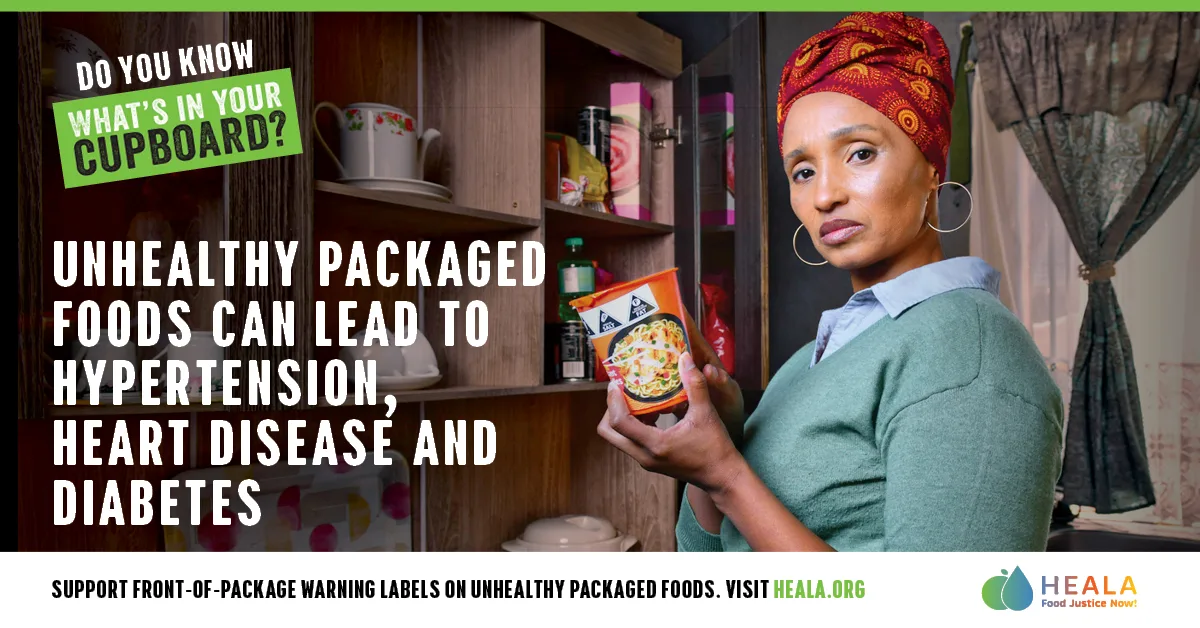
Johannesburg, 10 June 2026: Every day, millions of South Africans make decisions about what to feed themselves and their families. They compare prices, choose trusted brands, pack lunchboxes, prepare dinners and try to make the best choices they can.
But what if the biggest challenge isn’t choosing healthier food?
What if it’s understanding what is actually inside it?
That is the question actress and television personality Samela Tyelbooi is asking South Africans through a new awareness campaign highlighting the need for Front of Package Warning Labels (FoPWL) on foods high in sugar, salt and saturated fat.
What she discovered was not a lack of concern for their health. It was a lack of clear information. Families recognised the brands. They buy the products every week. They pack them and serve them around dinner tables. Yet many struggled to identify which products were high in sugar, salt or saturated fat.
When shown examples of Front of Package Warning Labels, many responded with surprise.
“If I had seen that warning, I would have understood the product differently.”
That moment of realisation sits at the heart of a growing national conversation about Front of Package Warning Labels and South Africans’ right to understand what is in the food they consume every day.
“What struck me most was not that people didn’t care about their health,” says Tyelbooi. “It’s that many genuinely believed they were making good choices. People want to do the best they can for themselves and their families, but they can’t act on information they can’t see or understand. Clear warning labels give people the chance to make informed decisions in a matter of seconds.”
The campaign comes at a time when South Africa is facing a growing burden of obesity and nutrition-related non-communicable diseases (NCDs), including hypertension, heart disease and Type 2 diabetes. Health advocates argue that one of the biggest barriers to healthier choices is not a lack of willingness from consumers, but a lack of clear and understandable information.
According to a recent policy brief on the proposed food labelling regulations (R3337), current food labels are often complex, unclear and inaccessible to the general public. The brief further notes that South Africa’s food environment is increasingly dominated by ultra-processed foods high in sugar, salt and saturated fat, contributing to rising rates of obesity and diet-related disease.
The proposed Front of Package Warning Labels would introduce simple, standardised warning symbols on products high in nutrients of concern. Unlike detailed nutrition tables typically found on the back of packaging, these labels are designed to help consumers quickly identify products high in sugar, salt and saturated fat, regardless of literacy level or language. Research conducted in South Africa has shown that these warning labels significantly improve consumers’ ability to identify less healthy products and support more informed purchasing decisions.
For South African advocacy organisation, Healthy Living Alliance (HEALA), the issue is ultimately about transparency.
“South Africa is at a critical moment in its response to the growing burden of diet-related diseases such as Type 2 diabetes, high blood pressure, heart disease and certain cancers,” says Nzama Mbalati, CEO of HEALA. “Front of Package Warning Labels are one of the most important public health tools available to help people understand what they are eating and make more informed food choices. The longer these regulations are delayed, the longer South Africans are left without clear information about what is in their food. The public consultation process has already been completed. What is needed now is decisive leadership to finalise these regulations and support healthier choices for millions of people across the country.”
The proposed regulation forms part of a broader package of measures aimed at creating healthier food environments and improving public health outcomes. Similar warning label systems have already been implemented in countries including Chile, Colombia, Argentina and Mexico, where evidence has shown improvements in consumer awareness, purchasing behaviour and product reformulation.
For Tyelbooi, the conversation comes back to something simple. “Every parent wants to make the best choices for their children. Every person deserves to know what they are putting in their body. Clear warning labels don’t take away choice; they make choices clearer.
For millions of South Africans standing in supermarket aisles every day, the question is no longer whether they want to make healthier choices. It’s whether they have the information to do so. HEALA says the regulations are ready. What’s needed now is the political will to act.
References:
- Healthy Living Alliance (HEALA). Draft Regulation Relating to the Labelling and Advertising of Foodstuffs (R3337): Policy Brief, May 2026.
- HEALA. “Clear Warnings Help People Act Before Hypertension Becomes a Lifelong Illness.” Available at: https://heala.org/clear-warnings-help-people-act-before-hypertension-becomes-a-lifelong-illness/

