



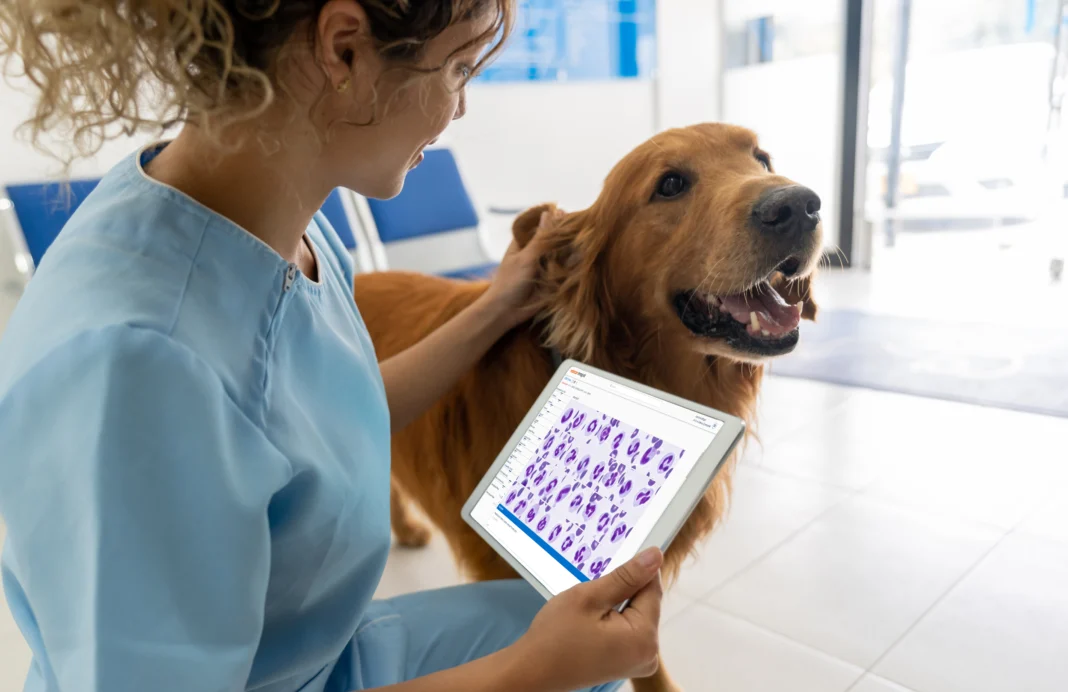
Take a deeper look into pet health, as Dr Tarryn Dent, Business Unit Director: Companion Animals at global animal health company, Zoetis South Africa, explains how diagnostic technology and specialist expertise can support veterinary care.
Johannesburg, 9 November 2026: As a pet owner, seeing your beloved pet unwell can be worrying. Often, you can see that something is wrong, but because pets can’t speak, you don’t know what’s causing their discomfort.
Trying to describe it to your veterinarian is just as hard. Pet owners may say: “My cat isn’t eating” or “My dog is sleeping more than usual, and she doesn’t want to play”. While that is helpful information, it doesn’t provide a clear cause.
Signs such as these can have many possible causes, so a veterinarian will consider them alongside the pet’s history and a physical examination. Depending on what they find, the veterinarian may recommend diagnostic tests to gather further information.
Some diagnostic tests can be carried out in veterinary practice, while others may need to be sent to an external laboratory. The time it takes to receive results varies according to the test and the service being used. Not knowing what is wrong can be difficult for pet owners. Thankfully, new in-clinic technologies can make results available sooner for some tests, helping veterinary teams consider the next steps with the pet owner.
Digital cytology
Cytology is the examination of cells. Digital cytology uses images of a cell sample prepared on a slide so that the sample can be reviewed remotely by a veterinary clinical pathologist.
How it works: Your veterinarian may take a sample of cells – for example, from a lump using a fine needle where appropriate, and place it on a slide. Where the service is available, the slide is scanned so a veterinary clinical pathologist can review the images. Your veterinarian can then consider the findings alongside your pet’s history and examination. The pathologist’s review gives the veterinarian additional information to consider alongside the pet’s history and examination as part of the diagnostic assessment.
AI-supported diagnostics
AI-supported tests help veterinarians analyse images of specific prepared samples, for example, faecal samples, urine sediment, blood smears or skin and ear samples depending on the test.
How it works: The sample is prepared for the specific test and scanned to create digital images. AI software analyses the images for relevant features, such as certain cells or parasites. The veterinarian then reviews the findings alongside the pet’s history and examination and may recommend expert review or further testing. Some in-clinic tests can provide results within minutes, although turnaround time varies by test and service.
Virtual laboratory services
Advances in digital technology can help veterinarians access specialist expertise remotely. If a test result needs a closer look, your veterinarian may be able to request a consultation or specialist review through a virtual laboratory service, where available. The specialist’s input gives your veterinarian another perspective when interpreting the findings and considering next steps for your pet. Your veterinarian remains responsible for guiding your pet’s care.
How it works: Your veterinarian can request a consultation or specialist review, depending on the service available. The specialist shares their advice with your veterinarian, who can then explain to you what it means for your pet. This service gives you access to specialist knowledge and expertise through the veterinarian your pet knows and feels comfortable with.
Pets cannot tell us how they feel, so veterinarians bring together what pet owners observe, the physical examination and appropriate diagnostic tests to understand what may be happening. Diagnostic technology and specialist input can add to that picture – they support, rather than replace the veterinarian’s knowledge and judgement.
With more information, the veterinary team can make better-informed decisions about the next steps and the care that may be appropriate for each animal. And when results are available sooner, the team may also be able to discuss those steps with the pet owner sooner. The aim is to provide care that’s even better informed, more individualised, and benefits animals as well as the people who care for them.
ABOUT ZOETIS:
A leading multi-national animal health company, Zoetis builds on more than 65 years of experience in animal health to research, develop, manufacture and commercialise medicines, vaccines and diagnostic products. Zoetis understands the deep connection between people and their pet and provides veterinarians with the resources needed to provide the highest quality of care and support, help improve the quality and extend the life of cats, dogs and horses and make it easier for owners to contribute towards the health and wellness of their companion animals. Zoetis produces vaccines, anti-infectives, parasiticides, dermatology products, animal health diagnostic and other pharmaceuticals.
Press Contact:
Mantis Communications
Kerry Simpson
Tel: 079 438 3252
Email: [email protected]

