



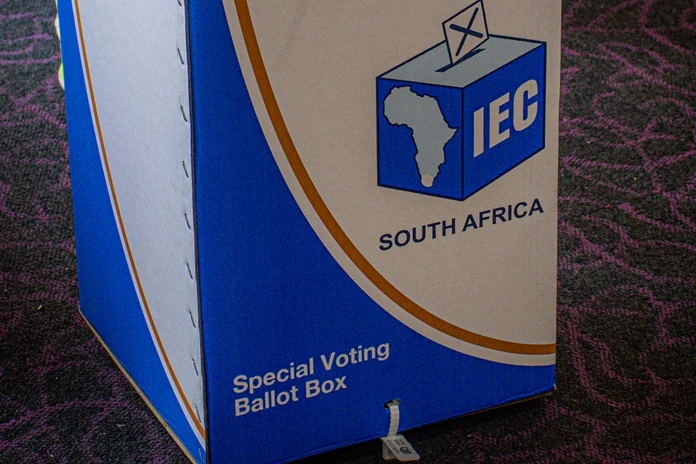
PRETORIA, Gauteng — The Electoral Commission of South Africa (IEC) has disqualified more than 5,000 candidates ahead of the upcoming November 4 local government elections, marking an unprecedented cleanup of the candidate roster following comprehensive statutory reviews.
The commission confirmed that a record 142,000 candidates were initially submitted by the August 28 nomination deadline. Masego Sheburi, Deputy Chief Electoral Officer for Electoral Operations at the IEC, outlined that the mass disqualifications stemmed from three primary compliance failures. Candidates or parties failed to pay the required nomination deposit by the August 28 cutoff, party-nominated individuals neglected to sign a formal acceptance of nomination, or independent candidates failed to pay their deposit and attach 50 signatures from registered voters in their intended ward.
A significant portion of the disqualifications involved candidates attempting to game the system. Sheburi revealed that over 500 candidates were nominated by more than one political party, or were nominated by a party while simultaneously attempting to stand as an independent candidate. In response, the IEC notified all affected parties and candidates, granting them until September 11 to either retain or replace the individuals in question. Where parties chose to replace the candidate, they were removed from the roster. However, in cases where parties did not respond, the original nominations were retained. Consequently, voters in some municipalities will see a single candidate’s name listed under multiple political parties, or contesting as both an independent and a party nominee.
Addressing concerns about preventing this deliberate strategy, Sheburi clarified that the IEC is legally constrained from intervening. Constitutionally, the sole requirement to stand as a candidate is eligibility to vote in that specific municipal council. The commission’s administrative role is limited to informing stakeholders of the irregularities and honoring the nominations as they stood on the August 28 deadline if no corrective action is taken.
Regarding the requirement for independent candidates to secure 50 voter signatures, Sheburi dismissed the notion that this is an overly burdensome hurdle. He noted that in metropolitan areas, 50 signatures is a minimal threshold, and any candidate unable to secure them is highly unlikely to garner the requisite votes for election. To ensure candidates were adequately prepared, the IEC conducted information sessions beginning in October of the previous year. Furthermore, the nomination system was made available on June 21—well before the legal requirement to open it only after an election is officially called—to provide parties with ample time to organize their lists. Those who failed to meet the requirements largely left the process too late.
The sheer volume of remaining candidates has created logistical challenges for voter navigation. Major metros, including Johannesburg, are facing crowded, double-column ballots featuring up to 75 parties, with some individual ballot papers listing close to 48 parties. Sheburi estimated that over 500 ballots across six metros will be formatted in double columns. In response, the IEC is urgently adapting its civic education strategy to confront the reality of unwieldy ballot papers. The focus is now on equipping voters to identify their chosen candidates and parties with absolute confidence to minimize spoiled votes, though Sheburi acknowledged that counting and capturing results in these specific metros will take longer than usual.
On the topic of election security and potential hotspots, Sheburi noted that every election presents unique dynamics, ranging from political tensions to community dissatisfaction over service delivery that can spill over into electoral disruptions. The IEC is working closely with the South African Police Service (SAPS) and is urging municipal leadership to proactively engage with communities to prevent violent protests that could imperil voting rights. While no specific problem areas have been publicly identified at this stage, the commission is relying on ongoing SAPS intelligence and is preparing for all 23,000 voting districts to operate smoothly and without hindrance on election day.

