



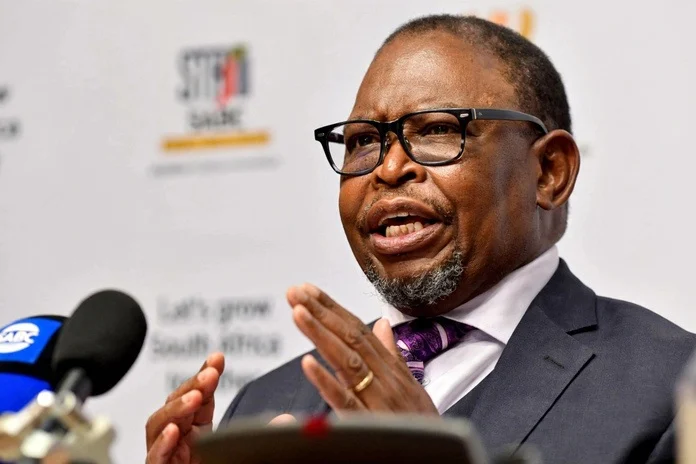
CAPE TOWN, Western Cape — The MTBPS 2026 (Medium-Term Budget Policy Statement) has introduced significant fiscal interventions, with Finance Minister Enoch Godongwana unveiling a R10 billion temporary fuel levy relief fund and a R3.8 billion allocation for social workers. Presenting the economic outlook in Parliament and defending the budget against political criticism, Godongwana outlined a comprehensive strategy to stabilize public debt, support municipalities, and cushion citizens against the rising cost of living.
Temporary Fuel Levy Relief and Electioneering Claims
To provide immediate consumer support, the government has allocated a R10 billion fund for temporary fuel levy relief. This intervention will reduce the price of diesel by R3 per litre and petrol by R1.50 per litre, effective from November 4 to December 1, 2026. The relief is expected to be reduced from January 2027.
Speaking during the Post Medium-Term Budget Breakfast, Godongwana hit back at criticism from political parties, including the EFF, who claimed the relief was a tactic for electioneering ahead of the November 4 local government elections. The Minister dismissed these claims, explaining that the November 4 start date was a pure coincidence. He noted that fuel price adjustments historically occur on the first Wednesday of the month, which happened to fall on November 4 this year, and the relief will end well after the elections in December.
Looking ahead, Godongwana confirmed that discussions are ongoing regarding the future of the fuel levy and the Road Accident Fund (RAF), which currently consumes about R2 per litre. While the fuel levy generates approximately R80 billion, the Minister emphasized that phasing it out requires finding a replacement revenue source to avoid creating a massive shock to the economic system.
Economic Growth, Debt Stabilization, and Tax Revenue
Addressing the broader economic landscape, Godongwana noted that public finances are stabilizing and debt has turned the corner. However, economic growth projections have been revised downward to 1.2% for this year, down from the 1.6% projected in the February 2026 budget. The Minister attributed this revision to unforeseen global geopolitical conflicts that forced energy, food, and borrowing costs upward. Growth is expected to recover to 1.6% in 2027 and reach 2% by 2029.
Despite subdued growth, the 2026 to 2027 gross tax revenue estimate was raised by R17.1 billion to R2.1 trillion. The SARS commissioner highlighted that tax administration must remain highly effective to close the estimated R200 billion tax gap. A major focus is VAT modernization—joining systems used in countries like Russia, Italy, and Portugal—to gain visibility across the ecosystem and bring unregistered traders into the net. The Minister also emphasized that government will focus heavily on skilling young people to prevent skills shortages when economic growth improves.
Social Workers and Municipal Accountability
To step up proactive prevention, early intervention, and psychosocial support against gender-based violence and femicide, a R3.8 billion budget will be used to hire more than 3,500 social workers. Godongwana indicated his inclination is to make this funding available as a conditional grant rather than part of the equitable share, ensuring the money is strictly ring-fenced for these employment programs.
For local government, R21.8 billion has been provided to municipalities to ensure communities can afford bulk services such as electricity, water, and sanitation. To address concerns about corruption and mismanagement, amendments to the PFMA and MFMA are being introduced to give the National Treasury more disciplinary teeth, which may include jailing individuals for non-compliance.
Following the withholding of funds from 69 municipalities in July due to issues like non-payment of creditors, unfunded budgets, and irregular expenditure, 38 have since concluded repayment plans. To further improve revenue management and efficiency, the grant for the installation of smart meters is being extended by an additional R3.5 billion, building on a previous R2 billion allocation.
Disaster Management, SANDF, and SABC Funding
In response to the El Niño weather phenomenon, the disaster management contingency reserve—which had a R5 billion provision that was exhausted—has an adjusted estimate of R6.2 billion. Following an overspend and savings that yielded an additional R45 billion in revenue, the Treasury is recapitalizing the contingency reserve with another R10 billion to mitigate future disasters.
Regarding the South African National Defence Force (SANDF), R823 million has been allocated for emergency deployment and support roles under Section 16 of the PFMA. Additionally, R560 million, along with an extra R280 million, will be provided to stabilize the regular force medical continuation fund for retired members. The Minister also noted that SANDF equipment and goods and services will be characterized as infrastructure and funded through the budget facility for infrastructure.
For the public broadcaster, the SABC, Godongwana stressed that the government is seeking a long-term funding solution rather than short-term cash injections. Discussions involving the President and the Minister of Telecommunications and Digital Technologies are underway to ensure the survival of the broadcaster ahead of the elections.
Finally, R516 million has been allocated for the Madlanga, Khampepe, and Nkabinde commissions of inquiry. The Minister clarified that this budget only covers current extensions, as the President intends to have the commissions, particularly the Machanga commission, fully conclude their work and recommendations by January.

