



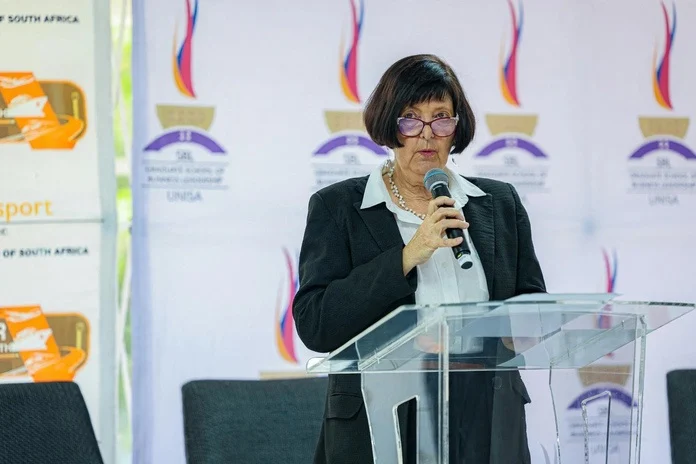
PRETORIA, Gauteng — As South Africa approaches the medium-term budget policy statement, Road Accident Fund reforms have taken center stage, with Transport Minister Barbara Creecy announcing a comprehensive overhaul of the entity’s payout structures and funding mechanisms. Facing mounting pressure across rail recovery, freight logistics, and public transport subsidies, the Transport Department is pivoting toward a more equitable and financially sustainable transport model.
A No-Fault System and Equal Benefits for All
Addressing the fiscal pressures on the Road Accident Fund (RAF), Minister Creecy confirmed that the department has ruled out an increase to the RAF fuel levy. Instead, the focus is on internal restructuring.
“The Road Accident Fund must sort out its own house and get its administration in order,” Creecy stated, highlighting a history of rising contingent liabilities, unmanaged case backlogs, and a past culture of failing to defend cases, which resulted in massive payouts.
To resolve these inefficiencies, the department is proposing a shift to a no-fault system to curb excessive legal spending. A central pillar of these Road Accident Fund reforms is the introduction of a defined schedule of benefits. Under the new policy, compensation will be standardized regardless of an individual’s circumstances or ability to hire top-tier legal representation.
“Whether you are a prince or a pauper, if you are injured in a road accident, you should have the same benefits. It shouldn’t depend on your ability to secure a very good lawyer,” Creecy explained.
Furthermore, the department wants to transition lifetime benefits from once-off lump-sum payments to incremental payouts. While the ultimate goal is to phase out the fuel levy grant, Creecy noted that a “hybrid model” will be required. This will involve self-insurance for new cases while allowing a transition period to clear the historical backlog of unsettled past cases.
Alternative Funding and Electric Vehicle Integration
Currently, R2 of every fuel levy goes to the RAF. However, the rise of electric vehicles (EVs) and fluctuating fuel costs threaten this funding model. Creecy noted a significant surge in EV purchases over the first eight months of the year as consumers seek to reduce fuel expenses.
The department is exploring alternative funding mechanisms, such as a motorist insurance model. However, Creecy emphasized that any new system must be administratively simple and avoid burdening motorists with massive lump-sum payments during annual license renewals.
To ensure public transport operators are not left behind with expensive internal combustion engines, the department is also investigating how the taxi recapitalization grant can be utilized to give the taxi industry access to electric vehicles.
Overhauling Public Transport Subsidies and BRT
Making public transport affordable remains a critical priority, especially with the Passenger Rail Agency of South Africa (PRASA) successfully recovering lines vandalized during the pandemic. Creecy highlighted that a return fare on a PRASA train is highly affordable at approximately R15.
To further ease the cost of living, the department is reviewing its transport grants, including the bus subsidy and public transport network grants. Historically, these funds were not directly utilized to reduce commuter fares. Moving forward, the department is consulting on a new model where bus and taxi operators receive targeted support on selected routes to directly lower fares for commuters.
Consequently, the department is phasing out the Bus Rapid Transit (BRT) grant. Describing it as a “dysfunctional grant” that failed to meet expectations, Creecy noted that the funds will be redirected to better support households. However, she clarified that existing BRT infrastructure will not be abandoned; cities and provinces can continue to operate buses on these routes and prioritize them for consumer support, particularly on corridors where rail is unavailable.
Massive Rail Investments and Infrastructure Upgrades
While the overall transport budget is not expanding, PRASA continues to receive a substantial share of the public transport budget to drive rail recovery. The agency is heavily investing in locally manufactured trains, having already taken delivery of over 300 units with 600 more on order.
Highlighting the scale of investment, Creecy noted that KwaZulu-Natal alone has seen R50 billion spent over the last three years to upgrade tracks, stations, and procure new trains. The immediate operational priority is increasing the number of trains running per hour to improve commuter availability.
During Transport Month, the department showcased several key infrastructure milestones:
- N2 Highway Upgrade: Construction of a brand-new dual carriageway from Piet Retief to the KwaZulu-Natal border to ease congestion and improve freight movement.
- Mabopane-Pretoria Line: Installation of new signaling to increase train frequency.
- Kokstad Interchange: The launch of a new interchange in KwaZulu-Natal aimed at boosting rural development.
- Sishen-Saldanha Line: Transnet’s major refurbishment of this critical Northern Cape corridor to secure the export of iron ore and manganese through the Port of Saldanha.
Road Safety Ahead of the Festive Season
Looking ahead to the festive season, Minister Creecy emphasized that road safety requires daily, year-round commitment rather than just seasonal campaigns. She expressed encouragement over current statistics, noting that the country is averaging a reduction in road deaths this year.
“We hope that going into the festive season, we’ll be able to sustain that,” Creecy said, urging all South Africans to behave more responsibly on the roads to ensure everyone returns safely to their families.

