



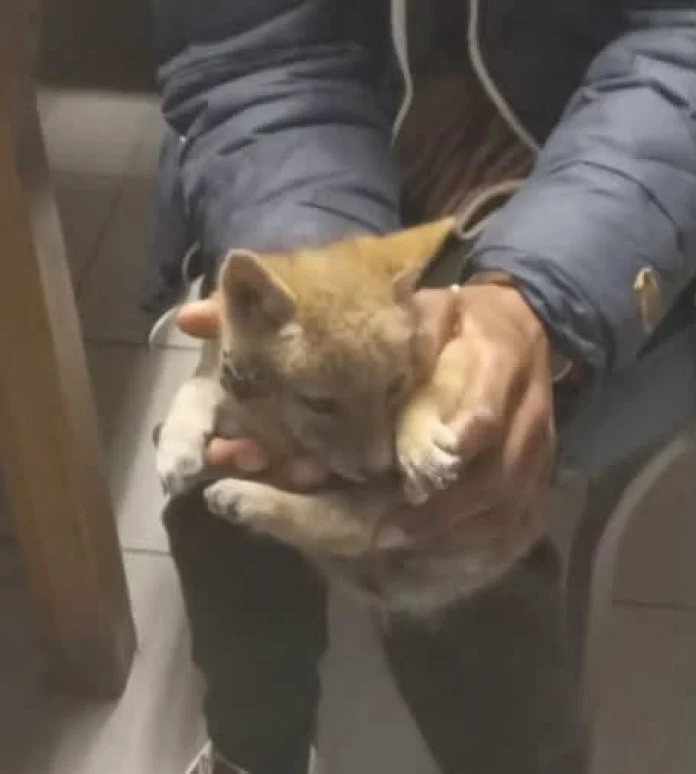
FREE STATE – A joint operation by the South African Police Service (SAPS) and the Wildlife Crime Information Network (WCIN) – Cross-Border Investigations & Anti-Poaching Operations has disrupted the illegal wildlife trade in the region, leading to the rescue of a leopard tortoise and a jackal pup. The collaborative law enforcement efforts resulted in one arrest in Reitz and a monetary penalty for another individual in Clarens following separate incidents of unauthorized wildlife possession and online trafficking.
The integrated task team acted on shared intelligence regarding the illicit online sale of protected animals via social media platforms. This intelligence led investigators to a 30-year-old suspect who had allegedly advertised a leopard tortoise for sale on Facebook Marketplace. Authorities traced the individual to his workplace in Reitz, after which he accompanied officials to his residence. The leopard tortoise was successfully recovered and rescued prior to the alleged sale.
The suspect was formally arrested for possessing a protected wild animal without the requisite permits and for conducting a restricted activity without proper authorization. These actions contravene Section 57(1) of the National Environmental Management: Biodiversity Act, 2004 (Act No. 10 of 2004), alongside charges of possessing a protected species.
In a separate but related enforcement action, intelligence sharing by the integrated team facilitated the rescue of a jackal pup in Clarens. The young animal had been kept in a private residence and was similarly advertised for sale on digital platforms. A 19-year-old male found in possession of the jackal pup was issued a fine of R3,000. This penalty was levied in accordance with Section 40(1)(c) of the Free State Nature Conservation Ordinance 8 of 1969.
According to representatives from the SAPS and WCIN, these cases underscore the escalating threat of the illegal online wildlife trade. They highlighted the critical role of continuous intelligence sharing and cooperation among law enforcement, conservation authorities, and wildlife crime organizations.
Authorities strongly urge the public to familiarize themselves with the laws governing the possession, transport, and trade of wildlife. It remains strictly illegal to collect, possess, transport, or keep wild animals without the necessary permits or formal authorization from the relevant provincial nature conservation authorities.

