



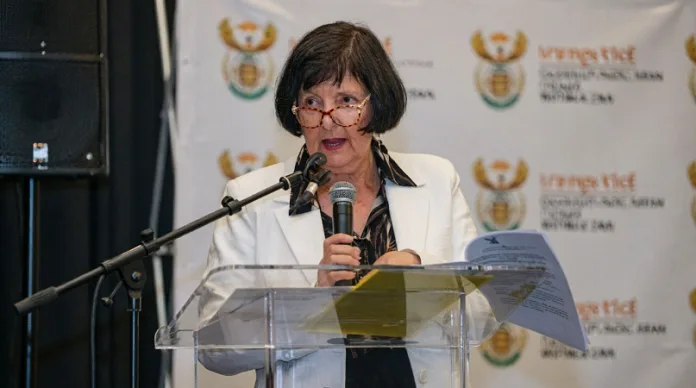
SOUTH AFRICA — South Africa is moving decisively toward implementing a strict zero percent blood alcohol policy, Transport Minister Barbara Creecy confirmed on Wednesday, as part of a broader national strategy to slash road fatalities. Speaking at the Road Safety Practitioners’ Colloquium in Ekurhuleni, the Minister detailed ongoing legal reforms aimed at fundamentally changing how the country addresses driving under the influence.
The proposed legislative changes will specifically target Section 65 of the National Road Traffic Act. To finalize this regulatory shift, the government is currently securing necessary approvals from the Chief State Law Advisor, alongside clearance from the Socio-Economic Impact Assessment System (SEIAS). The objective is to achieve full cabinet concurrence for the amendment before the close of 2026.
Highlighting the scale of the enforcement challenge, Creecy revealed that over 18,000 motorists were apprehended for drunken driving between March and the end of August 2026 alone. This figure represents a full third of all traffic-related arrests recorded during that five-month window.
With annual road deaths hovering near the 12,000 mark, the Minister stressed that such losses are unacceptable and cannot be normalized. Consequently, the government has committed to halving these fatalities by 2030, a target directly aligned with the United Nations Sustainable Development Goals.
Early indicators suggest the current strategies are yielding tangible results. Creecy pointed to a drop of more than 6 percent in both annual crashes and fatalities in 2025 when compared to 2024. Similarly, data from the 2025/26 Festive Season Road Safety Campaign reflected a 5 percent decline in crashes and deaths, with five provinces outperforming their previous year’s figures.
Data from the Road Traffic Management Corporation (RTMC) further showed that the 2026 Easter long weekend experienced the second-lowest crash and fatality rates in a four-year span. Relative to the 2024 peak, Easter crashes fell by 24 percent, while fatalities dropped by 39 percent. Extending into the current year, a snapshot from January 1 to August 23, 2026, recorded 6,457 road deaths, marking a 9 percent overall decrease from 2025.
Despite this progress, critical vulnerabilities persist. Pedestrians made up 48 percent of all recorded fatalities, and more than a third of these deaths were concentrated in the Gauteng and KwaZulu-Natal provinces. However, the Eastern Cape, KwaZulu-Natal, Mpumalanga, and North West provinces successfully achieved or surpassed their 10 percent fatality reduction targets.
Creecy attributed these positive trends to synchronized law enforcement, robust civil society partnerships, and an evolving public mindset regarding road safety. To tackle the disproportionate number of pedestrian deaths, authorities have launched targeted initiatives to discourage highway walking and crossing. This includes stepped-up policing around highway-adjacent entertainment venues to deter intoxicated pedestrians and actively promote the use of official crossing points.
Emphasizing that visibility and education are paramount, the Minister noted that collaboration with the South African Police Service (SAPS) and local communities is vital for maintaining this downward trajectory. A comprehensive, whole-of-society strategy has successfully mobilized traditional leaders, faith-based groups, and civil society to spread the road safety message.
This collaborative effort between the RTMC and provincial authorities has resulted in more than 14,000 road safety awareness and education interventions rolled out this year. Furthermore, the Department, in tandem with the RTMC, has executed a widespread media campaign across more than 50 outlets, delivering crucial public updates on weather advisories, traffic conditions, and vehicle roadworthiness compliance inspections.
While the statistical milestones are commendable, Creecy concluded that the government cannot rest on its laurels, emphasizing that every life lost represents the devastating loss of a loved one, a parent, and a breadwinner, necessitating intensified efforts to continue driving down these figures.

