



PRETORIA, Gauteng — South Africa-US diplomatic tensions have intensified following a third demarche against U.S. Ambassador Leo Brent Bozell III, driven by Pretoria’s firm stance on protecting its critical minerals and national transformation policies.
A senior Department of International Relations and Cooperation (DIRCO) official confirmed that Ambassador Bozell has been demarched for the third time in nine months. The official cited “undiplomatic conduct” as the primary catalyst for the diplomatic rebuke, though they noted that both nations remain committed to resolving their outstanding bilateral issues.
In response, a U.S. government official stated that Washington’s position remains clear. The official dismissed the friction as mere “diplomatic manoeuvring,” asserting that the United States has no interest in such tactics and that the ball is now in South Africa’s court.
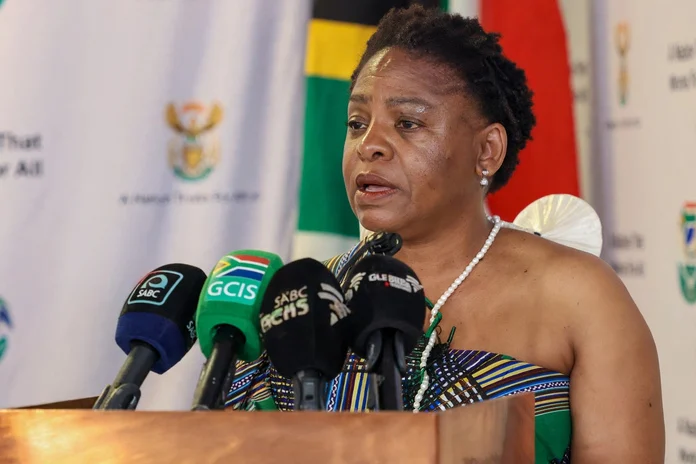
At the heart of the friction is the battle over the country’s mineral wealth. Minister in the Presidency Khumbudzo Ntshavheni highlighted that access to South Africa’s critical minerals is a central issue affecting relations with Washington.
“Insist South Africa has engaged the United States of America over its concerns, and [the dispute is] increasingly about the country’s mineral wealth, which they want to exploit and take with no participation of South Africans,” Ntshavheni explained.
The Minister emphasized that the government is non-negotiable regarding the utilization of these resources. “The minerals of this country, in particular the critical minerals, must be used to benefit South Africans first and foremost,” she stated, adding that citizens must participate not only in the extraction but also in the beneficiation of these minerals. “Africa can no longer continue to be the exporters of rock and dust.”
Despite the friction, Ntshavheni affirmed that South Africa remains willing to resolve any difficulties, provided it does not compromise the nation’s sovereign interests.
The diplomatic standoff also touches upon the so-called “five asks” raised by the U.S. Ntshavheni noted that it is highly unusual for a President to meet directly with an ambassador, but confirmed that the President did so to show the U.S. is taken seriously. According to the Minister, Ambassador Bozell acknowledged that three of the five issues have been cleared.
However, the remaining unresolved issues pertain to Black Economic Empowerment (BEE) in the mining and IT sectors. Ntshavheni clarified that BEE is embedded in national legislation and cannot be removed via an executive order or on a whim; it would require a formal legislative amendment. Furthermore, she stressed that the country is not ready to abandon BEE, as it is fundamentally tied to the transformation of South Africa.
Addressing domestic concerns often raised in international discourse, Ntshavheni also tackled the portrayal of race relations and violent crime in the country. She pushed back against narratives suggesting South Africa is unlivable, challenging detractors to leave if they are unhappy, but issuing a stern warning against internal sabotage.
“South Africans of all races here are committed to work and confront the challenges that confront this nation,” she said. “Do not destabilize this country. The destabilization of this country is not in the best interest of any of us… It’s a united and a prosperous South Africa that benefits all of us.”
As both countries navigate these complex differences, International Relations Minister Ronald Lamola has also been actively engaging with stakeholders in the United States to manage the diplomatic fallout and identify areas for continued cooperation.

