



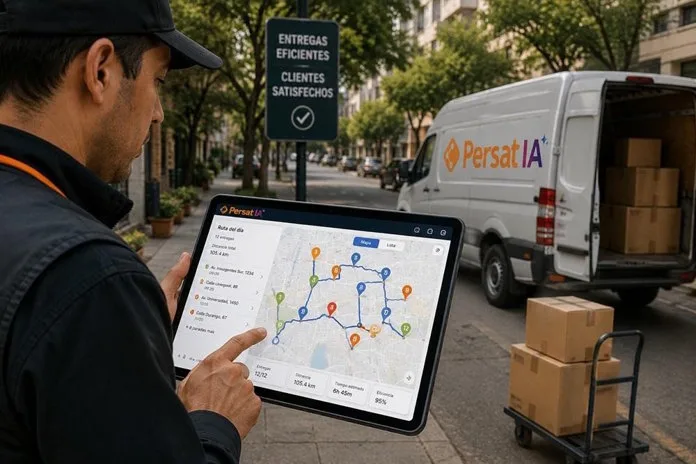
In the complex ecosystem of e-commerce, B2B distribution, and last-mile logistics, operational efficiency is no longer just a desirable goal—it has become the core pillar defining a company’s profitability. Facing urban traffic challenges, rising fuel costs, and increasingly demanding customer expectations for faster, more precise deliveries requires moving away from traditional, manual planning methods.
Implementing a modern, real-time connected route optimization app is the key to lowering transportation costs, maximizing fleet productivity, and ensuring a superior level of service.
The Operational Challenge of Urban Logistics and Last-Mile Delivery
Coordinating delivery fleets without digital tools creates operational bottlenecks that directly erode business margins. A lack of field visibility typically leads to recurring issues:
- Idle time and operational cost overruns: Poorly designed routes that increase mileage, accelerate vehicle wear and tear, and drive up fuel consumption.
- Uncertainty around delivery status: Dispatch central lacking real-time visibility into driver locations and overall route progress.
- Missed delivery windows: Failure to meet agreed-upon customer time slots due to unexpected traffic delays or inaccurate stop-time estimates.
- Lost delivery receipts: Missing paper documents that delay billing and collection cycles.
Essential Features of a High-Performance Route Optimization App
When evaluating a platform for fleet management and logistics tracking, managers must ensure the tool covers the full operational lifecycle:
- Smart dispatch algorithms and dynamic itineraries: Automatic calculation of the most efficient routes considering multiple stops, vehicle load capacities, and delivery time windows.
- GPS tracking and real-time monitoring: Constant satellite tracking of units to verify route compliance and react swiftly to unforeseen events.
- Digital Proof of Delivery (POD): Immediate confirmation from the driver’s mobile app via digital signatures, photo capture, and barcode/QR scanning.
- Customer alerts and end-to-end traceability: Automated notifications regarding delivery status and estimated arrival times, drastically reducing failed delivery attempts.
- API integration with e-Commerce and ERPs: Seamless connection with enterprise systems like SAP, Salesforce, or online stores to import orders and sync inventory in real time.
Persat IA: Bridging Route Optimization and Artificial Intelligence
In the regional landscape of software solutions for logistics and field team management, Persat stands out as one of the most robust tools on the market. Its platform connects the driver’s mobile app with a powerful control panel for dispatch teams.
The key differentiator lies in the integration of Persat IA, an intelligent ecosystem that elevates every feature expected from a modern route optimization app:
- Real-time prediction and data analytics: Persat IA analyzes historical delivery performance and route behavior to suggest proactive optimizations before bottlenecks occur.
- Automated customer support and tracking: AI agents automate interactions with recipients, resolving status inquiries 24/7 without burdening the support team.
- Streamlined decision-making: Persat IA algorithms turn raw operational data into clear metrics and forecasts, simplifying strategic transportation planning.
Direct Impact on Productivity and Operating Costs
Deploying an AI-powered route optimization app like Persat IA delivers measurable improvements in daily fleet performance:
- 35% reduction in planning time: Automated order assignment and smart itinerary generation eliminate hours of manual dispatch work.
- 20% to 50% increase in daily deliveries: Optimized routes maximize vehicle utilization and increase completed stops per shift.
- 22% decrease in operating costs: Reduced mileage directly lowers fuel expenditure and fleet maintenance costs.
- 36% improvement in customer satisfaction: Transparent, punctual deliveries supported by instant digital receipts build brand credibility.
Conclusion
Optimizing distribution doesn’t require adding more vehicles to your fleet—it requires making smarter use of existing resources. Adopting an advanced route optimization app powered by Persat IA allows businesses to automate workflows, cut operating costs, and deliver a modern, agile, and highly competitive delivery experience.

