



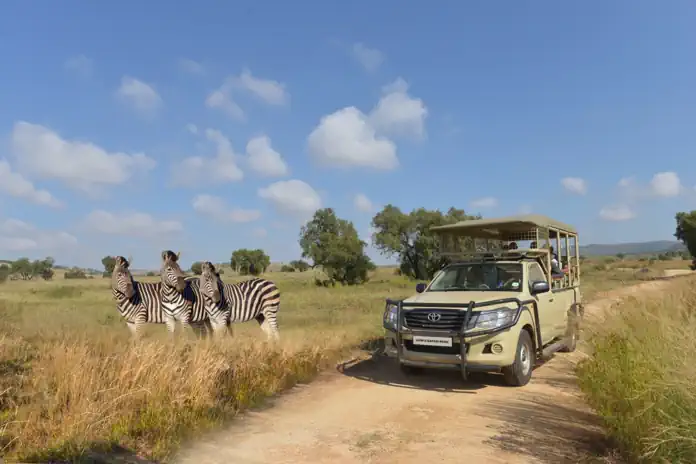
A safari is often associated with the excitement of seeing wildlife in its natural environment, but the value of a well-managed wildlife experience can extend far beyond the photographs and memories visitors take home.
For reserves such as the Bothongo Rhino & Lion Nature Reserve, responsible wildlife tourism forms part of a broader ecosystem of conservation, education and public engagement. Every visitor has an opportunity not only to experience South Africa’s natural heritage, but to gain a better understanding of the work involved in protecting it.
Located in the Cradle of Humankind, within easy reach of Johannesburg and Pretoria, the Bothongo Rhino & Lion Nature Reserve is home to more than 100 species of mammals, reptiles and birds and more than 650 head of game. The reserve is also home to several endangered species, while its Wildlife Centre provides care for animals that have been rescued, rejected, hand-reared or are undergoing rehabilitation.
This creates an important connection between tourism and conservation: the more people understand about wildlife, the greater the opportunity to build long-term appreciation for the species and ecosystems that need protection.
Conservation is about more than protecting animals
Conservation is often presented through the lens of endangered species and anti-poaching efforts, but the reality is considerably broader.
It involves habitat management, animal welfare, research, education, biodiversity and helping communities and visitors understand the complex relationship between people and wildlife. Wildlife centres can also play an important educational role by giving the public access to animals and information they may not otherwise encounter. At the Bothongo Rhino & Lion Nature Reserve, the Wildlife Centre provides an opportunity for visitors to learn about rescued and rehabilitated animals while developing a greater understanding of the challenges faced by different species.
For younger visitors in particular, this kind of experience can turn an abstract conversation about conservation into something tangible.
Tourism can create a connection with nature
South Africa’s wildlife is one of its greatest natural assets, attracting visitors from around the country and the world. But wildlife tourism can also play an important role in ensuring that people remain connected to the natural environment.
That connection matters at a time when many people, particularly children, are increasingly removed from nature in their everyday lives.
At the Bothongo Rhino & Lion Nature Reserve, that connection extends beyond the wildlife on the reserve. The destination also offers visitors the opportunity to explore the Bothongo WonderCave, one of the region’s significant natural attractions and an experience that adds another layer to understanding the area’s geological and natural heritage.
The Bothongo WonderCave forms part of the wider Cradle of Humankind landscape, a UNESCO World Heritage Site recognised for its extraordinary paleoanthropological significance. Experiencing the cave alongside the reserve’s wildlife offerings gives visitors a broader perspective on the environment they are exploring, from the animals and ecosystems above ground to the geological history beneath it.
For visitors, this creates an opportunity to slow down, observe and ask questions about the natural world from multiple perspectives. It can encourage curiosity about animal behaviour, habitats, biodiversity, geology and the history of the landscape itself.
The experience therefore becomes about more than seeing wildlife. It is about understanding the environment in which that wildlife exists, and the remarkable natural heritage that surrounds it.
Making conservation part of the experience
The Bothongo Rhino & Lion Nature Reserve’s approach brings conservation and education into the visitor experience through its reserve, Wildlife Centre and range of wildlife activities.
Visitors can explore the reserve through guided experiences or self-drives while learning more about its diverse wildlife, including species that are rarely encountered outside protected environments. The reserve also offers opportunities to observe vultures, an often-underappreciated but vital part of healthy ecosystems.
These experiences demonstrate why wildlife tourism can be an important tool for conservation awareness. When visitors leave with a greater understanding of the animals they have encountered, they also leave with a stronger connection to the importance of protecting them.
Choosing experiences that have a purpose
For travellers and families planning a safari, the experience itself is increasingly part of the decision.
Beyond asking what animals they might see, visitors can consider how a wildlife destination approaches animal welfare, education, conservation and environmental responsibility.
There is no single way to experience the South African bush, but choosing destinations that place these principles at the heart of what they do can make a wildlife outing more meaningful.
At the Bothongo Rhino & Lion Nature Reserve, the opportunity to experience wildlife sits alongside its broader focus on education, rehabilitation and conservation awareness.
Ultimately, the most valuable safari may not simply be the one that delivers the best photograph. It may be the one that leaves visitors with a greater appreciation for the responsibility of protecting South Africa’s extraordinary natural heritage for generations to come.
For more information, visit the Bothongo Rhino & Lion Nature Reserve’s Facebook or Instagram pages or visit www.rhinolion.co.za.

