



Understanding the Threat: Thrips and Their Role in Disease Spread
Thrips are small, slender, winged insects that primarily attack the tender parts of tomato plants—young leaves, buds, flowers, and fruits. Their feeding activity leads to leaf silvering, curling, and deformation. More alarmingly, they transmit several viral diseases that can devastate tomato production if not controlled on time.
Among the major viruses associated with thrip infestations are:
-
Tomato Yellow Leaf Curl Virus (TYLCV)
-
Tomato Mosaic Virus (ToMV)
Both viruses spread rapidly under favorable conditions, making continuous monitoring and early action vital.
Tomato Leaf Curl Virus (ToLCV): Symptoms and Control Measures
Tomato Leaf Curl Virus is one of the most destructive diseases in tomato farming. It causes upward curling and yellowing of leaves, stunted plant growth, and reduced fruit set, ultimately leading to heavy yield loss.
Symptoms:
-
Upward curling and yellowing of leaves
-
Stunted plants with shortened internodes
-
Reduced fruiting and poor fruit quality
Management and Control:
-
Remove and destroy infected plants immediately to prevent further spread.
-
Use yellow sticky traps to monitor and control thrips and whiteflies—the main disease vectors.
-
Adopt crop rotation and avoid overlapping planting seasons to break the virus life cycle.
-
Choose resistant or tolerant tomato varieties wherever available.
-
Apply neem oil or insecticidal soap regularly for organic management of thrips and whiteflies.
Implementing these tomato leaf curl virus control practices helps minimize crop losses effectively.
Tomato Mosaic Virus (ToMV): Symptoms, Transmission, and Prevention
Tomato Mosaic Virus is another major viral disease affecting tomato crops worldwide. Unlike ToLCV, this virus does not rely on insects for transmission—it spreads mechanically through contaminated tools, seeds, and even human touch.
Common Symptoms:
-
Mosaic or mottled light-and-dark green patches on leaves
-
Curling and distortion of young shoots
-
Stunted growth and poor fruit development
-
Unevenly ripened or hardened fruits
Integrated Pest and Disease Management (IPDM) Strategies
To protect tomato crops from thrips and related viral diseases, farmers should adopt an integrated pest and disease management approach, combining cultural, biological, and chemical methods.
-
Regular Monitoring:
Inspect tomato fields twice weekly for early signs of thrips and viral symptoms. -
Cultural Practices:
Remove weeds, maintain proper spacing, and follow crop rotation to reduce pest and disease pressure. -
Biological Control:
Introduce beneficial insects such as Orius insidiosus, which naturally prey on thrips. -
Organic Sprays:
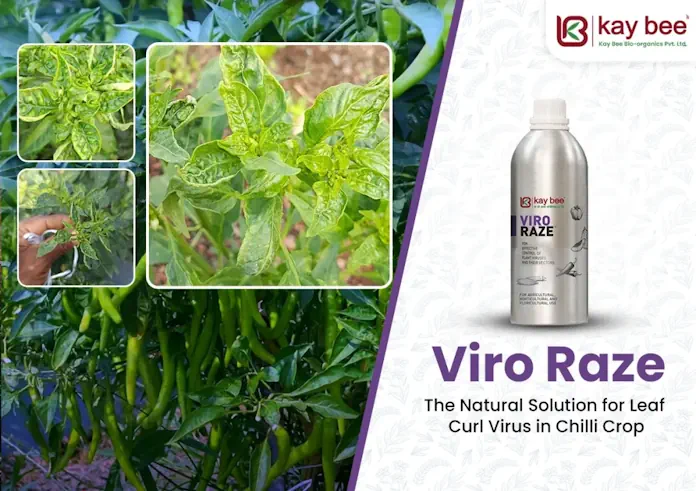
Use neem oil, Viro Raze, or insecticidal soap to suppress thrips populations effectively.
Conclusion
Thrips may be small, but their impact on tomato crops can be devastating—both through direct damage and by spreading viruses like tomato leaf curl virus and tomato mosaic virus. By combining cultural, organic, and chemical control methods, farmers can safeguard their crops effectively. Understanding the tomato mosaic virus symptoms, its treatment, and knowing that it has no insect vector empowers growers to act decisively and ensure a healthy, high-yield tomato harvest.

