



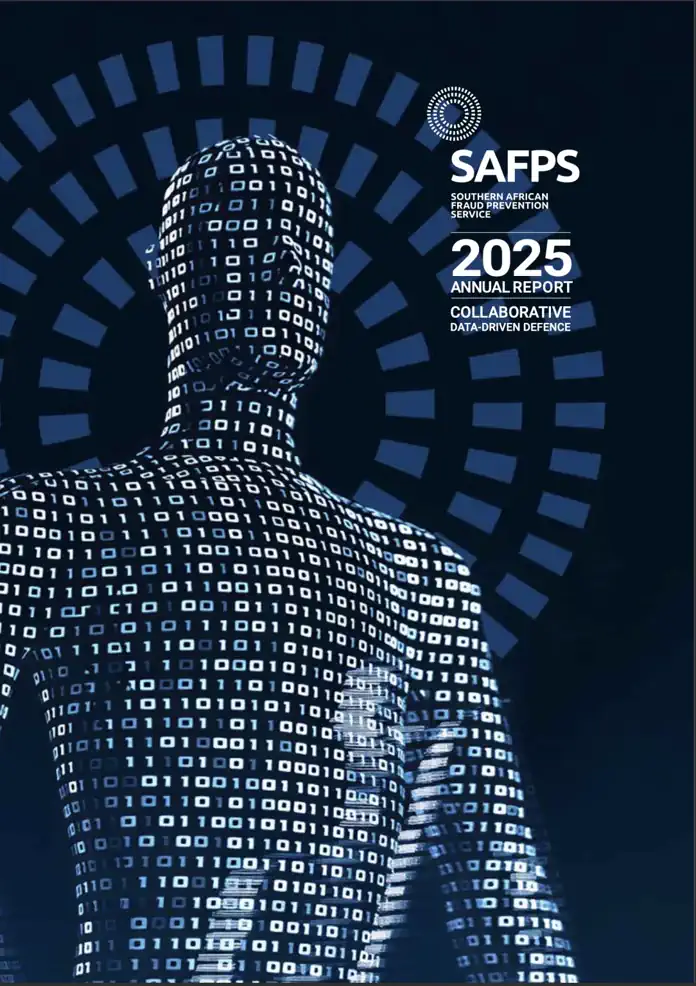
Johannesburg, 18 August 2026 – The Southern African Fraud Prevention Service (SAFPS) has saved its Members more than R7.44 billion in potential fraud losses during 2025, underscoring the growing value of shared fraud intelligence in an environment where criminal syndicates are becoming increasingly organised, technologically advanced and difficult to detect.
The figures, released in the 2025 SAFPS Annual Report, represent a 47% increase in fraud savings compared to the previous year. The number of enquiries into the SAFPS fraud database totalled 131 million during the year, reflecting a 63% increase in the use of shared intelligence to identify fraudulent activity before losses occur.
Manie van Schalkwyk, CEO of the SAFPS, says that the results demonstrate what is possible when industries collaborate instead of tackling fraud in isolation.
“Fraud is no longer confined to individual organisations or sectors. Criminals share information, adapt quickly and operate across industries. Our response must be equally collaborative. Every confirmed fraud case contributed by our Members strengthen our collective ability to detect emerging threats and prevent losses before they occur,” says Van Schalkwyk.
Fraud Networks Are Combining Multiple Attack Methods
The report shows that fraud has evolved well beyond isolated incidents. Increasingly, organised criminal groups are combining several methods into coordinated attacks that exploit both people and systems.
“Today’s fraudsters rarely rely on one technique,” says Van Schalkwyk. “They combine social engineering, identity theft, technology and document forgery into highly coordinated attacks. Understanding their modus operandi is critical if we want to stay ahead of them.”
Document fabrication remains one of the most significant fraud enablers. Forged identity documents, altered bank statements, fraudulent payslips and fabricated supporting documentation continue to underpin fraudulent applications across financial services, insurance and retail.
Alongside document fabrication, vishing (phone-based scams) has emerged as one of the fastest-growing threats and a leading attack vector within digital channels. Criminals impersonate banks, insurers, government departments and trusted institutions to manipulate victims into revealing confidential information or approving fraudulent transactions.
The report also identifies a strong operational link between vishing and money mule activity. In many cases, stolen funds are transferred into mule accounts that are opened weeks in advance and emptied within hours, making recovery increasingly difficult.
The systematic use of mule account networks across at least three major fraud categories indicates the existence of a coordinated money laundering ecosystem, in which mule accounts serve as the conduit for receiving and distributing illicit or stolen funds.
Regional Trends Reveal Fraud Hotspots
Based on the 2025 data, the Gauteng and KwaZulu-Natal provinces remain the main centres for fraudulent activity.
Document forgery, identity misuse, money mule activity, and vishing was geographically concentrated in Gauteng.
KwaZulu-Natal emerged as the dominant hotspot for funeral and long-term insurance claim fraud. While also recording a prevalence in bank statement fraud and high levels of vishing-related activity.
Preventing Fraud Through Shared Intelligence
“In the same way that fraudsters deliberately target organisations and consumers, we need to be mindful and strategic in our efforts to frustrate their attempts. By working with our Members, strategic partners and regulators, we can extend our reach and amplify our impact. A data-driven approach proactively mitigates fraud risks and makes the financial landscape much less hospitable for fraudsters. Many minds, one mission: united against fraud,” explains Van Schalkwyk.
This approach is reflected in the SAFPS’ new tagline, ‘Preventing fraud through shared intelligence.’
The organisation’s work extends across Southern Africa, supporting collaboration among Members. The fraud information contained within its database comes directly from Member organisations who investigate cases, follow due process and submit confirmed fraud information for the benefit of the wider community.
This shared intelligence model allows Members across different sectors to identify repeat offenders, recognise emerging criminal trends and strengthen fraud prevention before financial losses occur.
“Our database is only as powerful as the collaboration behind it,” explains Van Schalkwyk. “Every Member that contributes confirmed fraud information strengthens the protection available to every other Member. That shared intelligence is what makes our model so effective.”
Breaking the Silence
Beyond technology and data, the SAFPS believes one of the most powerful prevention tools is open conversation.
Too often, scams are discussed only after losses have occurred. Yet understanding criminal behaviour, recognising common scam techniques and openly sharing information about emerging threats makes it significantly harder for fraudsters to succeed.
“We can prevent other people from becoming victims of scams if we talk about it,” says Van Schalkwyk, “breaking the silence around scams, sharing methods used and educating people on how criminals operate are essential steps towards reducing financial crime across Southern Africa. Every conversation strengthens our collective resilience.”
As organised fraud continues to evolve, the SAFPS remains committed to expanding collaboration, strengthening intelligence sharing and providing its Members with the tools and information needed to stay ahead of increasingly sophisticated criminal networks.
SAFPS HELP-LINE: 011 867-2234
Yima Hotline: 083 123 SCAM (7226)
Yima Website: https://www.yima.org.za/

