



There is something irresistibly coherent about the way we tell stories of leadership.
First, a challenge, followed by a programme, followed by a ceremonious moment of revelation. Something changes, the leader returns to their organisation and does things differently, and somewhere along the way, we are presented with the satisfying conclusion that transformation has taken place.
Stories like these have beginning, a middle and an end. They leave us with the reassuring sense that impact has been achieved.
Leadership development, however, is not so obliging. It is notoriously difficult to measure, and sometimes, despite everyone’s good intentions, things do not always go as planned.
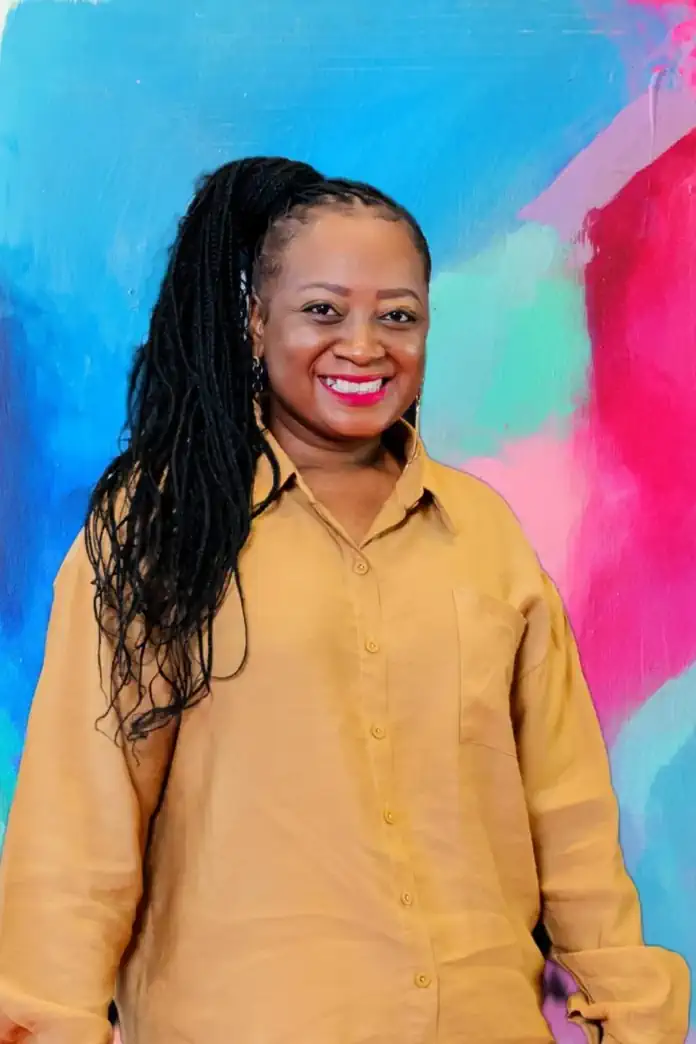
Recent *Citizen Leader Lab graduate Zonke Ngcobo, a Field Manager in Tiger Brands’ Sales division, brings these elements into focus. As part of Citizen Leader Lab’s 22nd **Leaders for Education cohort in Durban, she spent a year partnering with a school principal to learn from one another and support school leadership.
Promise vs reality
Zonke describes her Leaders for Education participation as “a journey of wisdom, grace and self-leadership”, one that challenged her to examine how she was showing up at work and in her everyday interactions.
One of her most significant learnings was about listening. “I have always been someone who interrupts when others speak,” she says. “In my mind, I was trying not to lose my train of thought or defend my perspective.”
It is a common admission, but a critical one. Interrupting is readily rationalised, and the intention is not necessarily malicious.
Zonke came to recognise this herself. “In holding onto my own thought, I could be taking away someone else’s opportunity to finish theirs.”
The programme also expanded Zonke’s understanding of grace. “I have principles and beliefs about how we should treat people. But Citizen Leader Lab broadened my understanding,” she reflects.
For her, grace came to mean meeting people where they are, while accepting what lies beyond her control. “While I cannot control another person’s actions, I am always responsible for my own.”
It is an easy distinction to make until it is tested by the unpredictability of human relationships.
For Zonke, that came through her partnership with a school principal who is retiring this year. She entered the partnership with expectations, but the relationship did not develop in the way she had envisioned.
“I am left feeling disappointed with that aspect,” she admits.
Zonke’s facilitator reminded her that the relationship with the school did not have to end when the programme ended. “I hold onto that,” she says, “and I genuinely hope that I will still find a way to contribute to and support the school.”
There was another side to Zonke’s experience: The relationships formed with fellow business and community leaders. Many of these have lasted beyond the programme, creating spaces for information, opportunities and encouragement to be shared.
Taken together, Zonke’s reflections offer a different way of thinking about leadership.
Leadership is understanding the habits and assumptions that inform how we relate to others, often in ways we are not always aware of. It calls for more than just adding another leadership skill to the repertoire. It is the ability to reckon with an outcome that has left us wanting, without allowing it to become the only meaning we attach to an experience.
None of these things make for glossy storytelling. They do, however, make for a more credible account of what leadership entails.
Zonke gives us something to keep pondering: “Leadership is not only about what I do, but also about how I show up.”
Maybe these are the stories that deserve attention in our conversations about leadership.
* Citizen Leader Lab NPC develops leaders across the public and private sectors to build the relationships, capabilities and conscious leadership needed to create a better future for all.
** Leaders for Education is Citizen Leader Lab’s flagship programme, bringing together school principals serving under-resourced communities and business leaders to learn from one another, collaborate and strengthen leadership in schools and communities.

