



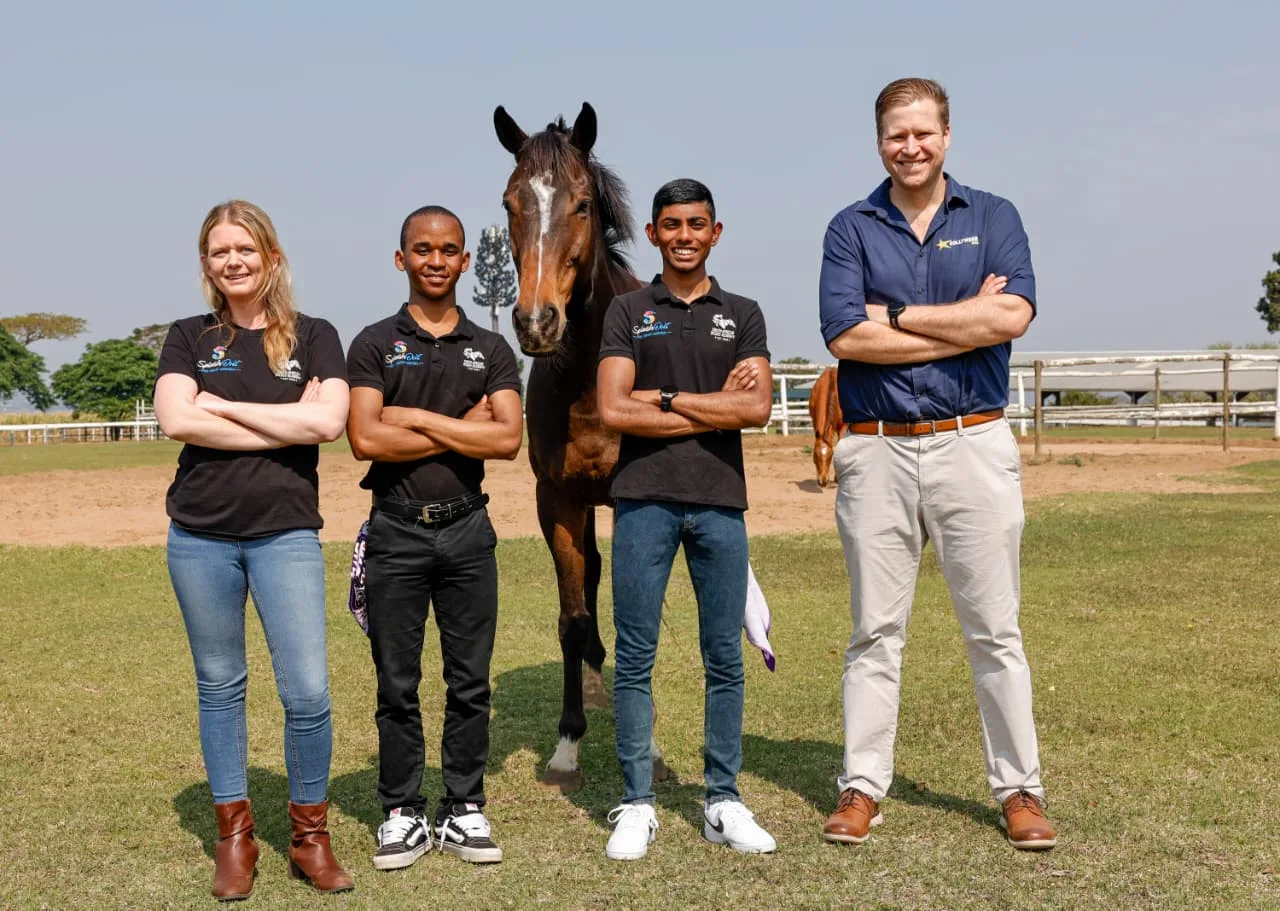
A multi-million-rand infrastructure upgrade at the South African Jockey Academy (SAJA) in Summerveld has officially launched, marking Phase 1 of a major long-term investment by the Hollywood Group and Hollywood Foundation to revitalise South African horse racing. The comprehensive revamp of campus dormitories is set to modernise facilities, support economic growth in KwaZulu-Natal, and empower the next generation of professional jockeys through the world-class education and training programme provided at SAJA.
“This project is not simply an investment in infrastructure. It is an investment in people, opportunity and the future of South African horse racing. Through funding, the Hollywood Foundation is creating an environment where young people can live with dignity, receive a quality education, develop their horsemanship and riding skills, and ultimately enter the racing industry as trained and qualified professionals,” says South African Jockey Academy (SAJA) chief operating officer, Tarryn Mason.
Speaking at the ribbon cutting ceremony for phase one of the multi-million-rand upgrade of the facility at Summerveld, in Durban, Mason said that the total revamp of the international and female apprentice dormitories would go a long way to realising SAJA’s mission of developing world class jockeys.
Already, the 69-year-old campus has trained jockeys that have gone on to win big races and championships on every continent including in countries such as the United Kingdom, Hong Kong, Macau, Mauritius, Singapore, Japan and Australia.
Phase one is just the first of a four-phase comprehensive infrastructure upgrade at Summerveld and forms part of the R500-million investment by the Hollywood Group as part of the long-term rescue of horse racing in KwaZulu-Natal.
Hollywood Group brand and communications manager, Devin Heffer, said that this initial phase created approximately 30 direct employment opportunities through the project’s main contractor and specialist subcontractors, including Msomi T Projects, Thaidon Flooring, Suburban Roofing, NK Furniture and Rooted Electrical.
It also supported indirect economic opportunities through local supplier purchases and specialist service providers, including plumbers, tree fellers and other local services. While these indirect opportunities are more difficult to quantify accurately, the project contributed to local economic activity, supporting additional businesses, trades and service providers.
Investing in the future of racing
The Hollywood Foundation’s commitment to the horse racing sector also includes funding full bursaries for previously disadvantaged apprentices. Thirty-five apprentices have already benefited with 15 having qualified as professional jockeys and nine becoming work riders and stable managers.
The academy – which includes the main Summerveld Campus as well as satellite campuses in Gqeberha, Cape Town and Johannesburg – is the only institution in South Africa that offers an apprenticeship programme for professional jockeys. As one of the potential casualties of the Covid-19 pandemic, it was on the brink of closure just five years ago.
It operates as a boarding school and provides both comprehensive academic education and practical riding training for the 40 future jockeys that are currently at the institution. This includes 18 apprentices from South Africa, two from Hong Kong, five from South Korea, two from Qatar, 12 from Mauritius and one from Hungary.
Four apprentices are females in a previously male dominated space.
The new intake of female jockeys in 2027 will be housed in Block C, which forms part of the first phase of the upgrade.
Rachel Venniker, a SAJA alumna who has progressed from being an apprentice at the Academy to becoming the country’s only professional female jockey, previously lived in the very dormitories that are under renovation.
Mason emphasises that SAJA goes beyond simply providing accommodation or riding lessons: “We are developing young people through a structured five-year apprenticeship that combines academic education, practical riding, horsemanship and experiential learning, ultimately preparing them for professional careers in racing. We want our apprentices to know that they are valued and that the industry is invested in their future.”
On successful completion of the programme, apprentices are awarded a jockey licence from the National Horseracing Authority of South Africa (NHA) and a Diploma in Jockeyship from the South African Jockey Academy.
Mason believes this adds an important level of professionalism and credibility to the industry, demonstrating that a jockey has progressed through a structured programme of academic education, practical training, assessment and supervised experience before entering the professional racing environment.
“It also helps elevate jockeyship as a profession. Jockeys are professional athletes who carry significant responsibility, and their role requires far more than simply being able to ride a horse. A jockey needs to understand horse behaviour, handling, training and welfare, as well as riding technique and the risks associated with working around horses and racing. Ultimately, we want our apprentices to understand that the horse is at the centre of the sport. Professional training therefore contributes to creating a safer environment for both horse and rider and reinforces the industry’s responsibility towards equine welfare,” she says.
Investing beyond the academy
Training and academy operations have continued throughout the construction period. This is particularly important because SAJA operates as a residential boarding school and apprentices follow an extremely rigorous and structured daily programme.
Work on phase two of the SAJA upgrade is imminent.
The Hollywood Group is committed to further investment in South Africa’s horse racing sector, confident that this contribution will strengthen communities, create jobs and support sustainable growth.
“By investing in racing, including upgrades to courses and the SAJA, the Group is preserving jobs. These support an estimated 300,000 South Africans, while creating opportunities for service providers, boosting local and national economies,” Heffer concludes.

